
Repercussions of the UK Trident Vote

July 15, 2016
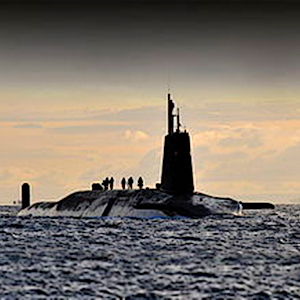
HMS Vanguard arrives back at HM Naval Base Clyde, Faslane, Scotland following a patrol. via Wikimedia
The UK Parliament is scheduled to vote July 18 on whether to renew its Trident nuclear submarine program. The vote will take place on the heels of a NATO Summit in Poland, in the wake of the “Brexit” vote, and on the dawn of the new Theresa May administration. It is likely to have major repercussions within the United Kingdom, NATO, and on global nuclear disarmament and nonproliferation.
The Trident constitutes the entirety of the United Kingdom’s nuclear weapon capability. Currently, there are four submarines that can carry up to eight missiles, each fitted with a number of warheads, though only one sub is on patrol at a time. It is estimated that the UK has 120 operational warheads in total. The Trident is based at Faslane in Scotland, a nation that overwhelmingly opposes both Trident renewal and Brexit.
The James Martin Center for Nonproliferation Studies has several experts available to comment on the repercussions of the Trident vote.
CNS Experts Available for Comment
William Potter
CNS Founder & Director
wpotter@miis.edu ⋅ 831.647.3511
Miles Pomper
Senior Fellow
mpomper@miis.edu ⋅ @MilesPomper ⋅ 202.842.3100 x318
Jenny Nielsen
Postdoctoral Fellow, Vienna Center for Disarmament and Non-Proliferation (VCDNP)
jennyn@vcdnp.org ⋅ @JennyNielsenNPT ⋅ +41 (1) 236- 948211
Nikolai Sokov
Senior Fellow
nsokov@miis.edu ⋅ 831.647.6577
Bryan Lee
Director, Eurasia Nonproliferation Program
bllee@miis.edu ⋅ @semyorka ⋅ 831.647.3509
Jeffrey Lewis
Director, East Asia Nonproliferation Program
jlewis@miis.edu ⋅ @ArmsControlWonk ⋅ 831.647.6616