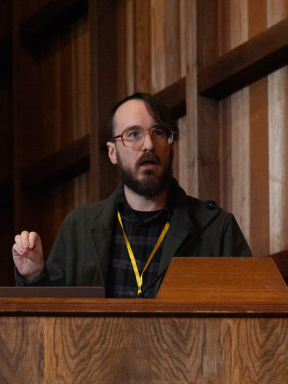
CNS VT Director Dr. Stephen Herzog discusses teaching this fall and opportunities for undergraduates at CNS Vermont.
Read Interview
CNS VT Director Dr. Stephen Herzog discusses teaching this fall and opportunities for undergraduates at CNS Vermont.
Read Interview
CNS is the largest nongovernmental organization in the United States devoted to nonproliferation research and training.
Learn More
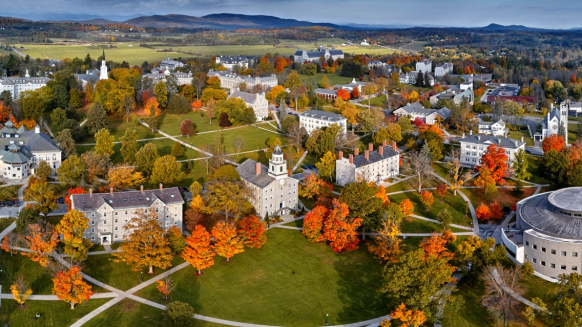
CNS VT welcomed students, faculty and staff to an Open House celebrating its new location.
Learn More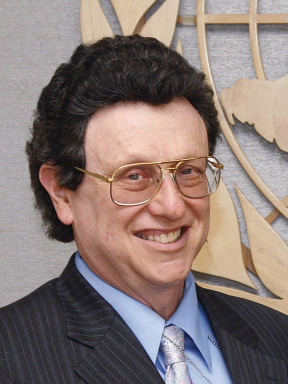
Message to the Middlebury Community from CNS Director Dr. William C. Potter
Learn MoreFounded in 1989 by Professor William C. Potter, the Center for Nonproliferation Studies (CNS) is the largest nongovernmental organization in the United States devoted exclusively to research and training on nonproliferation issues. CNS is a research center of Middlebury College.
CNS strives to combat the spread of weapons of mass destruction (WMD) by training the next generation of nonproliferation specialists, while disseminating timely information and analysis to policymakers and the public.
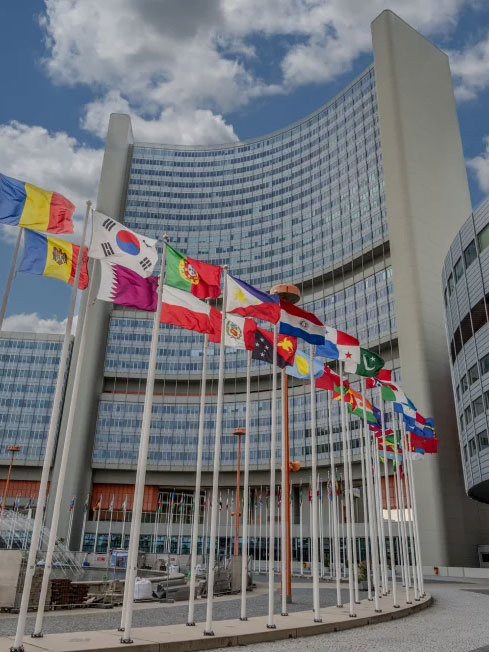
Extending Middlebury’s global reach, CNS experts and activities are concentrated in four offices—in Monterey, CA; Middlebury, VT; Washington, DC; and Vienna, Austria (through the Vienna Center for Disarmament and Non-Proliferation).
CNS Vermont’s Director and Professor Stephen Herzog teaches fall, winter term, and spring courses in the Global Security track of the International and Global Studies Program. Additional CNS experts teach on a visiting basis during the winter term. CNS is partnering with faculty in multiple departments on additional curricular initiatives in Vermont. Stay tuned!
Middlebury undergraduates are invited to apply for winter term internships and paid summer undergraduate fellowships with CNS Monterey; the MiddWorks for Vermont summer internship at CNS Vermont, and paid research assistant positions with CNS Vermont during the fall and spring semesters (these list on Workable when there are openings).
CNS Vermont brings distinguished guest speakers from around the world to Middlebury, giving students and faculty a direct connection to the international policy community. Planned activities also include policy and career skills workshops, opportunities to engage with visiting practitioners, and other events designed to bridge campus learning with real-world work in nonproliferation and global security.

CNS hosts six Middlebury summer undergraduate fellows in Monterey.
Watch Video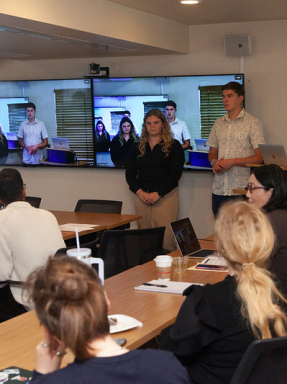
Apply now to be a winter term intern at CNS Vermont.
Apply Now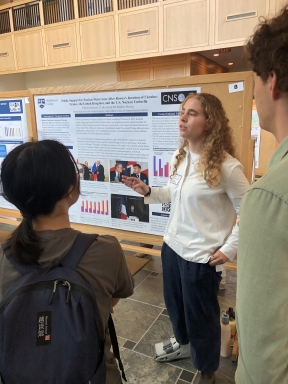
Ella Gincherman ’27 talks about her time as CNS’s first Vermont summer intern.
Learn More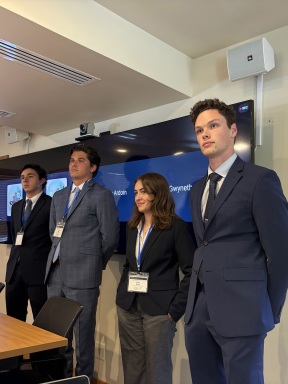
Summer undergraduate fellows present their research.
Learn MoreCourses offered in the past four years. Courses offered currently are as noted.
IGST 0203 Current
Nonproliferation Policy LabCourse Description
Center for Nonproliferation Studies Policy Lab Experience
In this course students will be introduced to policy-relevant skills for analyzing weapons of mass destruction (WMD). Students will work closely with staff from the James Martin Center for Nonproliferation Studies (CNS), the largest U.S.-based nongovernmental organization focused on research and training on these issues. We will discuss current issues in nonproliferation, arms control, disarmament, and strategy related to nuclear, chemical, and biological weapons. There will be an introduction to various tools used to study WMD and training in analysis skills for public and policy audiences. Sessions will also include practitioner presentations and assessments of WMD in pop culture and the media. The term will culminate in student presentations of their short policy writing to receive detailed feedback from CNS experts.(This is a half-credit course.) (This course will meet every other week throughout the semester.)
Terms Taught
IGST 0205 Upcoming
Intro Emerging Tech & SecurityCourse Description
Introduction to Emerging Technologies and Global Security
How are emerging and disruptive technologies reshaping global security? Who sets the rules when innovation moves faster than governance? In this course we will examine the international security, economic, and ethical consequences of recent technological advances. We will explore artificial intelligence, private space technologies, cyber capabilities, autonomous and remotely-piloted drones, and the semiconductor supply chains that power them. To do so, the course draws on literature from political science, international relations, and science and technology studies. We will analyze competition and cooperation in this new era. Course readings and simulations will focus on states, firms, and international institutions. Students will write short reflections and complete a final research paper proposing a concrete governance response to a real-world case. No prior technical background required.
Terms Taught
IGST 1016 Upcoming
RUS-UKR War & Nuclear OrderCourse Description
Russia-Ukraine War & Nuclear Order
Has conflict between Russia and Ukraine ushered in a new era of nuclear dangers? Nuclear weapons were central to Russia’s February 2022 invasion of Ukraine from the outset. Indeed, persistent Russian threats to use nuclear arms and provocations at the Zaporizhzhia Nuclear Power Station have drawn considerable public attention. In this course, students will think about nuclear weapons in the context of the war. They will consider topics such as implications for (non)proliferation, arms control, disarmament, and the future of the “nuclear taboo” established in the aftermath of the atomic bombings of Hiroshima and Nagasaki. In-class simulations will enable students to better understand how practitioners attempt to analyze and avert nuclear risks. No prior background with nuclear issues is required.
Dr. Stephen Herzog is Professor of the Practice at the James Martin Center for Nonproliferation Studies at the Middlebury Institute of International Studies at Monterey. He is an Associate of Harvard University’s Project on Managing the Atom and a former U.S. Department of Energy nuclear arms control official.
Terms Taught
Requirements