Ting Cui’s Unlikely Road to Cortina
| by Ali Paquette
Inside the stiff boot constraints of a figure skate, the ankle is not just a body part but a precision instrument connecting a skater to the ice. The difference between soaring through the air to land a triple Lutz and stumbling onto the cold surface relies on the micro-adjustments of the ankles. In many sports, a minor ankle injury is a nuisance where some tape and extra support can manage the pain enough to compete, especially on a forgiving surface such as turf or a court. There is no give in figure skating; there is a rigid boot on top of a quarter-inch-wide steel blade that sits on one of the hardest surfaces in sport. There is no room for error, and an ankle injury in figure skating, while extremely common, can’t be powered through.
Ting Cui ’25.5 began her figure skating journey at 7½ years old and understands just how vital the ankle is to achieving success on the ice. Her background in ballet allowed for grace from a young age; she claimed bronze in both the 2018 United States Junior National Championships and the 2019 World Junior Championships, which served as a prelude to her 2022 Olympic dream.
Just months after her medal at the World Junior event, Cui tore three outer ligaments and a tendon in her right ankle, which resulted in an avulsion fracture and bone bruising. In the midst of a global pandemic and with the Beijing Olympics looming, Cui became engulfed in a cycle of hope and heartbreak as she pushed the bounds of her body while frequently reinjuring her ankle. Cui’s injuries took a toll on her mental health over time, so she bid farewell to the sport that had shaped her youth and closed the door on her Olympic dream.
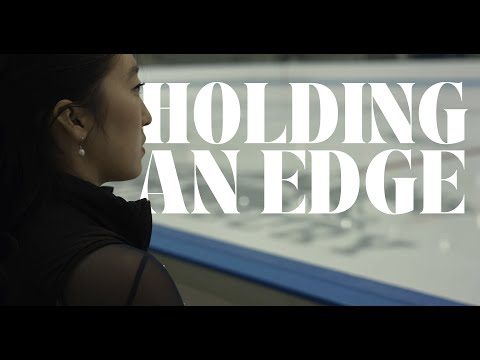
In February 2022, with the world gearing up for the Winter Games, Cui traded her skates for books and matriculated as a Feb at Middlebury. Without the eyes of the skating world watching her every leap, she found her way back to the rink and joined the figure skating club. The experience provided a community for Cui, and her love for the sport flourished again.
As she got back to the basics of skating, another passion arose. Cui began exploring a career in sports journalism, working as a writer and later the sports editor for The Campus throughout her time as a student. In the fall of 2025, she was offered an opportunity to work for NBC as a figure skater researcher ahead of and at the Olympics.
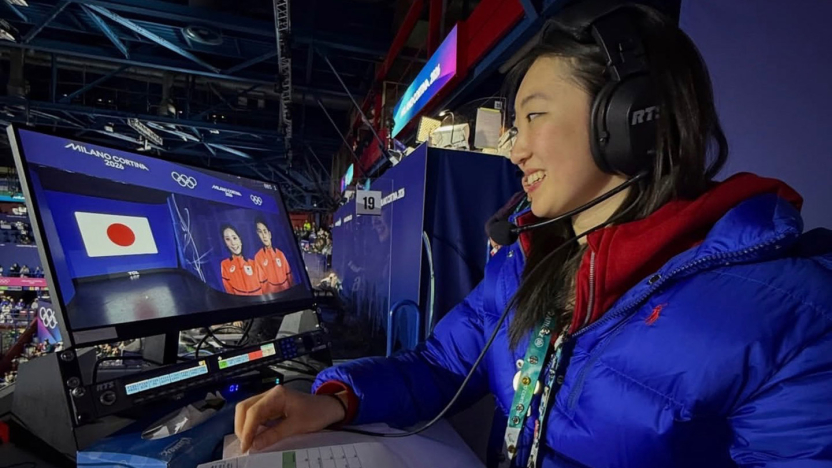
Cui’s role at the 2026 Games was to research and write biographics in preparation for events. As one of the “figs” on a team of a few researchers, she built “jump sheets.” Those items, which outlined the order of elements in the skaters’ programs, informed the control room, commentators, and tape room. She watched the most practices among her team, taking notes of any last-minute layout changes and observing how skaters looked. During some events, Cui worked over 12 hours each day, running between the main arena, where she provided backup research support on the headset, and the practice arena. The view from her desk overlooked legendary commentators and Olympians Tara Lipinski and Johnny Weir.
Having been a figure skater for more than 16 years, Cui knows a lot of the coaches, skaters, analysts, and U.S. Figure Skating support staff and officials, which provided her with a special opportunity to tell their stories to the world. She was even able to use her fluency in Chinese for interviews when a translator was needed.
Cui’s journey to Milan Cortina and her time at the Olympics allowed for a pause. Just like during the half second in the air during a triple Lutz, she felt like she was suspended in time and had the ability to appreciate the sport from a different perspective. She doesn’t know what the next cycle may hold for her; whether she will lace up her skates again for a panel of judges, pursue a career in sports, or tour with an ice show. Whatever she does, Cui is content knowing she found peace in the moments that led her back to the ice.