

In Handcrafting a Cherry Study Table, a Student Expresses his Japanese American Identity
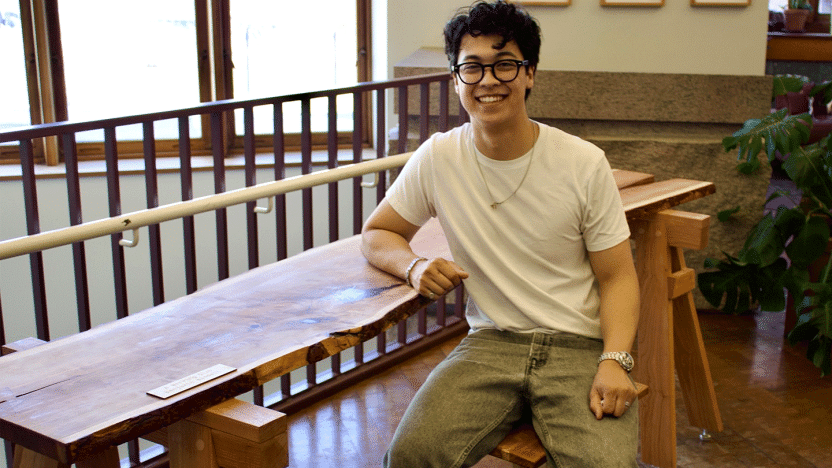
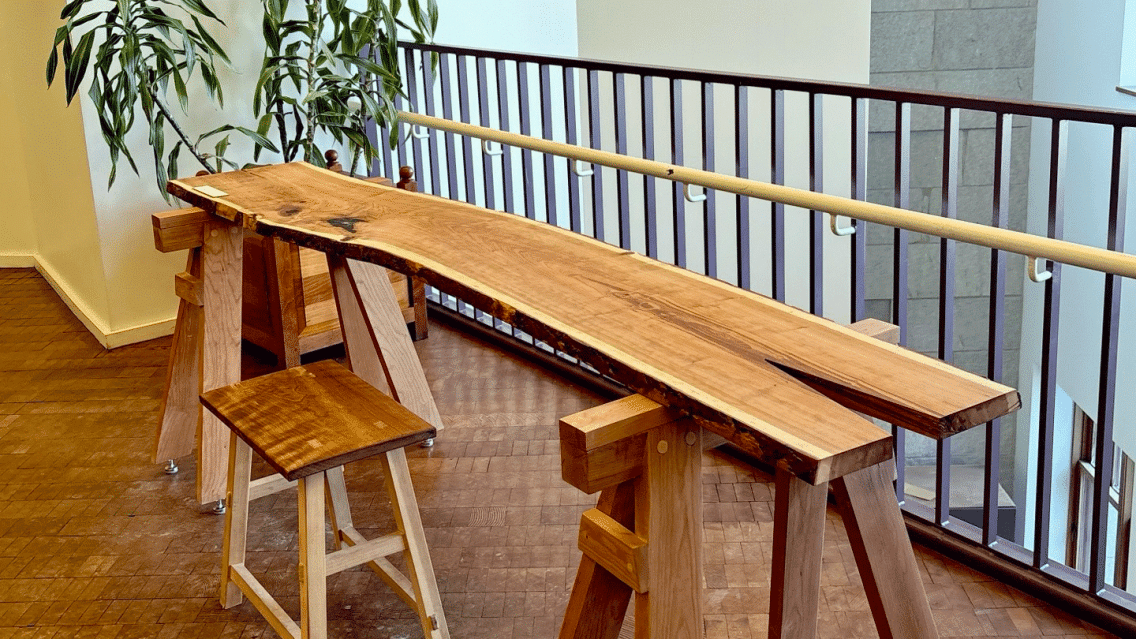
A slice of black cherry has become, in the hands of Benjamin Sindell ‘26, The Workman’s Slab—a beautiful and practical new addition to the Mahaney Arts Center.
Sindell, who graduated in May with a double major in architectural studies and political science, also served as a teaching assistant in the Middlebury College Makerspace woodshop. He took on the extra-curricular project at the request of MAC director Liza Sacheli and Arts Events Manager Molly Andres who were looking for someone to build a study table to improve their space. Sindell’s hope was to not only leave a tangible legacy for Middlebury students, but also to bring more attention to the positive impact of the Middlebury Makerspace.
Following is a conversation we had with Benjamin about his year-long process, his inspiration in American woodworker and architect George Katsutoshi Nakashima, and the enthusiastic mentorship he received from Makerspace director Daniel Houghton and from the wider Vermont design community.
Tell us about your experience with woodworking.
I had some prior experience using the woodshop through earlier projects, such as the hydroponic garden that Thaddeus Foote and I designed and built for the Warner study room, where we created a decorative wooden cover using a CNC tabletop mill (sponsored by the Makerspace). However, that project was very different from building a piece of furniture. Coming from an architecture background, I have always had an interest in furniture design, but my hands-on experience was limited to small-scale projects like photo frames and cutting boards. This was my first attempt at building something at a larger scale, and I approached it as a complete beginner. Looking back, I see this project as proof that beginners are both welcome and capable of succeeding in the woodshop and the Makerspace.
What about Nakashima’s designs resonated with you?
I chose to research George Nakashima to better understand and appreciate his philosophy on wood as I designed and built my table. From the start, I felt a personal connection to his work through our shared identity as Japanese Americans, which made his writing feel especially meaningful to me. His autobiography, The Soul of a Tree, was the most influential source I read at the beginning of this project. He spent several years in Paris, Tokyo, and Pondicherry, India, and was inspired by the international experiences he had as an architect. I found his life story extremely similar to my own. As a beginner in woodworking and most certainly furniture designing, I found his designs approachable because they focus less on complex construction and more on respecting and working with the natural qualities of the wood. His emphasis on honoring the material and elevating live-edge furniture helped me see that beauty does not have to be created from scratch but can come from carefully revealing what is already present in nature.
As a beginner, how did you even know where to start?
I worked with several mentors throughout this project, and I am incredibly grateful for the guidance they provided during the build. Early in the semester, I had a serendipitous encounter when furniture designer Bruce Beeken walked into my architecture studio looking for the Japanese Teahouse exhibit a few students built during J-Term. We spoke briefly about my project, and he generously shared his contact information and encouraged me to look into George Nakashima, specifically his Conoid collection. About a week later, he invited me to his woodshop at Shelburne Farms, where he gave me a tour and offered detailed feedback on my project, including techniques I could use in my own work. A few weeks after that, I met with Damian Arndt, an experienced furniture builder and a friend of Daniel Houghton, Middlebury Makerspace director, who provided valuable insight into live-edge tables and helped me think through both the design and its feasibility. In addition to these two experts, Daniel supported me throughout the process by helping troubleshoot problems and think through decisions, even though we were both learning as we went. I also received help from Jameson Bregar ’29.5, who assisted with specific techniques such as making plugs to conceal screws and offered thoughtful input on design choices.
How did this project relate to your studies at Middlebury?
I came to Middlebury intending to major in Political Science, but I will graduate as a double major in architectural studies and political science. Next year, I will continue my studies in design in Paris through the Lafayette Fellowship before eventually pursuing architecture school. Looking back, Middlebury has given me the confidence to pursue a path that is very different from what I originally imagined. The architecture program has been especially influential, and courses such as Modern Architecture and Community Design have shaped my interest in design that is grounded in history while also serving and improving the community. In addition to building this table, I have worked on projects such as a pavilion design for Battell Beach and the Knoll, which reflect this same commitment. I believe that my work as an architecture student can have a meaningful impact on the Middlebury community, just as this table does in a smaller but tangible way. At the same time, I have come to see the Makerspace and woodshop as underutilized resources within the architecture program. Architecture is not only about designing but also about making, and these spaces offer valuable opportunities to test and develop those skills, whether at the scale of a building or a piece of furniture. I hope students are able to use The Workman’s Slab over the coming years!
This table marks the last of many projects I was a part of during my time at Middlebury and with the Makerspace. I hope, if anything, that this table can bring more attention to the positive impact that the Middlebury Makerspace has on our community and it’s clear, just by the amount of interest, it has. I want to thank Daniel for his support as well as Liza and Molly for entrusting a student to pursue a project of this scale.