

A Golden Celebration
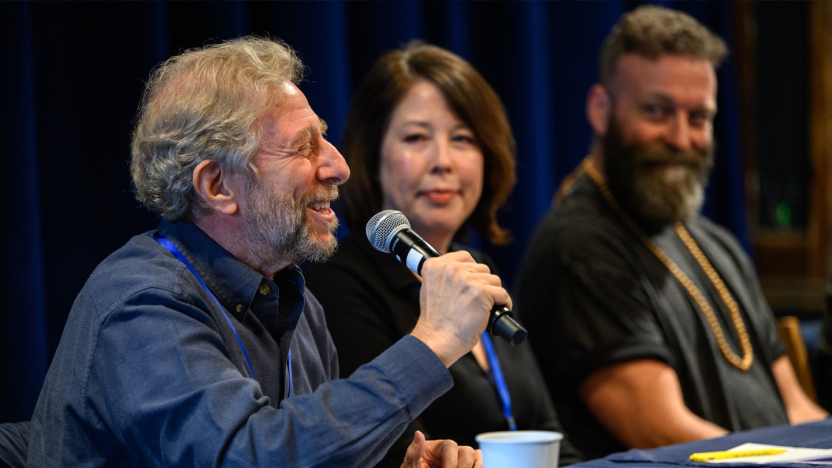
Half a century after John Berninghausen and the late Gregory Kuei-Ke Chiang arrived at Middlebury to begin teaching Chinese to undergraduate students, the Greenberg-Starr Department of Chinese celebrated its Golden Anniversary last weekend on the Bread Loaf campus.
Nearly 150 alumni and another 80 family and friends returned to Vermont for a three-day reunion and conference that featured eight alumni panels, informal socializing and networking, and a gala celebratory dinner on Saturday evening in the Bread Loaf dining room that featured no fewer than 14 speakers—who introduced the current faculty in the department today; offered a financial update on the endowed funds that support the teaching and learning of Chinese at Middlebury; discussed the good health of the Schools Abroad program in China; and, in the most touching moments, provided toasts to the department’s cofounder and first chair, John Berninghausen; the recently retired Tom Moran; the current chair, CV Starr Professor of Chinese Carrie Wiebe; and the current John D. Berninghausen Professor of Chinese, Hang Du.
Prior to the kickoff of the events, Berninghausen promised a reporter that the weekend would be both a “lovefest” and an intellectual gathering with little precedent—outside of the regular reunion gatherings the department has held every five years (with a COVID exception in 2021) since 1986.
And he wasn’t wrong.
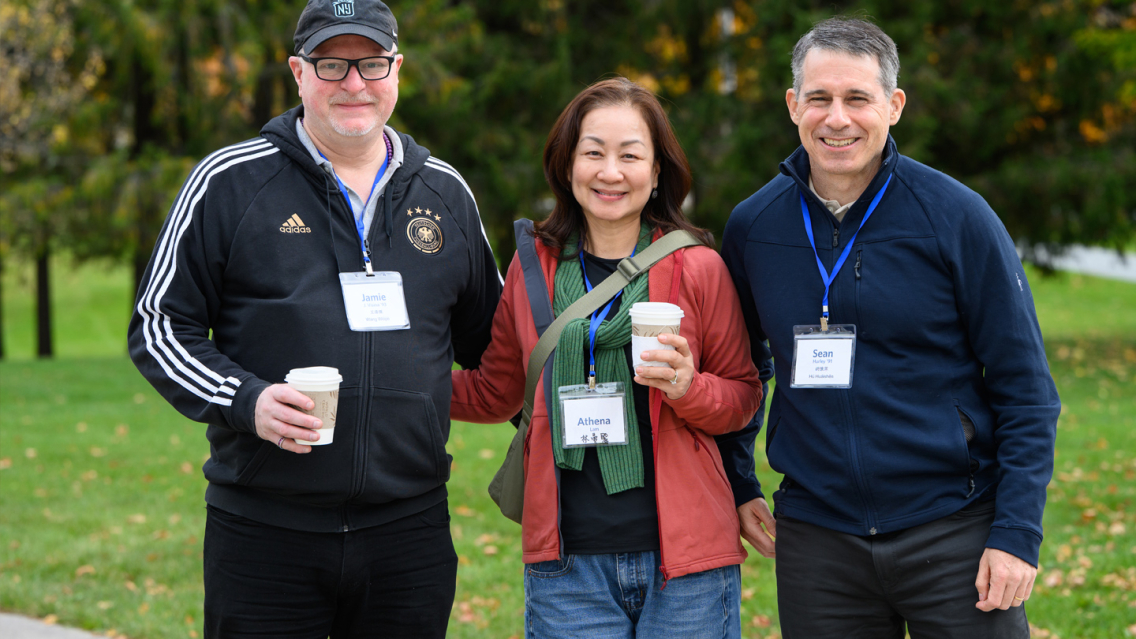
Alumni from 46 of the 50 classes since the program’s founding were in attendance, including a handful of students from that first year of instruction in 1976. They came from Bangkok and Beijing, Shanghai and Hong Kong, Berlin and Taipei. They came from both coasts of the United States, from locations in between, and from our Canadian neighbor to the north.
They came to honor—and, in some cases, remember—their mentors. They came to enjoy each other’s company and celebrate this Golden Anniversary (a Friday night champagne-fueled party was mentioned more than once at the gala dinner on Saturday). And they came to discuss and debate ideas relating to China, its history, and its place in the world.
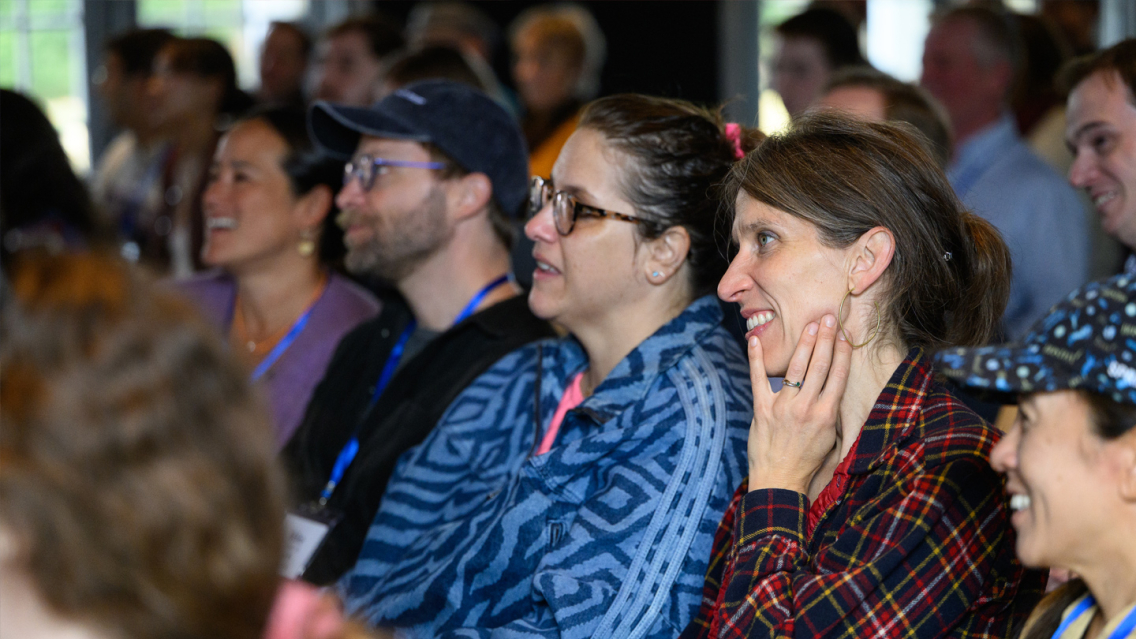
There were those eight (!) panels, after all, including a standing-room-only event in Wilson Hall on Friday afternoon that featured alumni panelists discussing Chinese foreign policy (Taylor Fravel ’93, director of the Security Studies Program at MIT); the state of U.S.-Chinese collaboration on global energy issues (Margaux Fimbres Murali ’10, a director in the Office of Asian Affairs in the U.S. Department of Energy); Chinese society in the 21st century (Elizabeth Knup ’82, the former regional director for China at the Ford Foundation); and recent sustainability efforts in East Asia (Merisha Enoe ’08, who works in the climate solutions division at Apple).
At the center of the festivities was Berninghausen, equal parts sage and rock star for the assembled guests. When he and Chiang were hired in 1976, the graduate School of Chinese had been in operation for a decade, yet the decision to introduce the study of the language into the undergraduate curriculum was not without detractors.
At the dinner, Berninghausen credited then-president Olin Robison and provost Nicholas Clifford, a history professor who specialized in 20th-century Chinese history, with “having the courage and fortitude” in 1976 to insist that the study of language and culture had a place at the undergraduate College, despite opposition from “forces who held a more Western or Eurocentric view of [global studies].”
Moments earlier, Middlebury President Ian Baucom had toasted the department and spoken reverently of its legacy before turning his attention to Berninghausen.
“John,” he said, gesturing around the room, “look at what you did.”
And then a roomful of people—many, if not most, of whom had spoken passionately that weekend about how deeply their lives had changed because of this College, this department, and these professors and peers—stood as one for a sustained ovation.
It was one of at least five standing ovations that occurred over the course of the evening.