

New Book by Christopher Star Explores Ancient Ideas About Apocalypse and What They Can Teach Us Today
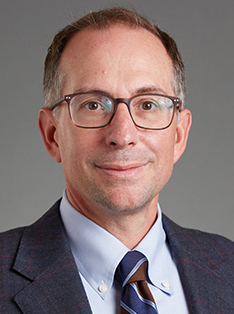
It would be easy to assume that Christopher Star’s new book, How to Face the End of the World: An Ancient Guide for Apocalyptic Times (Princeton University Press, 2026), is a depressing read. It does explore ancient Greek and Roman predictions of the end of the world, from Zeus destroying humanity to Plato and Seneca viewing catastrophe as part of the natural order.
But Star says these writings can also be surprisingly reassuring, even today when 39 percent of Americans believe we are living in the end times, according to a Pew Research Center survey cited in the book. Drawing on the Stoics, Star emphasizes that while we cannot control what happens, we can control how we respond, helping us face catastrophe with less fear knowing that people have endured crises throughout history.
Star, professor of classics and director of the Axinn Center for the Humanities, has published extensively on the late Roman Republic and early Roman Empire, focusing on the transition from freedom to autocracy and the influence of ancient ideas on modern debates. He has also written extensively on ancient philosophy and literature, with research focusing on eschatology and global catastrophe. His books include The Empire of the Self, Seneca, and Apocalypse and Golden Age.
The following are excerpts from an interview with Star about why he decided to write the book and what ancient philosophers can teach us about facing thoughts on the end of the world.
What first got you interested in studying ancient ideas about the apocalypse and the end of the world?
I’ve always been interested in ancient philosophy. One of my main focuses has been Stoicism. About 10 years ago, I was looking for a new project. I had focused on Seneca and the Stoics throughout my career, and then it hit me that the Stoics write a lot about the end of the world. And I said to myself, “That’s interesting, because they’re writing around the same time as Jews and Christians, and nobody had really picked up on it.” Then I started looking at other philosophers. The Epicureans believed that the world consists of atoms moving through space and that there are laws of nature bringing atoms together and pulling them apart. There are multiple worlds, and we’re not living in a special place. Every planet has its ending. Plato is interesting, too. He talks about terrestrial catastrophes that push society back and then how people rebuild from them. He presents an optimistic picture, the opposite of The Walking Dead, the violent apocalypse. Humans are actually pretty happy to see each other after these apocalypses. They want to work together.
How do the Stoics and other ancient philosophers offer a different way of thinking about catastrophe?
The Stoics would say we’ve got to plan for bad things so we can meet them with resilience or equanimity. That’s one of the things that people really focus on today, this idea of emotional control. If you ever hear a football coach say, “Focus on what you can control and what you can’t control,” that’s straight out of Epictetus. The Epicureans were very interested in studying nature and understanding that there are what we would call “natural problems.” A fire or flood or disaster isn’t happening because the gods are angry. It’s happening because this is just the way nature works. If you can understand that, you’re going to remove fear. That’s one way this is different from the violent biblical apocalypse. This is the way nature works. Nature is violent. You’ve got to realize that there are forces of nature out there that can be more powerful than us.
Given everything you’ve studied, does the current moment feel particularly unusual or apocalyptic?
What got me interested in this around 2016 was the long view. This is a 2,000-plus-year-old tradition of people saying the end of the world is coming and that they can see the signs. But we have been in this cycle where nothing seems to be getting better for about 10 years. People have gone through worse before, especially in the early 20th century, so I still have hope. But even the fellow who interviewed me from Stanford for Philosophy Talk basically said, “This is starting to feel different.” What’s interesting is how that has developed. First, it was just nuclear war. Now we’ve got to think about climate. We’ve got to think about AI. We’ve got to think about politics. I think a better way to look at it is that this is a critical time, perhaps one of the most critical times in human history, in terms of the decisions we make. Apocalyptic images and narratives can help us perhaps start to avoid these catastrophes actually happening.
What do you hope readers take away from the book?
One thing is the long view of people looking at crisis. Another way I’m packaging this book is to say this is a different way of thinking about apocalypse. This isn’t the violent biblical apocalypse. There’s also this vision that if the apocalypse comes, like you see with preppers, you’ve got to be armed and ready to fight, and the most well-armed are going to survive. Plato doesn’t see it that way. Humans might actually work together, and they might be happy to see each other. That’s another way of thinking about what the future can be. I think the main takeaway is that reading apocalyptic literature and postapocalyptic fiction is perhaps good for you in some ways, in that it’s mentally a way to prepare for the worst possible case. Hopefully we don’t get there. But this idea of foresight can be a good way to prepare for any crisis in your life. Apocalyptic literature is not all doom and gloom. It is about imagining what could be, preparing yourself for it, and hopefully trying to come up with a better way.
Was there anything you discovered while working on this book that changed the way you think about apocalyptic literature?
I think it was the psychological aspect of it. Marcus Aurelius was emperor, but he was also trying to be a Stoic. He has his Meditations, which were basically written for himself. He’ll tell himself, “Don’t get angry. You’re going to meet with a lot of people who are going to annoy you today.” He has these sort of self-help remarks. But he also has this passage where he’s thinking about how everything in the universe will eventually be destroyed. For me, that literature is a way to see the bigger picture, to try to control your own emotions and understand your place in the world. Usually, as you say, this kind of literature is seen as depressing or overly violent. But with the ancient philosophers, and if you think about the biblical tradition, too, it really is sort of mental preparation. There really is this psychological aspect behind it. That’s what apocalypse means: revelation or uncovering. What you think is happening now isn’t the whole picture. There is a bigger picture. Ultimately, apocalypse is about a revelation of knowledge, as opposed to the way the word has changed to mean destruction.