

Vermont Secretary of State Hopes to Learn from Students’ Research on Civics Education
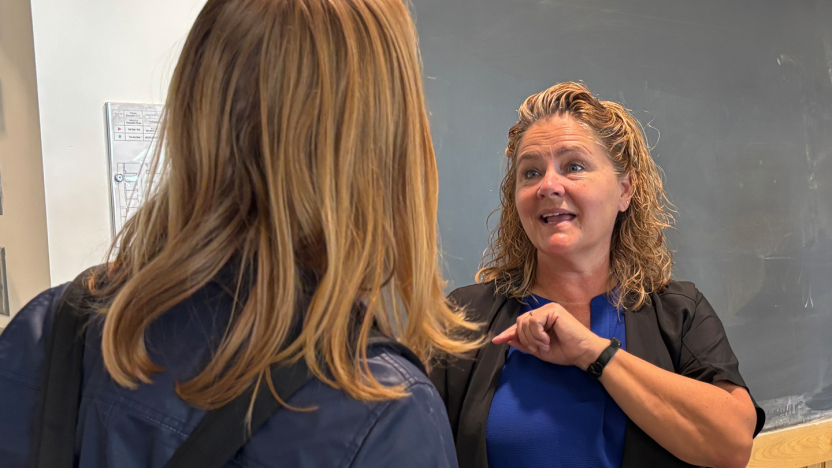
Middlebury students had democracy on their minds when Vermont Secretary of State Sarah Copeland Hanzas made a guest appearance in their research methods class on a recent Friday afternoon. Her visit was the start of a collaboration between the class and a local high school aligned with the secretary’s initiatives that could potentially impact the way Vermont schools teach about civics and government.
“This is going to be great,” said Copeland Hanzas, greeting the class. “I was so excited when I read through the scope of your assignment because I feel like it fits so nicely into what we need—to understand the landscape around civics and civics education.”
I have a feeling that what we’re doing right now is sort of tilling the ground so that when the conditions are right, we’re going to see a great explosion and widespread adoption of better curriculum and better civics opportunities for young people.
A former middle school science teacher, Copeland Hanzas told students that expanding civics education had been a high priority for her since she first took office in 2023. She expressed her deep concern that the current system can leave people feeling disconnected from the process of solving problems.
“The greatest tragedy that I see in a democracy is when I hear so many people say, ‘Oh, I don’t vote, I don’t do that, because all of those wealthy and well-connected people are going to decide what the answers are,’” said Copeland Hanzas.
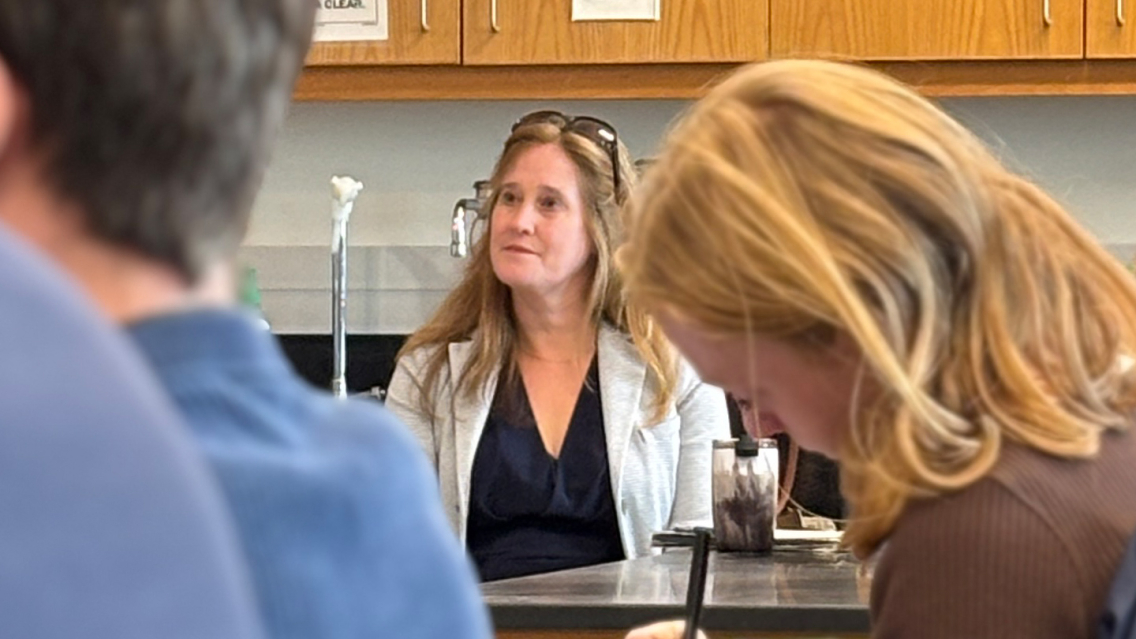
Students in the qualitative methods course, taught by political science professor Jessica Teets, are currently immersed in a semester-long project to study civics curriculum in partnership with social studies teachers at Mount Abraham Union High School in Bristol, Vermont. They had a long list of questions for the secretary about what she had learned through her initiatives on civics education. Unsurprisingly, she said the state needs more.
“We recognize that there’s not enough just basic civics education happening in our schools and, in fact, there hasn’t been for generations,” Copeland Hanzas told the class. “What became really clear really quickly is that there are huge disparities between the wealthier communities and the better-funded schools and their ability to invest in civics education and the schools that are really struggling and having a hard time getting by. By and large, it is hit or miss. If you have a social studies teacher who’s really passionate about civics, those kids are going to get an education. But if you don’t—and if that teacher is part of that generation of people who don’t understand civics, don’t understand how government works—those kids are going to get a much spottier introduction to how power works in this country.”

In the coming months, the Middlebury students will conduct interviews, surveys, focus groups, and text analysis in their exploration of the issues. At the end of the semester, they’ll share their findings with the secretary, along with staff at the Agency of Education. Those who want to continue the project will take a winter term course taught by Professors Teets and political science professor Bert Johnson to design and pilot civics curriculum with Mount Abraham faculty. Students also plan to share the results with state officials, potentially contributing to the development of a statewide model.
“I have a feeling that what we’re doing right now is sort of tilling the ground so that when the conditions are right, we’re going to see a great explosion and widespread adoption of better curriculum and better civics opportunities for young people,” said Copeland Hanzas.