Food Studies FOOD

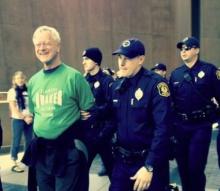
Image of a man being arrested by the police.

Rebel with a Mission: Documentary film about George Lakey

Sponsored by:
Food Studies
The George Lakey Documentary Film presents the life and work of a nonviolent revolutionary, a deeply spiritual man with a rebel heart, who has been guided in life by his ideal of societal transformation. George Lakey will speak after the film.  

Dana Auditorium (Sunderland Language Center)

Open to the Public

The Role of Ruminants In Reversing Global Warming

Sponsored by:
Food Studies
Seth Itzkan, co-founder of Soil4Climate and a resident of Vermont, presented at last year’s COP26 on Climate Change about the role of ruminants in mitigating greenhouse gas emissions. Seth is an Honorable Maasai Herder and a Regenerative Agriculture Advocate. He will give a presentation to campus, followed by refreshments provided by Middlebury Natural Foods Co-op.

McCardell Bicentennial Hall 220

Open to the Public

Taste the Valley

Sponsored by:
Food Studies
Local producers meet local buyers! Middlebury hosts a gathering to support local procurement and purchasing, as we have done several times in the past.

Kirk Center

Open to the Public

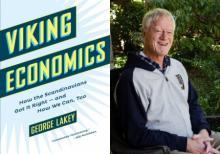
Viking Economics with George Lakey

Sponsored by:
Food Studies
Viking Economics: Hear author George Lakey describe how Norway overcame a repressive conservative government to become one of the most equitable societies in the world, capable of responding effectively to the threat of climate change.

Dana Auditorium (Sunderland Language Center)

Open to the Public

The revolution begins with food: Reflections of an organic elder

Sponsored by:
Food Studies
“The revolution begins with food: Reflections of an organic elder” by Grace Gershuny, author, educator and organic consultant. Today’s ‘good food’ revolution has its roots in the soil of the organic movement. In Organic Revolutionary: A Memoir of the Movement for Real Food, Planetary Healing, and Human Liberation, Grace Gershuny traces the evolution of the organic movement and her experiences as a grassroots organizer that led her to help develop organic standards for USDA.

(Private)

Open to the Public

Student discussion with Frances Moore Lappe'

Sponsored by:
Food Studies
Informal Student Discussion with Frances Moore Lappe, before her public lecture. Sponsored by: Food Studies, Global Health Minor, Center for Community Engagement, Environmental Affairs, Environmental Studies, Academic Enrichment Fund

Franklin Environmental Center, The Orchard-Hillcrest 103

Open to the Public

Politics of Pesticides: How One Town Banned Them & Preserved Its Food Heritage

Philip Ackerman-Leist will give a presentation based on his recent book, A Precautionary Tale: How One Small Town Banned Pesticides, Preserved Its Food Heritage and Started a Movement, accompanied by film and photos. The presentation will be followed by a reception.

Robert A. Jones '59 Conference Room

Open to the Public

Beyond Hunger: Moving Toward Food Democracy

Sponsored by:
Food Studies
Frances Moore Lappe’ was a pioneer of sustainable food systems, long before current luminaries such as Michael Pollan and Mark Bittman started writing about food. She published the bestseller Diet for a Small Planet in 1971, the first book to point out the destructive impacts of meat production. She has written numerous articles and other books; the latest book is World Hunger: 10 Myths. She will be speaking about the intersections of food democracy, hunger and food sovereignty.

Dana Auditorium (Sunderland Language Center)

Open to the Public

Food Studies Faculty & Staff Gathering

Sponsored by:
Food Studies
Faculty and staff who are interested in the Food Studies Program are welcome to attend a discussion and update to discuss how to move forward with program development, particularly in light of the recent decision of the Educational Affairs Committee about free-standing minors.

Franklin Environmental Center, The Orchard-Hillcrest 103

Closed to the Public

Farming in Addison County: Present & Future

Sponsored by:
Food Studies
Agriculture is Addison County’s leading industry; and farming is deeply embedded in our history, traditions and values. Yet agriculture is under threat, and misunderstandings sometimes cause conflict between farmers and community members. In this event, farmers who use different management systems in the county will engage with campus and community members in a dialog about what is being done and what more might be done to support public health, environmental quality, community engagement with agriculture, and viable farming livelihoods, now and in the future.

Twilight Auditorium 101

Open to the Public