

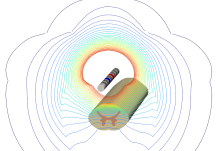
Spinal cord stimulation to treat chronic pain
- Sponsored by:
- Mathematics
Presented by Adrian Porras Laura, Graduate Student at the University of Michigan
Warner 105
Presented by Adrian Porras Laura, Graduate Student at the University of Michigan
Warner 105
Are you interested in registering for Mathematics and Statistics courses in Fall 2026 but don’t know which ones to take? Are you curious about the Math and Stats majors and minor options? Come chat with Mathematics and Statistics faculty over dessert to learn about the amazing courses we have on offer. discover how math and stats might fit into your Middlebury experience, or just to say hi! We’ll have plenty of cookies, ice-cream, fruit, and advice to share!
Warner 105

With Dr. Casey Schine, Postdoctoral Research Associate, Biology
McCardell Bicentennial Hall 220

Presented by Richard Single, University of Vermont
Warner 104
Women in Data Science (WiDS) Middlebury aims to celebrate the participation of women in data science and to feature outstanding women doing outstanding work in the field. Come listen to mini research talks by Middlebury professors, and be inspired by our keynote speaker Professor Kaitlyn Cook, a biostatistician from Smith College. All students, faculty, and staff are encouraged to attend! Lights snacks and refreshments will be provided.
Franklin Environmental Center, The Orchard-Hillcrest 103
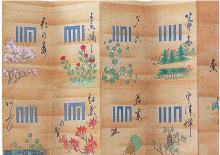
Bell numbers count the number of ways that n objects can be sorted into any number of buckets. They were studied and named after Scottish-American mathematician E.T. Bell who wrote about them in the 1930’s, but their study actually dates back much further. We will introduce the topic from scratch, investigate some of its interesting properties, learn more about the intriguing character E.T. Bell, and delve deeper into the history of Bell numbers and their connection to Russian dolls and to an ancient Japanese incense game!
Warner 101
Interested in taking a Math or Stats course in Fall 2025? Join the Math & Stats faculty over dessert to learn about course offerings for the upcoming semester, receive information about the different majors we offer, or celebrate taking your last Math or Stats course at Middlebury. Anyone who is currently taking or wants to take a course in the department is welcome!
Warner 105
Are you interested in taking some Mathematics or Statistics courses next semester? Are you currently taking a Math or Stats class? Do you have a sweet tooth?
Join the Math & Stats faculty over dessert and learn about their Spring 2025 course offerings! This is a great opportunity to get more information about the different majors and minor, receive advice on planning a course of study that aligns with your dream Middlebury experience, and chat with students currently enrolled in Math and Stats courses.
We hope to see you there!
Warner 101
Are you interested in taking some Mathematics or Statistics courses next semester? Are you currently taking a Math or Stats class? Do you have a sweet tooth?
Join the Math & Stats faculty over dessert and learn about their Spring 2025 course offerings! This is a great opportunity to get more information about the different majors and minor, receive advice on planning a course of study that aligns with your dream Middlebury experience, and chat with students currently enrolled in Math and Stats courses.
We hope to see you there!
Warner 100
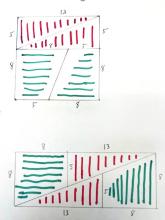
Along with geometry, number theory is one of the oldest and most revered areas of mathematics. Topics that are often studied in an elementary number theory course include triangular numbers, squares, and the Fibonacci sequence. Later topics include continued fractions and a class of equations called Pell’s equation.
Warner 105