13th President of Middlebury College

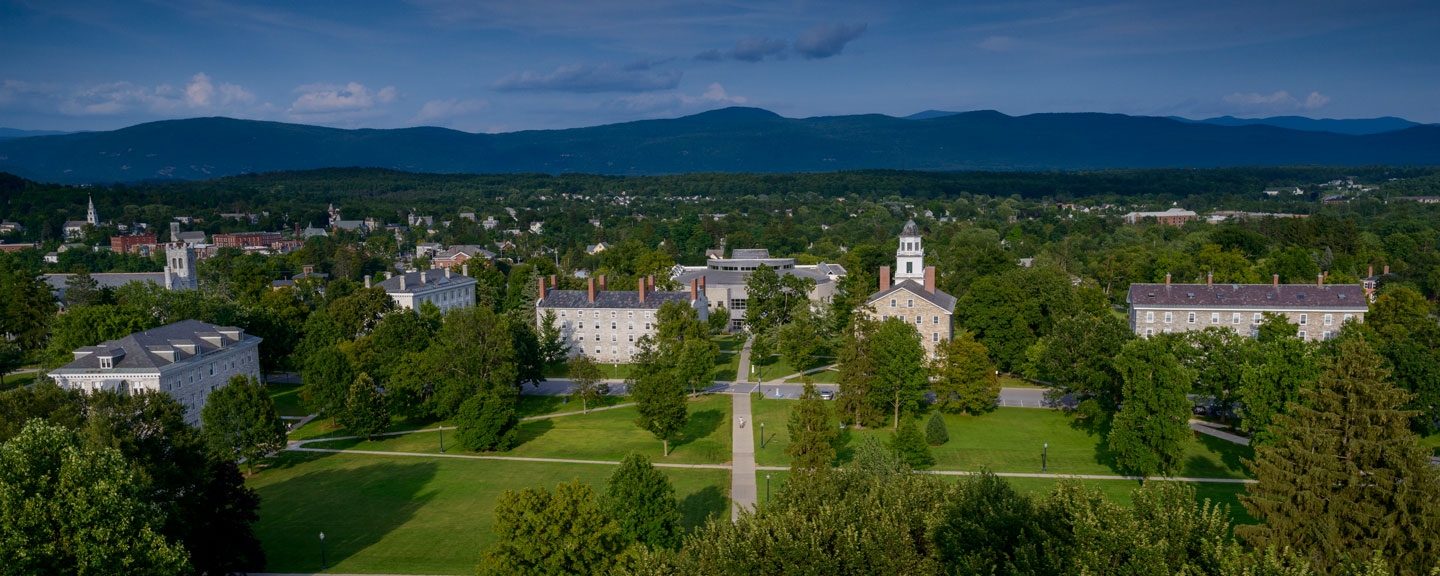
Olin C. Robison, 13th President of Middlebury College President Emeritus Olin C. Robison was president of Middlebury College for 15 years, from 1975 to 1990. During Robison's tenure, the College changed dramatically, physically and otherwise. When he left office in 1990, about 20 percent of the space on campus had been built during his tenure.

Building projects included the Center for the Arts; the Meredith Wing of Starr Library; the North Dormitory; the purchase and renovation of Twilight Hall; and two additions to the Field House, including a Fitness Center.

The full-scale computerization of the campus also took place during Olin Robison's years as president, with Voter Hall becoming the nexus of a newly digital institution. The number of faculty grew, and the number of staff grew even faster, particulary in the area of student support -- in the financial aid office, the counseling center, and the career counseling and placement office.

As significant as the changes in the physical plant during the Robison years were changes in the student body, brought about in part by Middlebury's decision to adopt a need-blind admissions policy, meeting the demonstrated financial need of all admitted students. In addition, the College increased its commitment to attracting a student body that was more diverse -- racially, geographically and economically. Middlebury's minority recruiting became noticeably more successful in the years after 1983, when the Twilight Committee, appointed by Robison, issued a report calling on the College to rededicate itself to recruiting and retaining minority students, faculty and staff.

During the Robison years, the College began to take on a more international feel, thanks in part to President Robison's interest in international affairs, specifically U.S.-Soviet relations. Financially, the College's endowment grew from $32 million in 1975 to $217 million in 1989. Faculty salaries improved dramatically, and the faculty/student ratio went from 1:15 to 1:12 (in 2004, it's about 1:11).

A graduate of Baylor and Oxford universities, Robison began his career in Washington and worked as a Peace Corps administrator and with the State Department. He subsequently held academic and administrative posts at Bowdoin and Wesleyan before coming to Middlebury. He advised both Democratic and Republican administrations on U.S.-Soviet relations, and has served on and chaired numerous commissions and task forces, including the United States Advisory Commission on Public Diplomacy.

In 1991, Robison was named president of the Salzburg Seminar, based in Salzburg, Austria, and in Middlebury, a leading forum for promoting global dialogue on issues of pressing international concern. He retired from that position in 2005.