

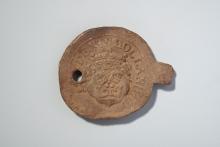
Wait, What?!? How My Global Textile Project Took a Surprisingly Local Turn
- Sponsored by:
- Dean of Faculty
Carol Rifelj Lecture Series
Franklin Environmental Center, The Orchard-Hillcrest 103
531 College Street
Middlebury, VT 05753
United States
Carol Rifelj Lecture Series
Franklin Environmental Center, The Orchard-Hillcrest 103
Carol Rifelj Lecture Series
Franklin Environmental Center, The Orchard-Hillcrest 103
Carol Rifelj Lecture Series
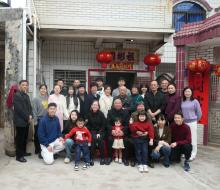
Ellen has been engaged in fieldwork in one village in China since 1993, visiting periodically and writing two monographs based on that fieldwork (one on morality and one on food). Having just come back from fieldwork again this past sabbatical year, in this lecture she would like to take the long view and ask how the transformations, continuities and emerging contradictions she has observed can provide us a more microscopic and longitudinal understanding than we often get based on journalistic accounts or urban-based research.
Franklin Environmental Center, The Orchard-Hillcrest 103
Carol Rifelj Lecture Series
Franklin Environmental Center, The Orchard-Hillcrest 103
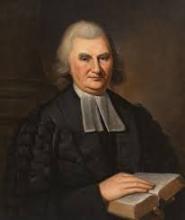
This lecture turns to the Ottoman province of Tunis, a terminus for trans-Saharan human trafficking in the late 18th and early 19th century, to center the lives of enslaved women forcibly conveyed to the province. It examines how the violence of slavery intersected with French economic intervention in the region as well as with emerging racial ideologies held by Tunisian and western African elites. This lecture critiques disembodied historical perspectives conventionally preserved in state archives, like those of the chief doctor to the Ottoman governor of Tunis.
Franklin Environmental Center, The Orchard-Hillcrest 103
Carol Rifelj Lecture Series
Franklin Environmental Center, The Orchard-Hillcrest 103
This talk consists of two parts. In the first, Ata offers an analysis of Morteza Motahhari’s theology. A prominent student of Ayatollah Khomeini, Motahhari is often regarded as the intellectual forefather of the religious ideology that the Islamic Republic adopted in the post-revolutionary period as it consolidated its monopoly over public space.
Franklin Environmental Center, The Orchard-Hillcrest 103

Carol Rifelj Lecture Series
Will will draw on research that he has done over the past half decade on the shorter and longer-term consequences of Russia’s painful exit from communism in the early 1990s. He will give particular attention to public opinion in the past several years, including through the fall of 2025, drawing on his own and others’ survey data to trace the influence of the War in Ukraine on Russians’ life satisfaction, their commitment to democratic values, and their attachment to their country.
Franklin Environmental Center, The Orchard-Hillcrest 103
The existence of supermassive black holes, with millions to billions of times the mass of the Sun, residing at the centers of galaxies throughout the universe is well supported by a substantial body of indirect and, more recently, direct imaging evidence. When mass is pulled into a black hole gravitationally, in a process called ‘accretion’, a tremendous amount of energy is released signaling this growth in the form of a ‘quasar’. This growth is stochastic and episodic with a variety of routes for triggering and quenching.
Franklin Environmental Center, The Orchard-Hillcrest 103

“Witness Marks: Anatomy of a Memory” is a multi-media installation, premiering at the Kent Museum, in Calais, VT, in September, in which I explore how we create, store, and access memory. While there have been theories of how the brain works for millennia, we only have accurate imagery of brain structures based on dissection spanning from the 1860s (drawings by scientists Deiters, Golgi, Bevan-Lewis, and Dejerine, to name a few), to Ramon y Cajal’s drawings of neurons (1899 – 1930s), all the way to the colorful and beautiful photo imagery of neuronal circuits generated by supercomputers.
Franklin Environmental Center, The Orchard-Hillcrest 103