Biology BIOL

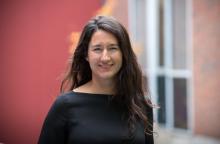
Woman with long dark hair, black shirt. Soft rose background with windows.

Biology Seminar Series - Melissa H. Pespeni, Ph.D., University of Vermont

Sponsored by:
Biology

Using genomics to reveal the mechanisms of resilience: Studies of global change adaptation and sea star wasting disease.

In this talk, I will discuss how we integrate genomic approaches with the ecology and evolution of interesting, ecologically foundational marine organisms to understand if and how they respond to stressors such as ocean warming, ocean acidification, and pathogens. We use field sampling, common garden studies, and experimental evolution to shed light on the mechanisms of resilience in a rapidly changing world. 

McCardell Bicentennial Hall 220

Open to the Public

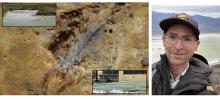
Biology Seminar Series - Dr. Jonathan Cummings, Fish and Wildlife: Applying Decision Science to Natural Resource Mgmt

Sponsored by:
Biology

This will be a wide-ranging talk exploring the insights and challenges of practicing applied science and utilizing decision theory to aid natural resource management. I’ll begin with an overview of my career, an explanation of structured decision making, and the flavors of applied science I practice. From there, based on audience interest, I will provide greater detail on some selected applications and case studies of interest.

McCardell Bicentennial Hall 220

Open to the Public

Biology Seminar Series - Dr Eric Moody, Middlebury College

Sponsored by:
Biology

Hold the Salt: Salinity Influences Structure and Function of Streams Across North America

Most inland waters are defined by their low salinity relative to the oceans. However, both geological and anthropogenic processes can lead to freshwater salinization. This talk will summarize work done by Eric Moody and his research students at Middlebury College using ecological stoichiometry as a framework to study the causes and consequences of freshwater salinization in streams and rivers across North America.

McCardell Bicentennial Hall 220

Open to the Public

Biology Seminar Series - On the (im)possibility of elephants

Sponsored by:
Biology

Biology Seminar, Saul Lecture - Dr. Vincent Lynch, University of Buffalo

Cancer, aging, Peto’s paradox

Evolutionary theory predicts that large animals, because they have more cells than smaller ones should have higher cancer prevalence than the small ones; similarly long-lived animals, which have a long time to acquire cancer causing mutations should have higher cancer prevalence than short lived ones but do not. In fact the cancer prevalence in mammals averages 50-10%. What mechanisms underlie this apparent disconnect between theory and observation?

McCardell Bicentennial Hall 220

Open to the Public

The quest for, and impossibility of, immortality. Dr Vincent Lynch, University of Buffalo

Sponsored by:
Biology

Biology Seminar, Saul Lecture: Dr. Vincent Lynch, University of Buffalo

The quest for, and impossibility of, immortality.

A public lecture, sponsored by George B Saul II lecture fund and the Biology Department.

Why do we get sick, old, and die?

Theoretically there is no reason organisms cannot live forever. However, except for maybe one animal, every thing that has ever lived, and will live, will get old, sick, and die.  But if immortality is possible, why hasn’t it evolved?

McCardell Bicentennial Hall 220

Open to the Public
Text file with same event info.

Biology Graduate School Panel

Sponsored by:
Biology

Join the Biology SAC to hear professors speak about their educational and career experiences. Feel free to come with your questions! 

McCardell Bicentennial Hall 317

woman in olive green top, reddish shoulder length hair and glasses.

Biology Seminar Series - Lisa Lundgren

Sponsored by:
Biology

 Level Up! Measuring Science Interest XP Gain at Comic Cons

A common requirement of granting agencies is showing that the work reaches wide audiences and has an impact upon them. However, showing that reach and impact can be difficult. In this seminar Dr. Lundgren will discuss her work with Cosplay for Science, where STEM professionals share their “nerdy” interests and expertise with people in the unconventional learning space of comic conventions.

McCardell Bicentennial Hall 220

Open to the Public