Biology BIOL

Susan on a boat retirement announcement

Retirement Party - DeSimone

Sponsored by:
Biology

Join the Biology department’s bon voyage celebration for Susan DeSimone, Assoc. Lab Professor. Susan has been with department for over 25 years and we will gather to wish her well as she embarks on new adventures.

McCardell Bicentennial Hall Tormondsen Great Hall

An invitation for the Museum of the Multiverse: Insects! event that will be held on Saturday Dec. 6th from 1-4PM in the Great Hall of McCardell Bicentennial Hall. The flyer depicts Ant-Man having opened up portals to different universes from Pokémon, Star Wars, Hollow Knight, Animal Crossing, the world of Eric Carle, and more!

Museum of the Multiverse: Insects!

Sponsored by:
Biology

Museum of the Multiverse: Insects! by Middlebury College Entomology Students

When: Dec 6, 2025 from 1:00 PM to 4:00 PM

Where: The Great Hall in McCardell Bicentennial Hall 

 276 Bicentennial Way Middlebury, VT 05753

 (Parking available in the lot on Bicentennial Way)

In a twist on the successful Pokémon-inspired Pop-Up Museums, get ready to learn about insects or insect-inspired creatures from across many universes like Star Wars, Animal Crossing, Hollow Knight, Alien, Dune, Avatar, and more!

McCardell Bicentennial Hall Tormondsen Great Hall

Open to the Public

TidyTuesday

Sponsored by:
Biology

TidyTuesday provides an opportunity to learn, practice, and explore coding and data analysis. Whatever your skill level, you are welcome here. This is a judgment free space to try things out, experiment, and play with data.

(Private)

A tranquil image of a forested brook with the caption "Another lovely day in the brook" with an inset image of a student holding a stonefly in a plastic spoon and the caption "UNTIL..."

Aquatic Ecology Student Project Presentations

Sponsored by:
Biology

Have you ever heard the story of the Middlebury River? What about Lake Dunmore? In this informal session, students from BIOL 304: Aquatic Ecology will be sharing the work they’ve done this semester to tell the stories of various aquatic ecosystems in Vermont based on concepts we’ve learned in class over the semester.

McCardell Bicentennial Hall Tormondsen Great Hall

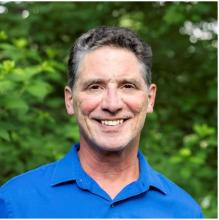
Man with short dark hair and beard. dark framed glasses.

Biology Seminar Series-David B. Needle, DVM DACVP, Clinical Associate Professor, Senior Veterinary Pathologist, Unive

Sponsored by:
Biology

Population Ecology and Diseases of Fishers in the Northeastern USA

Our work currently includes: (1) comparative microbial ecology focusing on the emergence of pathogens and antimicrobial resistance on farms – with plans to expand our focus; (2) emerging infectious disease discovery; and (3) wildlife disease ecology. 

McCardell Bicentennial Hall 220

Open to the Public
Woman with long dark hair, black shirt. Soft rose background with windows.

Biology Seminar Series - Melissa H. Pespeni, Ph.D., University of Vermont

Sponsored by:
Biology

Using genomics to reveal the mechanisms of resilience: Studies of global change adaptation and sea star wasting disease.

In this talk, I will discuss how we integrate genomic approaches with the ecology and evolution of interesting, ecologically foundational marine organisms to understand if and how they respond to stressors such as ocean warming, ocean acidification, and pathogens. We use field sampling, common garden studies, and experimental evolution to shed light on the mechanisms of resilience in a rapidly changing world. 

McCardell Bicentennial Hall 220

Open to the Public

Biology Seminar Series - Eric Moody MIDD

Sponsored by:
Biology

Specifics of the lecture will be added when available, please check back or check the Biology department events page.

McCardell Bicentennial Hall 220

Open to the Public

Biology Seminar Series - On the (im)possibility of elephants

Sponsored by:
Biology

Biology Seminar, Saul Lecture - Dr. Vincent Lynch, University of Buffalo

Cancer, aging, Peto’s paradox

Evolutionary theory predicts that large animals, because they have more cells than smaller ones should have higher cancer prevalence than the small ones; similarly long-lived animals, which have a long time to acquire cancer causing mutations should have higher cancer prevalence than short lived ones but do not. In fact the cancer prevalence in mammals averages 50-10%. What mechanisms underlie this apparent disconnect between theory and observation?

McCardell Bicentennial Hall 220

Open to the Public

The quest for, and impossibility of, immortality. Dr Vincent Lynch, University of Buffalo

Sponsored by:
Biology

Biology Seminar, Saul Lecture: Dr. Vincent Lynch, University of Buffalo

The quest for, and impossibility of, immortality.

A public lecture, sponsored by George B Saul II lecture fund and the Biology Department.

Why do we get sick, old, and die?

Theoretically there is no reason organisms cannot live forever. However, except for maybe one animal, every thing that has ever lived, and will live, will get old, sick, and die.  But if immortality is possible, why hasn’t it evolved?

McCardell Bicentennial Hall 220

Open to the Public
Text file with same event info.

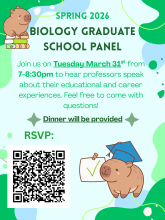
Biology Graduate School Panel

Sponsored by:
Biology

Join the Biology SAC to hear professors speak about their educational and career experiences. Feel free to come with your questions! 

McCardell Bicentennial Hall 317