Library LIBRARY

Behind the Scenes - Desperate measures: Visulalizing the effects of abortion clinic closures in Texas

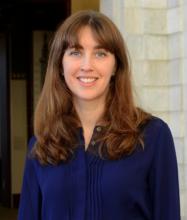
Join us on Wednesday, January 25th from 12:15-1:30 for our next Behind the scenes presentation. Caitlin will present new work visualizing the effects of Texas HB-2, a law that caused more than half of Texas’ abortion clinics to close their doors in late 2013. Working with Middlebury students Anna Cerf and Birgitta Cheng, Caitlin has tracked and visualized the closures of abortion clinics across Texas. She combines this information with data on health outcomes to estimate how decreasing access to abortion services has impacted women’s health.

Davis Family Library Center for Teaching, Learning and Research

Open to the Public

Alex Soojung-Kim Pang Lecture: Rest: Why Working Less Gets More Done

Some of history’s most creative and accomplished scientists, writers, and artists produced great works while spending far fewer hours “working” than we would expect. Other famous figures led governments, built commercial empires, won Nobel prizes, or developed medical breakthroughs while also having second lives as authors, explorers, and athletes. How did they do it? In this talk I argue that rest played an under-appreciated but critical role in making people more creative and successful.

Davis Family Library 105A

Open to the Public

Alex Soojung-Kim Pang Lecture: Contemplative Computing

Computers, smartphones, and the Internet all promised to make us smarter, more connected, and more productive; but all too often living with them leaves us feeling busier, more distracted, and more unfocused. Responses to this have ranged from negative (technologies are dehumanizing and antisocial) to positive (computers are rewiring our brains to read status updates rather than Steinbeck) to fatalistic (progress is unstoppable). In this talk, I present an alternative view. Humans have used technologies to extend our minds and augment our abilities for hundreds of millennia.

Wilson Hall, McCullough Student Center

Open to the Public

AIDS Memorial Quilt Display

A section of the AIDS Memorial Quilt will be on display from April 11 through April 29. The Quilt was nominated for a Nobel Peace Prize in 1989, and is today the largest community art project in the world. Today it consists of more than 48,000 panels with the names of more than 94,000 individuals who died of AIDS. The display will be open during the Davis Family Library regular open hours. Sponsored by: Center for Teaching, Learning and Research; American Studies Program; Davis Family Library; Scott Center for Spiritual and Religious Life; Gender, Sexuality and Feminist Studies

Davis Family Library

Open to the Public