Office of College Advancement COLLEGE ADVANCEMENT

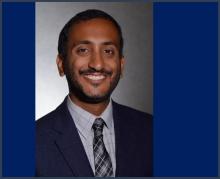
Faculty at Home Lecture Series: James Chase Sanchez - Salt of the Earth: The Rhetoric of White Supremacy

In this talk, James Chase Sanchez argues that contemporary rhetoric of white supremacy is built around structures of preservation. Using ethnographic and autoethnographic research in his hometown of Grand Saline, Texas, Sanchez pinpoints the ways communities preserve their white supremacy via tactics of identity formation, storytelling, and silencing.

Virtual Middlebury

Open to the Public

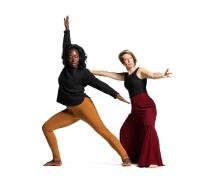
Faculty at Home Lecture Series: Liria Evangelista de Gonzalez - Teaching and the Pedagogy of Memory

After the last military dictatorship in Argentina ended in 1983, the long decades of post-dictatorship posed a challenge: how to transmit the memory of that period to younger generations. This talk will explore questions such as: Is there a pedagogy of memory? Is it possible to build a curriculum that addresses the difficult issue of traumatic memories? Are institutions willing or able to deal with this issue? Professor Evangelista will also address the complex ways in which Argentine schools and universities, along with human-rights organizations, have dealt with memory.

Virtual Middlebury

Open to the Public

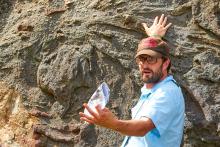
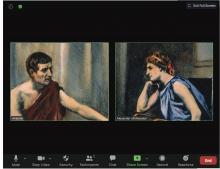
Faculty at Home Lecture Series: Scenes From “Aristotle & Alexander”: A New Play About an Ancient Classroom

Last March, theatre professor Dana Yeaton and actor-playwright Cole Merrell ’21 started writing a play together. Their inspiration was the legendary teacher-student relationship between Aristotle and Alexander the Great. Actor Ethan Bowen joined the weekly Zoom sessions to improvise the role of Aristotle, with Merrill playing the teenaged Alexander. Join Bowen and Merrill for a performance of excerpts directed by Assistant Professor of Theatre Michole Biancosino.

Virtual Middlebury

Open to the Public

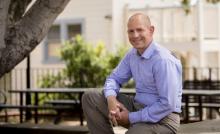
Faculty at Home Lecture Series: Antonia Losano

Ekphrastic poetry—poetry that describes a work of art, real or imagined—has been around since Homer described the complex decorations on the shield of Achilles in the Iliad, and countless poets since then have tried to translate visual artworks into words. How are we to understand this cross-media genre? Professor Antonia Losano will talk about a few notable examples of ekphrastic poets, including Keats, Browning, Auden, Sexton, Komunyakaa, and Trethewey. You’ll also look at the artworks they describe and explore the complex relationship of word and image.

Virtual Middlebury

Open to the Public

Faculty at Home Lecture Series: Emily Proctor - Algebra and Geometry: A Beautiful Relationship

Many of us first encountered algebra and geometry as two separate and very different areas of mathematics, but the two fields are intricately interconnected. Starting from the basics of Euclidean geometry and elementary algebra, award-winning teacher Emily Proctor highlights the relationship between these fields and shows how algebra is one of our strongest tools for understanding geometric objects and the world around us.

Virtual Middlebury

Open to the Public

Bostwick Family Squash Center Dedication

Sponsored by:
Office of Advancement
Join us for a reception and acknowledgements as Middlebury formally dedicates the “Bostwick Family Squash Center.”

Admission is free, however this event does require an advance RSVP by Friday, October 26, 2018. Please contact us at middevents@middlebury.edu if you would like to register to attend.

Bostwick Family Squash Center Courts

Open to the Public

Sleuthing from Home: How To Use Technology to Monitor Nuclear Weapons Programs Around the World Without Leaving Monterey

The James Martin Center for Nonproliferation Studies at the Institute uses technologies such as computer models and commercial satellite photographs to study nuclear weapons programs around the world. The results look like the work of an intelligence agency, but they are done entirely by faculty, staff and students using open information.

Virtual Middlebury

Free
Open to the Public

When Galaxies Collide

The galaxies we see in the universe today formed through a hierarchical process of smaller galaxies merging together, often multiple times, over billions of years. During these mergers, the supermassive black holes residing in the galaxies’ centers also merge. In 2015, the LIGO experiment detected, for the first time, gravitational waves from the mergers of small black holes – but what about the supermassive ones in the centers of merging galaxies? How will we detect those? And where should we look to find these events?

Virtual Middlebury

Free
Open to the Public