

Inside a New York Newsroom: A Middlebury Student’s J-Term at Documented
Within weeks of walking into a Manhattan newsroom in January, Ross Davis ’27 had reorganized two years of photography, begun drafting sections of an annual impact report, and produced a pair of films introducing journalists to their audience. Davis, a Film and Media Culture major, spent his J-Term internship at Documented, an independent nonprofit newsroom serving New York City’s immigrant communities. The outlet publishes reporting and resource guides in English, Spanish, Chinese, and Haitian Creole, with a mission rooted in community-driven journalism.
“Ross was a fantastic intern at Documented during this January session and made significant contributions in the time that he was with us,” said Rebecca Neuwirth, the organization’s chief strategy officer.
Founded in 2018, Documented reports with and for immigrant New Yorkers. “We believe that trusted news and information is a critical piece of democratic infrastructure,” Neuwirth said. “At this moment in time, with immigrants under fire, this work is especially important.”
Davis’s work began behind the scenes. As Documented has grown, so has its archive of original photography, visual reporting that documents the lived realities of the communities it covers. The system for organizing that archive had lagged. He helped design and implement a new categorization structure, reviewing and archiving two years of photography while improving the system itself. Neuwirth described the project as “a critical job long overdue as we grow our team, production and strength of our work,” particularly given “the increasing importance of visual imagery in journalism.”
He also examined how Documented’s journalism translated into measurable outcomes in 2025, tracking policy and practice shifts, pickup across the media ecosystem, and direct impacts on individuals and communities. The research fed into a draft section of the organization’s Annual Report, where Davis also identified photography that will be featured. For an intern, the scope was significant. For Davis, it was personal.
“I saw Documented as an opportunity to use the creative skills I honed at Middlebury to give back to my own community,” he said. “Having grown up in an immigrant family in New York City, I thought it would be fulfilling if my work could contribute to the benefit of my own neighbors.”
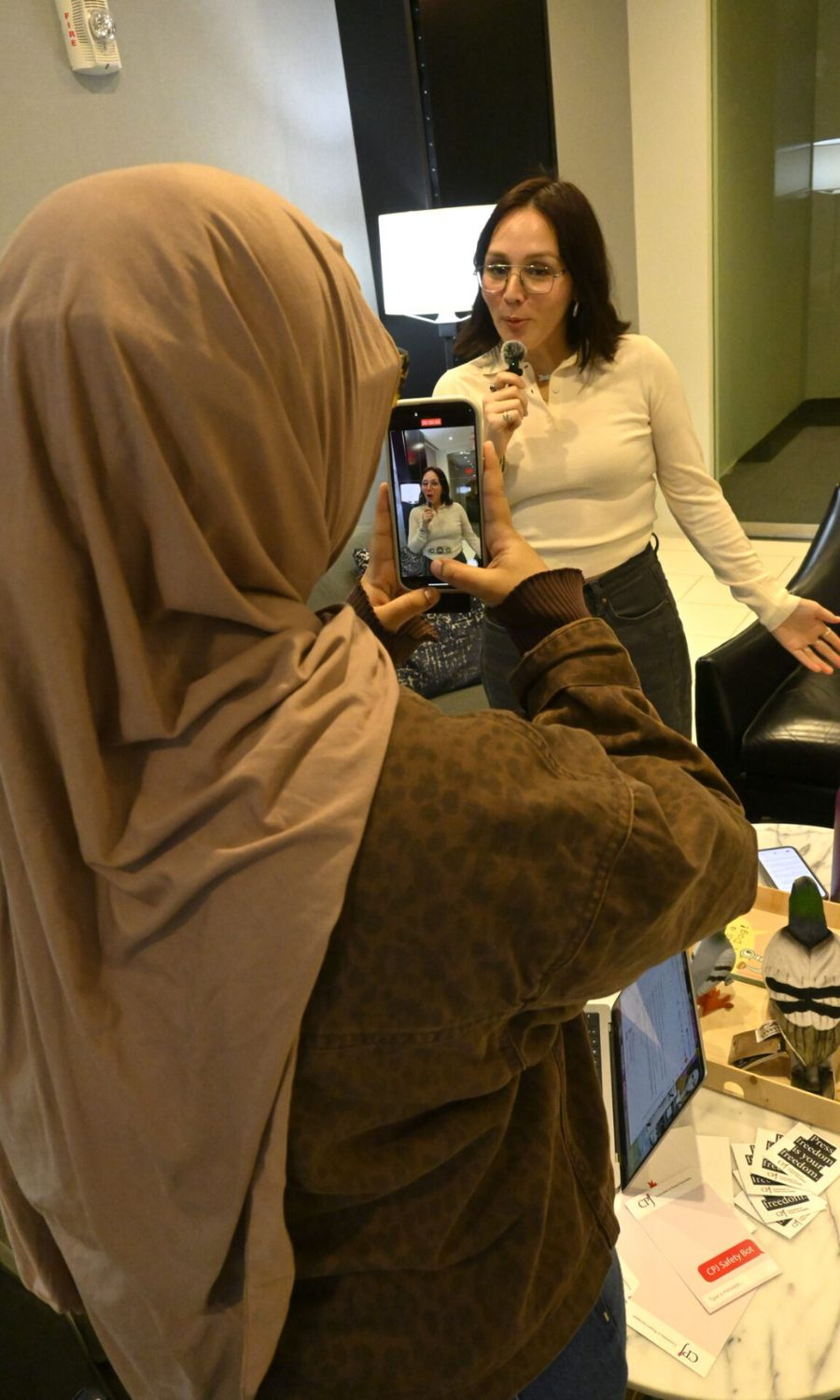
If the archival and impact work focused on infrastructure, Davis’s video projects focused on visibility. Over the course of the month, he filmed and edited a series of videos introducing Documented’s journalists, short pieces designed to show not just what they report on, but who they are. The final products included two edited compilations, one humorous and one more reflective.
“In a media ecosystem increasingly dominated by influencers, being able to introduce our journalists in this very humanizing way becomes so much more important,” Neuwirth said. “Trying to combine the rigor of journalism with a more personality-driven focus on the journalists is especially worthwhile and very much on the cutting edge of building trusted infrastructure that really works for people today.”
For Davis, the tone of those videos was shaped in weekly editorial meetings.
“Every Tuesday at 11 they would share the work they’d accomplished the week prior and outline the road ahead,” he said. “Everyone was so proud of the work they were accomplishing, especially the impact their work had on the readers’ lives, and so determined to continue working ahead despite all the adversity in the news.”
This was Documented’s first year hosting J-Term interns from Middlebury. In addition to Davis, another student, Jeffrey Lewis ’27, worked with the newsroom during the same period.
“Both were outstanding interns.” Neuwirth said. “We were able to build projects that capitalized on their interests and talents and also supported our work in meaningful ways, and their learning and ours.”
The model, short-term, skills-based placements embedded within mission-driven organizations, mirrors many summer opportunities students are now pursuing. J-Term internships concluded recently, and attention on campus is already shifting to summer plans. For students considering media, nonprofit, or impact-driven work, placements like this offer a blueprint: small teams, real deliverables, and measurable stakes.
For Davis, the month altered how he thinks about his future in film and media.
My time with Documented made me really consider the impact of the work I create, and how I should measure my goal of success. Going forward, I want my next internship experiences to not just let me continue to improve my skills but let me use my skills in a way that would bring tangible meaning.
He hasn’t ruled out a return. “I would really like to work with Documented again at some point,” he said. “They were all a joy to work with and be around.”