

Teaching English and Building Community in Costa Rica During Winter Term
For nearly three decades, Middlebury students have spent January term in a small Costa Rican town teaching English as a Second Language (ESL) and becoming part of a community-centered tradition that continues to shape both learners and teachers.
This past Winter Term, Middlebury students traveled to Nosara, Costa Rica, stepping into classrooms and into a program with a 28-year legacy.
Through a Center for Careers and Internships (CCI)-funded internship, Amelia Castillo Recio ’27, Adonai Haile ’27, and Violet Gordon ’26.5 spent four weeks teaching ESL at Biblioteca David Kitson, a nonprofit library and community hub serving the region.
The story of the program begins decades before the current cohort arrived. Biblioteca David Kitson was founded in 1995 by Beverly and David Kitson, who were drawn to Nosara in the 1970’s through Peace Corps connections. As development increased in the area, they saw a growing need for educational resources and created a library to serve the local community.
Not long after, the connection to Middlebury took shape. Middlebury math professor Bruce Peterson, who has ties to Nosara, partnered with the Kitsons to bring students to the library during Winter Term. The first group arrived in 1998, launching what has become a long-running tradition. Today, Middlebury continues to send interns each January, a model that has remained consistent even as the program has evolved. Over nearly three decades, more than 100 Middlebury students have participated.
Miguel Fernández, professor of Luso-Hispanic Studies, now oversees the program. He first became involved by helping assess students’ language readiness before eventually taking on leadership of the internship after Peterson retired.

Nosara is a remote town of about 5,000 residents, located a few miles inland from Costa Rica’s Pacific Coast. While the beach nearby has become a destination for international visitors drawn to surfing and yoga, the town itself remains home to a largely local population.
At its center, Biblioteca David Kitson serves as far more than a library. In addition to housing over 17,000 books in three languages, it offers reading support, math tutoring, community programming, and a gathering space for residents of all ages. Each January, its intensive English-language program, known locally as “the Middlebury program”, becomes a focal point for the community. “The Middlebury program is the only program that runs in January in Nosara,” Fernández said. “People get excited to see the interns arrive each year.”
Library staff also emphasize that the program has become a defining part of their work, helping sustain a long-running tradition of learning, connection, and opportunity in the community.
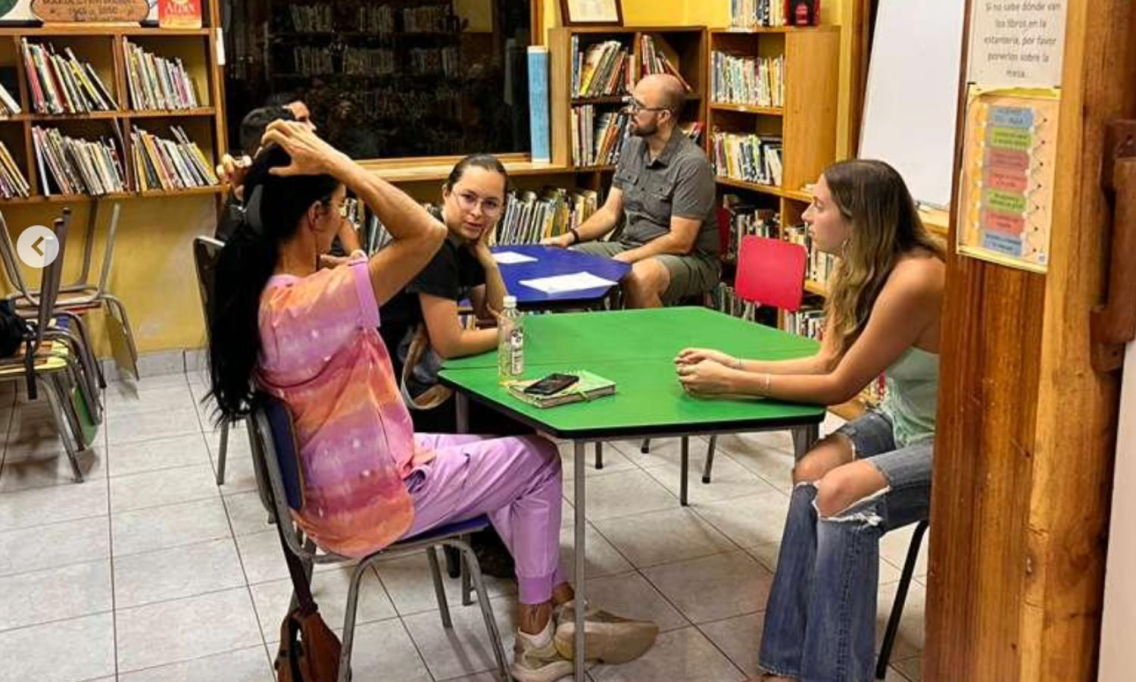
After several days of training in classroom management and lesson planning, students quickly take on full teaching responsibilities. They lead morning classes for children and evening classes for adults, working Monday through Thursday, with weekends to explore the region.
For many, the pace is demanding. Students often spend their afternoon breaks preparing lessons, sometimes at the beach, gaining firsthand experience in the work required to teach effectively.
“Students come away with a real appreciation for how much preparation teaching takes.” Fernández said.
The impact is especially visible in adult classes, where learners often return year after year. Since 1998, more than 1,600 local residents have taken English classes through the January program taught by Middlebury students, creating a sustained pathway for language learning in the community.
“Some of the advanced students wouldn’t be there without the Middlebury interns,” Fernández said.
For Amelia Castillo Recio ’27, a history major considering a career in education, the experience was both challenging and affirming.
“Becoming a teacher has been a long-held goal of mine,” she said. “But in the first week, I often felt unsure of myself.”
Over time, that uncertainty gave way to a deeper understanding of the role.
“As I built relationships with my students, the classroom becomes less about perfection and more about connection and mutual learning,” she said.
A chance encounter at the end of her trip reinforced the program’s long-term impact. On her way to the airport, she met a woman who had taken English classes at the library many years prior, and still remembered her teacher’s name. “That moment helped me understand how lasting this work can be,” she said.
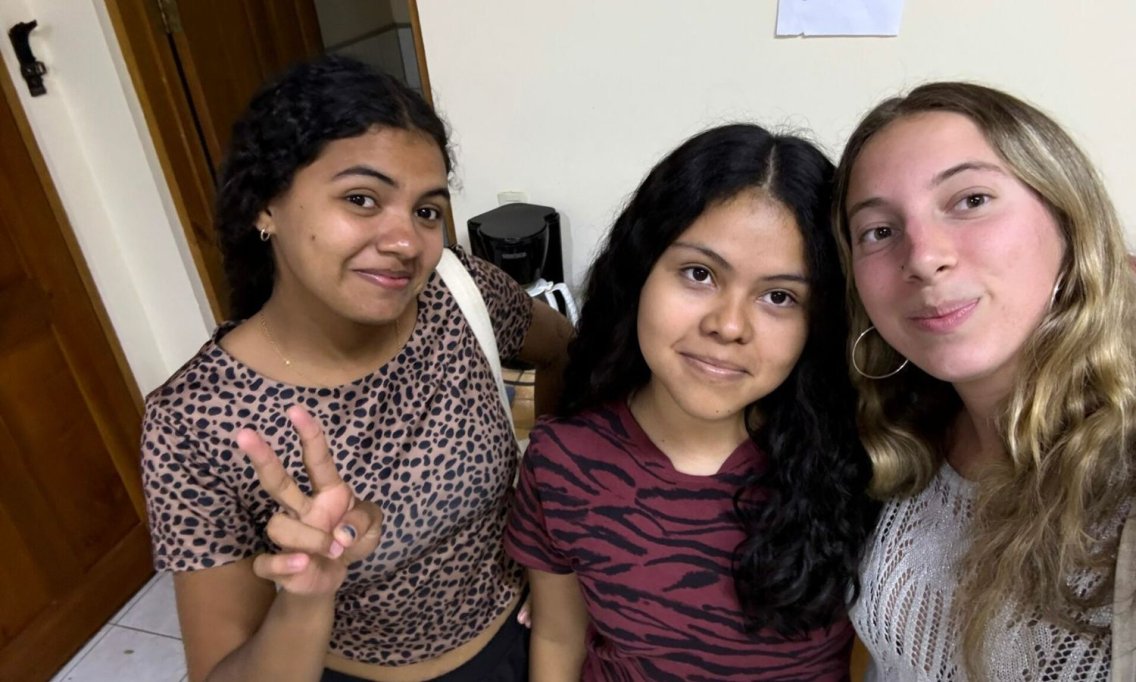
For Violet Gordon ’26.5, a religion major, the experience prompted reflection on the broader context of language learning in a community shaped by tourism. Nosara presents a striking contrast: a local town inland and, just a few miles away, a coastal area with luxury homes and international visitors. Fernández prepares students for this reality before they arrive, encouraging them to think critically about their role in the community.
The question isn’t just about teaching, it’s about how you show up, whether you’re genuinely interested in people’s lives and stories.
Through her time at the library, she came to see it as a vital community space, one that offers connection, learning, and support beyond the classroom.
During their stay, interns live in modest hostel accommodations in town, within walking distance of the library and other amenities. The experience can be eye-opening. Students may find themselves moving between two very different environments, from conversations with local families to invitations into expat spaces near the beach.
Fernández recalls one student who was invited to dinner by an adult learner. “She went into their home, which had a dirt floor, and they served her this generous meal,” he said. “It changed how she saw the world.”
While the internship offers meaningful rewards, it also requires a particular mindset. Fernández emphasizes that students who succeed in the program tend to be adaptable, self-motivated, and resilient problem solvers.
“It’s not for everyone,” he said, noting that a small number of students over the years have withdrawn due to the challenges of the experience. Those who complete the program, however, leave with substantial teaching experience and a deeper understanding of cross-cultural engagement.
The internship runs the full January term, with students receiving course credit through Middlebury’s Winter Term Internship program. To support participation in this unpaid experience, CCI provides a $1,500 stipend from its internship funding program to help cover travel and housing costs, and to offset daily expenses.
For many students, the experience becomes a defining part of their time at Middlebury, one that extends learning far beyond their campus classrooms. And in Nosara, the impact continues to build year after year, as each new group of students contributes to a program that has become woven into the life of the community.