Geology GEOL

Robert Pappalardo, Europa Mission Project Lecture

Jupiter’s moon Europa may be a habitable world. Galileo spacecraft data suggest that an ocean lurks beneath its frozen ice surface. A paucity of large craters argues for a young surface and recent geological activity, and magnetic measurements imply that a salty ocean persists today. Europa’s ocean and surface are inherently linked. This presentation will summarize both our state of knowledge about Europa and the science potential of NASA’s mission to explore Europa and investigate its habitability.

McCardell Bicentennial Hall 104

Closed to the Public

Latest Findings From the Mars Curiosity Mission

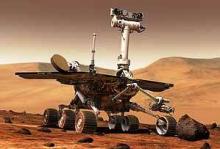
The Mars Curiosity rover is still going strong after 3.5 years on Mars and has recently reached exposures of sedimentary rocks that are yielding dramatic new insights into Martian history! Please join us to welcome Chief Project Scientist John Grotzinger (Caltech/JPL) who will give an update on the latest findings and answer questions from the audience.

McCardell Bicentennial Hall 216

Free
Open to the Public

A new era of earth science with LiDAR

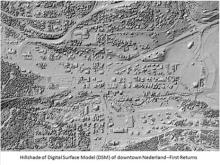
Airborne LiDAR (Light Detection and Ranging) is a technique that measures surface elevation using an aircraft-mounted laser. The result is an extremely detailed rendering of Earth’s surface, with a typical resolution of about 1 m. As Vermont moves quickly towards statewide coverage, LiDAr is enabling countless new applications in fields such as hydrology, soils and agriculture, ecology, forestry, and land use management.

McCardell Bicentennial Hall 417

Free
Open to the Public