History of Arts and Architecture HARC

Experiments in Teaching Across Disciplines at Harvard Art Museums

Jessica Levin Martinez, director of the Division of Academic and Public Programs at the Harvard Art Museums, discusses new spaces and strategies for teaching and learning at the museums, which reopened in the fall of 2014 after a major renovation and expansion. She also addresses public programs that encourage collaboration with campus and community partners. Sponsored by the Middlebury College Museum of Art, Museum Studies Enrichment Fund, Education Studies, and the Art History program. Free

Mahaney Arts Center 125

Open to the Public
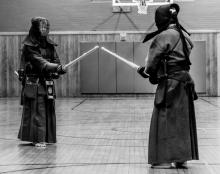
Kendo: The Way of the Sword

Kendo, “The Way of the Sword,” is the art of Japanese fencing. Kendo is one of the oldest and most celebrated of the Japanese martial arts and is held in high regard in Japan as an important cultural legacy. Kendo has transcended its bloody origins in Japan’s feudal past to become a modern martial discipline that instills courtesy, humility, self-control, and fighting spirit through mentally intense and physically rigorous training. This demonstration is conducted by members of Boston Kendo Kyokai and Boston Shufukai. Sponsored by the Department of History of Art and Architecture. Free

Mahaney Arts Center Dance Theatre

Open to the Public

The Revolutions Are Being Televised: Curating Islamic Art in the 21st Century

News channels broadcast chaotic scenes from Cairo, Damascus, and Kabul to millions of people, increasing awareness of Islamic sites and cultures in North Africa, Central Asia, and the Middle East while simultaneously contributing to erroneous public assumptions about a monolithic Islam hostile to art. Islamic art historian and museum curator Leslee Michelsen discusses the changing role that contemporary museums play in curating and interpreting Islamic art amidst the socio-political realities of the 21st century.

Mahaney Arts Center 125

Open to the Public

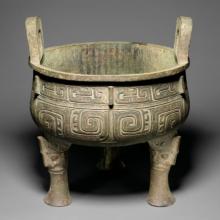
The Casting of a Bronze Vessel and Writing in Ancient China

Edward Shaughnessy, distinguished professor in early Chinese studies at the University of Chicago, discusses the casting and inscription of a Western Zhou dynasty bronze vessel called the Shi Wang Ding, acquired by the Chicago Institute of Art in 2005. This lecture considers both the dating of the vessel and the significance of the casting technique for the presentation of writing in ancient China.

Mahaney Arts Center 125

Open to the Public
Subjects/Objects of Production, Consumption, and Desire: The Japanese Manga Comics Tale of Genji

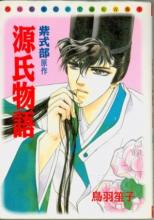
For more than a thousand years, the Tale of Genji has captured the imagination of writers and artists. In 1970 Genji appeared in one of its newest iterations—Japanese manga comics. Lynn Miyake, Professor of Japanese at Pomona College, offers an illustrated lecture on the range of manga interpretations and the ancient tale’s interpretive richness. Sponsored by the Middlebury College Museum of Art, Department of Japanese Studies, East Asian Studies Program, Department of History of Art and Architecture, Gender, Sexuality, and Feminist Studies Program, and the Christian A.

Mahaney Arts Center 125

Open to the Public
Culture at Hand: The Anthropology of Creativity and the Making of a Divine Craftsman in India

Professor Kirin Narayan of the School of Culture, History, and Language at Australian National University will give a public lecture on Vishwakarma, a Hindu deity traditionally associated with the creative processes of making the material world. Elaborated through very different iconographies, genealogies, and rituals in different regions of India, his worship was once confined to craftsmen who view him as a primordial ancestor, honor him through tools, and pray to him for inspiration and success.

Mahaney Arts Center 125

Open to the Public
Grieving through Stone and Clay: Affect in Chinese Funerary Art of the Middle Period

Jeehee Hong, Associate Professor of East Asian Art History at McGill University and current Fellow at the Clark Art Institute, examines representations of grief in Chinese middle-period (9th-14th centuries) funerary contexts. Hong shows that fictional or localized mourners were “inserted” into monuments to transmit corporeal and raw emotions. Sponsored by the Department of History, Department of History of Art and Architecture, Middlebury College Museum of Art, and the Program in East Asian Studies.  Free

Mahaney Arts Center 125

Open to the Public
Illustrated Lecture: Materiality and Subjectivity in the Woodblock Prints of Die Brücke

Daniel Hackbarth, visiting assistant professor of art and art history at Colgate University, gives an illustrated lecture on the woodblock prints of the German Expressionist artist group Die Brücke (1905–1913), focusing on the direct encounter between metal tools, viscous ink, and fibrous wood these images recorded, and highlighting an ongoing construction of the self through an intentionally laborious artistic process. Sponsored by the Middlebury College Museum of Art. Free

Mahaney Arts Center 125

Free
Open to the Public

Gauguin in Polynesia: The Final Years

Lecture by Elizabeth Childs, Etta and Mark Steinberg Professor of Art History, Washington University in St. Louis. French avant-garde artist Paul Gauguin is perhaps best known for the art he produced in Tahiti during his first trip there in 1891. This lecture examines a later period of Gauguin’s life and art, including his increasing engagement with modern Polynesian culture, his fascination with global religions, his artistic texts, and his relocation to the Marquesas Islands in 1901. Sponsored by the Art History Program and the Johnson Enrichment Fund. Free

Mahaney Arts Center, Olin C. Robison Concert Hall

Open to the Public

The Insensitive Chaos of Objects: Pier Paolo Pasolini, Arte Povera, and Paleo-aesthetics

Lecture by Ara Merjian, associate professor of Italian and art history, NYU. By using humble materials, Arte Povera artists tacitly protested the corporate, technological design which had come to distinguish Italy by the late 1960s—the most conspicuous upshot of the so-called “economic miracle” of 1958–63, which had transformed the nation from a chiefly agrarian backwater into a major industrial power. Sponsored by the Department of History of Art and Architecture and the Johnson Enrichment Fund. Free

Mahaney Arts Center 125

Open to the Public