Mathematics MATH

Department of Mathematics and Statistics Fall Colloquium Series: Sabina Haque '18

Sponsored by:
Mathematics
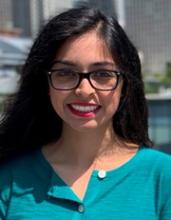
Join us for a talk by Sabina Haque, PhD Candidate at Harvard University, and Middlebury Class of 2018. Sabina’s talk is titled “A graph-theoretic approach to Markov processes with applications in biochemical reaction networks.” Talk description: The linear framework models biochemical reaction networks under timescale separation using finite directed graphs with labeled edges. Recently, the linear framework has provided a deterministic approach to understanding the thermodynamic properties of biological information processing systems.

Warner 101
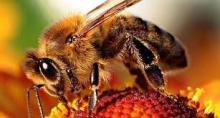
Close-up photograph of a honeybee

Dynamic and adaptive information accumulation and exchange during foraging

Sponsored by:
Mathematics
To effectively forage in natural environments, organisms must learn and adapt to changes in the availability of resources. Patch exploitation is a canonical foraging behavior, and the way in which animals account for environmental change and uncertainty should be captured more accurately by mathematical models. We first address this issue in a model describing agents that statistically and sequentially infer patch resource quality using Bayesian updating, based on their resource encounter history.

Warner 100

Open to the Public

Women in Data Science Conference

Sponsored by:
Mathematics
Please join us for a Women in Data Science conference where speakers from both within and outside Middlebury discuss their experiences and engagement with the field of data science. This event will include presentations by academic and industry professionals, as well as a faculty panel featuring Professor Myers (Economics department) and Professor Abe (Japanese department). Snacks will be provided!

Axinn Center 229

Closed to the Public

The Mathematical Career of the Opera Singer Jerome Hines

Sponsored by:
Mathematics
Presentation by T. Christine Stevens Professor Emerita, Saint Louis University, Associate Executive Director of American Mathematical Society Operatic bass Jerome Hines, who died in 2003, sang at the New York Metropolitan Opera for over forty years. He was also a math major who retained a lifelong interest in mathematics. In the 1950’s he published several papers based on work that he had done as a student. Our speaker will focus on the first of these papers, which describes a new method for finding the solutions of an equation.

(Private)

Open to the Public

The Bernoulli Family and Some of their Mathematical Creations

Sponsored by:
Mathematics
Professor Peter Schumer will present a mathematics seminar talk on “The Bernoulli Family and Some of their Mathematical Creations.” The Swiss Bernoulli family included at least eight prominent mathematicians and scientists. He will discuss a bit of their family history - especially brothers Jakob (1654 - 1705) and Johann (1667 - 1748) and Johann’s son Daniel (1700 - 1782). He will then give a brief overview of some of their interesting mathematics such as the brachistochrone problem (curve of quickest descent) and the gambling problem known as the St. Petersburg Paradox.

(Private)

Free
Open to the Public

Senior Mathematics Thesis Presentations II

Sponsored by:
Mathematics
Senior mathematics majors will speak about their theses: 3:00 pm: Kate Stewart: “Modeling Vermont’s Heroin Epidemic” 3:30 pm: Jillian Green: “A Technology Based Rumor Spreading Model for College Campuses” 4:00 pm; Jordan DuBeau: “Inaccessible Cardinals: How Big Can Infinity Be?”

(Private)

Open to the Public

Mathematics Senior Thesis Presentations I

Sponsored by:
Mathematics
Senior mathematics majors will speak on the topics of their theses. 3;00 pm: Calvin Kim “The Four Color Theorem” 3:30 pm: Eliot Van Valkenberg “Nonperiodic Tilings of the Plane” 4:00 pm: Tiffany Hau “The AKS Primality Test” There will be a second round of presentations on Thursday, May 12

(Private)

Open to the Public

Mathematics Seminar: Using Mathematical Modeling To Understand Diverse Behaviors

Sponsored by:
Mathematics
Lecture by Kathryn Montovan of Bennington College . Mathematical modeling, simulation, and analysis are valuable tools for answering biological questions about evolution, self-organization, and complex ecosystem interactions. For each biological question the appropriate mathematical tools must be carefully employed in order to produce meaningful results. This talk will present several recent projects to illustrate the process of taking a biological problem and making it into a mathematical one, the mathematics used to answer the question, and the biological meaning of the results.

(Private)

Open to the Public

Mathematics Seminar: Connecting Forensics and Linear Algebra

Sponsored by:
Mathematics
Lecture by Donna Beers of Simmons College Just as you can alter pictures to make yourself look more attractive, so, too, politicians, advertisers, and others with particular agendas are using digital imaging tools to manipulate photos to create false impressions. Determining whether a photo has been doctored is just one of the many questions that photo forensics tries to answer. The good news is that linear algebra offers powerful tools for carrying out digital photo forensics.

(Private)

Open to the Public