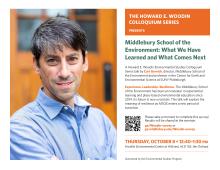
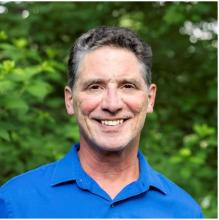
“Middlebury School of the Environment: What We Have Learned and What Comes Next” a Howard E. Woodin Environmental Studies Colloquium Series talk by Curt Gervich, Director, Middlebury School of the Environment and Professor in the Center for Earth and Environmental Science at SUNY Plattsburgh.
Franklin Environmental Center, The Orchard-Hillcrest 103
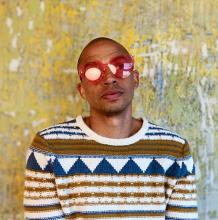
“The Narratives of Nature” a Howard E. Woodin Environmental Studies Colloquium Series talk by Bira Vanara, a Mixed Media Artist.
For our entire known history, humans as a species have told stories about how we and nature came to be, and why things happen as they do. This discourse will explore how story still determines the way we perceive our relationship to the natural world through the narrative lens.
Franklin Environmental Center, The Orchard-Hillcrest 103
This is a talk on “human-forest mutualisms” exemplified by small-scale, forest conservation efforts in Mexico’s Yucatán. These efforts link conservation of globally-important forest ecosystems with production of natural, non-timber, forest products (vanilla and honey) that can help support local communities involved in conservation.
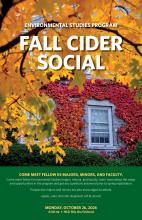
Come meet fellow Environmental Studies majors, minors, and faculty. Learn more about the major and opportunities in the program and get any questions answered prior to spring registration.
Prospective majors and minors are also encouraged to attend.
Apples, cider, and cider doughnuts will be served.
Franklin Environmental Center, The Orchard-Hillcrest 103
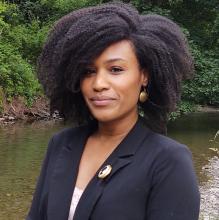
“Desertification Archives: Global Black Ecologies and Anticipating Terror” a Howard E. Woodin Environmental Studies Colloquium Series talk by Brittany Meché, Assistant Professor of Environmental Studies, Affiliated Faculty in Science and Technology Studies and Africana Studies, Williams College.
Franklin Environmental Center, The Orchard-Hillcrest 103
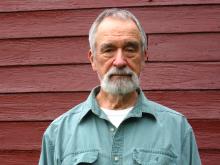
“Which Side Are You On?” a Howard E. Woodin Environmental Studies Colloquium Series talk by Garret Keizer, Writer.
The issue of environmental justice assayed from a viewpoint both leftishly biased and locally based. Questions raised: Why has “environmentalist” become a dirty word? What are the limits of environmentalism under capitalism? For whom will you be working ten years from now? Will you be working at all?
Franklin Environmental Center, The Orchard-Hillcrest 103
“Environmental Studies Affiliate Conversations: Excellence, Purpose, and Joy - Environmental Perspectives” a Howard E. Woodin Environmental Studies Colloquium Series panel discussion featuring:
David Allen, Associate Professor of Biology Michael Sheridan, Professor of Anthropology Spring Ulmer, Assistant Professor of English
Franklin Environmental Center, The Orchard-Hillcrest 103
All are welcome to attend poster presentations as the culmination of the 2026 Limno-STOICH Database Conference supported by midd.data and the National Science Foundation. Aquatic ecologists from a range of institutions and Middlebury College students enrolled in BIOL 304 Aquatic Ecology will present on database-driven research they have done related to the field of ecological stoichiometry in aquatic ecosystems. Light refreshments will be provided.
ENVS 0401 A Community Engaged Environmental Studies Practicum Presentations: Desalt, Detox
In this Howard E. Woodin Environmental Studies Colloquium Series talk students in ENVS 0401 A will present their work from their semester long projects.
Franklin Environmental Center, The Orchard-Hillcrest 103
In this Howard E. Woodin Environmental Studies Colloquium Series talk students in ENVS 0401 B will present their work from their semester long projects.
Franklin Environmental Center, The Orchard-Hillcrest 103
Students in STAT 0261: History of Statistics will portray historical statisticians. Each of the statisticians will open with a brief introduction, followed by an opportunity for attendees to wander and ask all of the burning questions they may want to ask these historical statisticians (don’t worry if you don’t have any, sample questions will be provided).