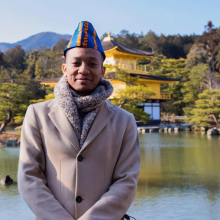
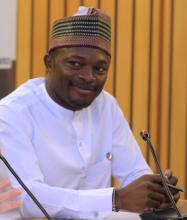
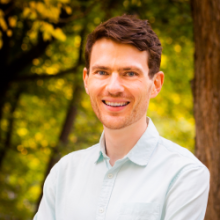
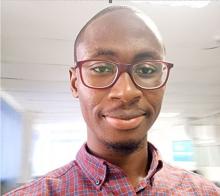
Tabi Joda is an internationally influential figure in the ecological, sustainable development, and resilient agriculture movement. He is the Ambassador of the Great Green Wall Initiative of the African Union, UN Consultant, and coordinator for One Billion Trees for Africa—a movement promoting tree planting to combat the Sahara Desert and building sustainable micro-agriculture systems across the Sahel. While his work is in the realm of ecology, his work rests first on the local human ecosystems that must be strong and healthy for sustainable local projects to succeed.
Come hear how village residents, local officials, and urban investors draw on customary norms, family networks, and bureaucratic documents in order to conduct land sales and to produce vast areas of commercial forestry in Tanzania.
Toyib Aremu is a Ph.D. candidate at the University of Vermont’s program in sustainable development policy, economics and governance. His dissertation focuses on the use of scientific evidence to support the agricultural development policy-making process in Nigeria. He has experience in analyzing nationally representative household surveys, supporting multi-stakeholder processes and researching the welfare impact of smallholder farmer access to advisory services.
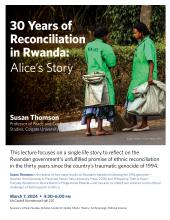
In this lecture, Susan Thomson, focuses on a single life story to reflect on the Rwandan government’s unfulfilled promise of ethnic reconciliation in the thirty years since the country’s traumatic genocide of 1994.
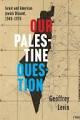
Geoffrey Levin (Emory University) will discuss his new book, Our Palestine Question: Israel and American Jewish Dissent, 1948-1978 (Yale 2023), a new history of the American Jewish relationship with Israel, which focuses on its most urgent and sensitive issue: the question of Palestinian rights.
In this lecture, Dr. Sa’ed Atshan will provide an overview of the hostilities between the Israeli military and Hamas, reflecting on the past, present, and future of this crisis. The talk will also address the impact on Palestinian and Israeli civilians, the provision of international humanitarian aid, the role of the United States, and prospects for reconciliation.
Over the past two decades, China has increased its investment across the African continent, leading to economic development. As much of this economic development is located, where fragile ecosystems intersect with weak governance, the resultant environmental costs can be high. Mustapha Manneh, West Africa Regional Editor of the China Dialogue Trust, will speak about the social, financial, and environmental impact that Chinese fishing investments are having in The Gambia.
“World Cup Soccer and the Global South: From South Africa 2010 to Brazil 2014” a presentation by Peter Alegi, professor of history at Michigan State University. He is the author of African Soccerscapes: How a Continent Changed the World’s Game (2010) and co-editor with Chris Bolsmann of Africa’ World Cup: Critical Reflection on Play, Patriotism, Spectatorship, and Space (University of Michigan Press, 2013).