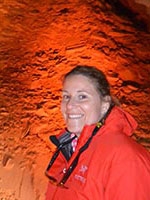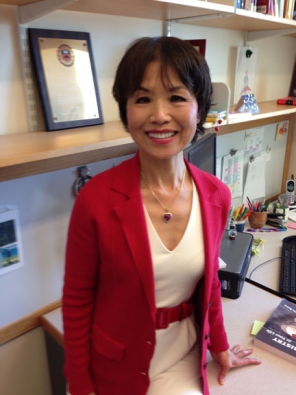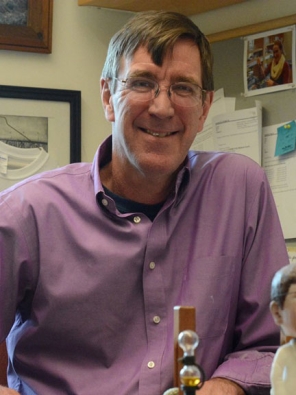
Sunhee Choi
John G. McCullough Professor of Chemistry
Email: choi@middlebury.edu
Phone: work802.443.5716
Office Hours: Spring 2013: Mon, Tues. and Thurs: 10:00 to 12:15PM, and by appointment
Download Contact Information
Professor Sunhee Choi joined the chemistry faculty at Middlebury College in 1987. She earned her B.S. in Chemistry at Seoul National University and Ph.D. in Physical Chemistry at Princeton University. Prior to her arrival at Middlebury, she worked at Colgate-Palmolive Company as a research chemist. For chemistry and biochemistry majors, she teaches general chemistry, physical chemistry, and instrumentation analysis and physical-inorganic laboratory courses. She has taught several nonmajors courses entitled "Food chemistry", "Biographies of the Imaginative", "Art and Chemistry", "Color in Science and Culture", and "Many Faces of Science".
Professor Choi maintains an active externally-funded (Research Corp, ACS/PRF, NIH/AREA, and NSF/RUI; total ~$839,000 ) research program involving undergraduates in the area of the mechanism of platinum (PtIV) and ruthenium (RuIII) anticancer drugs. Professor Choi and her students discovered that PtIV complexes bind and oxidize DNA. Their findings have been published in peer reviewed journals (two papers in the Journal of American Chemical Society and five papers Journal of Inorganic Chemistry) with Middlebury College students as co-authors. Professor Choi has also given oral presentations at several international conferences, including the ESF-COST High-Level Research Conference, Inorganic Chemistry, Metal-Nucleic Acid Interactions (Athens, 2006), the 13th International Conference on Biological Inorganic Chemistry (Vienna, 2007), and the 4th Asian Biological Inorganic Chemistry Conference (Jeju, Korea, 2008). Current research efforts of the Choi lab lie in the comparison of reactivity of PtIV with that of RuIII toward DNA and the reaction of RuIII complexes with a protein, transferin, to understand how PtIV and RuIII anticancer drugs have anticancer activities.
Most of Professor Choi's research students went on to graduate school or medical school. Nine students earned Ph.D.s from Virginia, Minnesota, North Carolina, Yale, Cal Tech, Stanford, or North Western. Four are progressing towards their Ph.D.s at Oregon, North Carolina, Princeton, or Northwestern. Two former students are chemistry professors now: Professor Jim Phillips at University of Wisconsin, Eau Claire, and Professor Sarah Delaney at Brown University. Twelve students obtained MD's from Rochester, New York, UC San Francisco, Georgetown, Mass, Texas, Connecticut, Harvard, Vermont, or Colorado. Professor Choi's teaching efforts are described in the Middlebury alumni magazine (1999) and Middlebury students' The Campus newspaper in 2004. In 2005, the Carnegie Foundation named Professor Choi the Vermont Professor of the Year in recognition of her dedication to undergraduate research.
Awards
Vermont Professor of the Year awarded by the Carnegie Foundation, 2005.
Colgate Presidential Award, Colgate-Palmolive Company, 1985.
Best Chemist Award, Seoul National University, 1973.
Click here for Professor Sunhee Choi's CV.
Courses
Courses offered in the past four years.
▲ indicates offered in the current term
▹ indicates offered in the upcoming term[s]
CHEM 0101 - World of Chemistry
World of Chemistry
The goal of this course is to investigate how chemistry impacts our daily lives in both common and extraordinary ways. After learning basic concepts of elements, atoms, and molecules, we will explore topics in energy (petroleum, nuclear, batteries, and solar), environment (global warming and the ozone hole), health (food and drug), and art (color, conservation, and forgery detection). We will perform occasional hands-on activities.
Spring 2011, Winter 2013
CHEM 0104 - General Chemistry II ▲
General Chemistry II
Major topics include chemical kinetics, chemical equilibrium, acid-base equilibria, chemical thermodynamics, electrochemistry, descriptive inorganic chemistry, and coordination chemistry. Lab work includes inorganic synthesis, qualitative analysis, and quantitative analysis in kinetics, acid-base and redox chemistry. (CHEM 0103 or by waiver) 3 hrs. lect., 3 hrs. lab, 1 hr. disc.
Fall 2013
CHEM 0107 - Advanced General Chemistry
Advanced General Chemistry
This course is a one-semester alternative to one year of general chemistry (CHEM 0103 and CHEM 0104). It is open to all students who have received a 4 or 5 on the Advanced Placement test in Chemistry. Students who have two or more years of high school chemistry without AP credit may enroll with permission of the instructor. Topics will be drawn from the traditional general chemistry curriculum, but discussed in greater detail with a more thorough mathematical treatment. Special emphasis will be placed on chemical bonding, coordination chemistry, and real world research in chemistry. (AP Chemistry or equivalent.) 3 hrs. lect., 3 hrs. lab, 1 hr dis. (Approval required)
Fall 2010, Fall 2011, Fall 2012
CHEM 0311 - Instrumental Analysis
Instrumental Analysis
An introduction to analytical and experimental chemistry with an emphasis on practice and application of modern instrumental methods. Lecture topics will include quantitative analysis, statistics and error analysis, experimental design, and the theory and operation of chemical instrumentation. Laboratory projects will involve use of volumetric glassware, atomic absorption spectrometry, UV/Vis spectrometry, , high pressure liquid chromatography, gas chromotagraphy and gas chromatography/mass spectrometry. (CHEM 0242) 3 hr. lect., 6 hrs. lab.
Fall 2009, Fall 2012
CHEM 0312 - Inorganic & Physical Chemistry
Inorganic and Physical Chemistry Laboratory
In this course students will carry out experiments in the field of inorganic and physical chemistry and write journal-style reports based on their results. In the first half of the semester students will conduct a multi-step synthesis and characterization of a Mo-Mo complex with a quadruple bond. Students will learn inert atmosphere synthetic techniques and how to use a glove box. The synthesized Mo-Mo complex will be characterized by UV-Vis, IR, 1H and 31P NMR spectroscopies, and cyclic voltammetry. In the second half of the semester students will conduct two physical chemistry experiments. First students will carry out a kinetic study of the isomerization of the Mo-Mo (alpha to beta or beta to alpha) complex by UV-Vis spectroscopy. Finally, students will obtain the high-resolution IR spectra of acetylene and deuterated acetylene and analyze the rotation-vibration spectra using statistical and quantum mechanics to obtain structural data and interpret the peak intensities. In addition to the laboratory activities, there will be lectures on metal quadruple bonds, principles of UV-Vis , IR, 1H and 31P NMR spectroscopies, cyclic voltammetry, and statistical mechanics. (CHEM 0311, CHEM 0351, and CHEM 0355. CHEM 0355 can be taken concurrently.) 3 hrs. lect. 3 hrs. lab
Spring 2010, Spring 2011, Spring 2012, Spring 2013
CHEM 0351 - Quantum Chemistry/Spectroscopy ▲
Quantum Chemistry and Spectroscopy
Quantum theory is developed and applied to atomic structure and molecular bonding. Spectroscopy is examined as an application of quantum theory. (CHEM 0241 co-requisite, MATH 0122 and PHYS 0110, or by waiver) 3 hrs. lect., 1 hr. disc.
Fall 2009, Fall 2010, Fall 2013
CHEM 0352 - Thermodynamics and Kinetics
Thermodynamics and Kinetics
Statistical mechanics is developed and applied to thermodynamics. Solutions and equilibrium are explained in terms of thermodynamics. Chemical kinetics is introduced. (CHEM 0351 or by waiver) 3 hrs. lect., 1 hr. disc.
Spring 2010, Spring 2011, Spring 2012
CHEM 0353 - Physical Biochemistry
Physical Biochemistry
This is a basic course in physical biochemistry intended for majors in chemistry and the life sciences. The course presents an introductory development of thermodynamics and kinetics as applied to the structure and function of biochemical systems. Special emphasis is given to biological energetics, the forces that stabilize the conformation of biological macromolecules, enzyme kinetics, and membrane transport, as well as physical methods used to isolate and characterize proteins and nucleic acids. (PHYS 0109, MATH 0122, CHEM 0242) 3 hrs lect., 1 hr. disc.
Spring 2012
CHEM 0400 - Seminar In Chemical Research
Seminar in Chemical Research
This seminar provides students with experiences to support the preparation of a senior thesis. As the course involves participation in a mentored laboratory project and the intent to complete a senior thesis, students must make arrangements to work with a faculty advisor prior to gaining approval for course registration. The classroom portion of this seminar focuses on reading the scientific literature, giving effective oral presentations, and writing the thesis introduction. Particular emphasis will be given to computer and technology issues related to oral and written presentations. Participation will normally be followed by registration for CHEM 0500 or CHEM 0700 (winter term and spring). (Senior standing; 0300-level CHEM co-requisite; Approval only) 2 hrs. sem., 12 hrs. lab.
Fall 2011
CHEM 0500 - Independent Study ▲ ▹
Independent Study Project
Individual study for qualified students. (Approval required)
Spring 2009, Fall 2009, Winter 2010, Spring 2010, Fall 2010, Winter 2011, Spring 2011, Fall 2011, Winter 2012, Spring 2012, Fall 2012, Winter 2013, Spring 2013, Fall 2013, Spring 2014
CHEM 0700 - Senior Research ▲ ▹
Senior Research
In this course students complete individual projects involving laboratory research on a topic chosen by the student and a faculty advisor. Prior to registering for CHEM 0700, a student must have discussed and agreed upon a project topic with a faculty member in the Chemistry and Biochemistry Department. Attendance at all Chemistry and Biochemistry Department seminars is expected. (Approval required; open only to seniors)
Spring 2009, Fall 2009, Winter 2010, Spring 2010, Fall 2010, Winter 2011, Spring 2011, Fall 2011, Winter 2012, Spring 2012, Fall 2012, Winter 2013, Spring 2013, Fall 2013, Spring 2014
CHEM 0701 - Senior Thesis ▲ ▹
Senior Thesis
Students who have initiated research projects in CHEM 0400 and who plan to complete a senior thesis should register for CHEM 0701. Students are required to write a thesis, give a public presentation, and defend their thesis before a committee of at least three faculty members. The final grade will be determined by the department. Attendance at all Chemistry and Biochemistry Department seminars is expected. (CHEM 0400; approval required)
Spring 2013, Fall 2013, Spring 2014
FYSE 1368 - Many Faces in Science
Many Faces in Science
Are scientists very different from artists? In this seminar we will read biographies of Nobel Prize winning scientists including Marie Curie, Richard Feynman, James Watson, Rita Levi-Montalcini, Linus Pauling, and Kary Mullis to learn the human and artistic sides of these scientists. While we will look at the impact and significance of the work of these scientists, we will not focus on technical details of their science. We may, in the end, discover that they are also fun-loving, creative artists, far from the “scientist” stereotype. 3 hrs. sem.
Spring 2013
INTD 1084 - The Many Faces of Science
The Many Faces of Science
What makes great scientists? After reading biographies of some of histories most distinguished scientists, including Marie Curie, Richard Feynman, James Watson, Rita Levi-Montalcini, Linus Pauling, and Kary Mullis, you will agree that scientists, far from being boring nerds who only care about measurement and numbers, are more like fun-loving creative artists. We will closely examine their great discoveries from both their fundamental principles to their applications to benefit humanity.
Winter 2010
Selected Publications
* Middlebury College student authors are underlined.
Wolf, M.W.; Choi, S. "Disproportionation of Pentaammineruthenium(III)-Nucleoside Complexes Leads to Two-Electron Oxidation of Nucleosides without Involving Oxygen Molecules" J. Bio. Inorg. 2012, 17, 1283-1291, DOI 10.1007/s00775-012-0942-8.
Choi, S.; Ryu, DW; DellaRocca, JG; Wolf, M. W.; Bogart, J. A. "Two Electron Oxidation of Deoxyguanosine by a Ru(III) Complex without Involving Oxygen Molecules through Disproportionation" Inorg. Chem. 2011, 50, 6567-6574.
Choi, S.; Personick M. L.; Bogart, J. A.; Ryu, DW; Redman, R. M.; Laryea-Walker, E. " Oxidation of a Guanine Derivative Coordinated to a Pt(IV) Complex Initiated by Intermolecular Nucleophilic Attacks" Dalton Trans. 2011, 40, 2888-2897.
Choi, S.; Vastag, L.; Larrabee, Y. C.; Personick, M. L.; Schaberg, K. B.; Fowler, B. J.; Sandwick, R. K.; Rawji, G. "The Importance of Pt(II) Catalyzed Pt(IV) Substitution for the Oxidation of Guanosine Derivatives by Pt(IV) Complexes" Inorg. Chem., 2008, 47, 1352-1360. Correction: Inorg. Chem., 2008, 47, 3920-3920.
Choi, S.; Vastag, L.; Leung, C. H.; Beard, A. M.; Knowles, D. E., Larrabee, J. A. "Kinetics and Mechanism of Oxidation of Guanosine Derivatives by Platinum(IV) Complexes" Inorg. Chem., 2006, 45, 10108-10114.
Choi, S.; Cooley, R. B.; Voutchkova, A.; Leung, C. H.; Vastag, L.; Knowles, D. E. "Oxidation of Guanosine Derivatives by a Platinum(IV) Complex: Internal Electron Transfer through Cyclization" J. Am. Chem. Soc., 2005, 127, 1773-1781.
Choi, S.; Cooley, R. B.; Hakemian, A. S.; Larrabee, Y. C.; Bunt, R. C.; Maupaus, S. D.; Muller, J. G.; Burrows, C. J. "Mechanism of Two-Electron Oxidation of Deoxyguanosine-5'-Monophosphate by a Platinum(IV) Complex" J. Am. Chem. Soc., 2004, 126, 591-598.
Choi, S.; Delaney, S.; Orbai, L.; Padgett, E. J.; Hakemian, A. S. "A Platinum(IV) Complex Oxidizes Guanine to 8-Oxo-Guanine in DNA and RNA" Inorg. Chem., 2001, 40, 5481-5482.
Choi, S.; Mahalingaiah, S.; Delaney, S.; Neale, N. R.; Masood, S. "Substitution and Reduction of Platinum(IV) Complexes by a Nucleotide, Guanosine 5'-Monophosphate (5'-GMP)" Inorg. Chem., 1999, 38, 1800-1805.
Choi, S.; Filotto,C.; Bisanzo, M.; Delaney, S.; Lagasee, D.; Whitworth, J. L.; Jusko, A.; Li, C.; Wood, N. A.; Willingham, J.; Schwenker, A.; Spaulding, K. "Reduction and Anticancer Activity of Platinum(IV) Complexes" Inorg. Chem., 1998, 37, 2500-2504.
Major Research Grants
NSF-RUI (CHE-0848072) 6/2009-5/2012 ($210,000) "Oxidation of Guanosine Derivatives Coordinated to Pt(IV) and Ru(III) Complexes"
NSF-RUI (CHE-0450060) 3/2005-2/2009 ($225,000) "Mechanism and Kinetics of Oxidation of Guanosine Derivatives by Pt(IV) Complexes"
NIH-AREA (1R15 CA82145-01) 7/1999-6/2003 ($101,920) "Mechanistic Study of Pt(IV) Anticancer Complexes"
NIH-AREA (1R15 CA67217-01A1) 6/1996-5/1999 ($122,197) "Mechanistic Study of Pt(IV) Anticancer Complexes"