
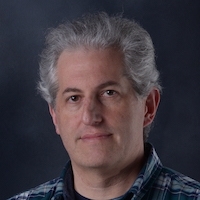
Jason Mittell
he/him
Professor of Film & Media Culture
- Office
- Axinn Center 208
- Tel
- (802) 443-3435
- jmittell@middlebury.edu
- Office Hours
- Spring 2026: Wednesday 10:30am-12:30pm, Thursday 1pm-2pm, and by appointment
Jason Mittell is Professor of Film & Media Culture at Middlebury College. He arrived at Middlebury in 2002 after two years teaching at Georgia State University.
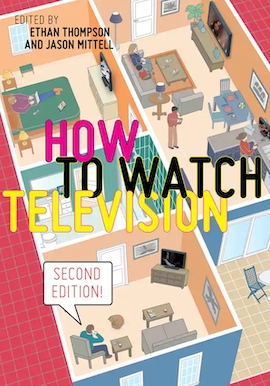
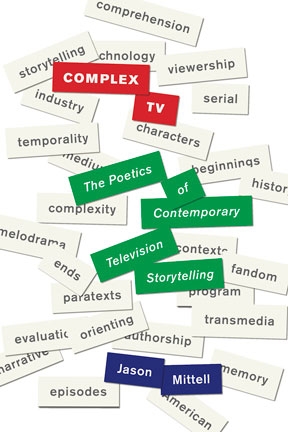
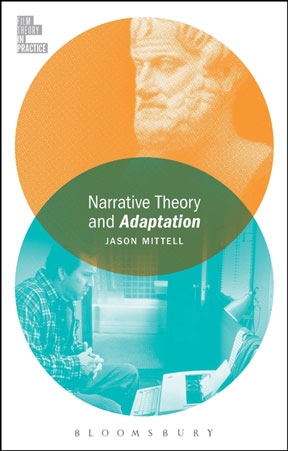
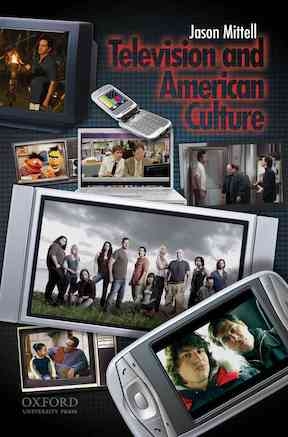
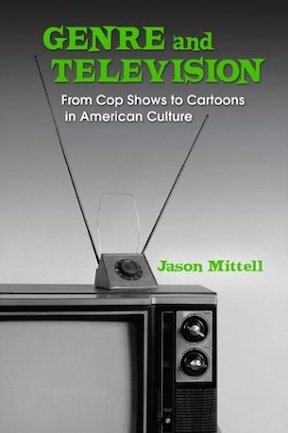
He is the author of Genre and Television: From Cop Shows to Cartoons in American Culture, (Routledge, 2004), Television and American Culture (Oxford University Press, 2010), Complex Television: The Poetics of Contemporary Television Storytelling (NYU Press, 2015), and Narrative Theory and ADAPTATION. (Bloomsbury, 2017), co-author with Christian Keathley and Catherine Grant of The Videographic Essay, and the co-editor of How to Watch Television (NYU Press, 2013; second edition, 2020). He maintains the blog Just TV.
His research interests include television history and criticism, media and cultural history, narrative theory, genre theory, videographic criticism, animation and children’s media, videogames, digital humanities, and new media studies & technological convergence. He is Project Manager for [in]Transition, a journal of videographic criticism, and co-leader of the NEH-sponsored digital humanities workshop “Scholarship in Sound & Image” a two-week intensive workshop focused on producing video-based scholarly criticism since 2015. See his CV for more details, his scholarly writings for downloadable content, and his Vimeo page for videographic work.
In Fall 2014, Professor Mittell was the founding Faculty Director of Middlebury’s Digital Liberal Arts Initiative, a program funded by the Mellon Foundation to expand the use of digital tools and methods across the curriculum and help faculty innovate in their research and creative work.
In the 2011-12 academic year, he was a visiting fellow at the Lichtenberg-Kolleg at the University of Göttingen, Germany, collaborating with colleagues on the Popular Seriality research initiative.
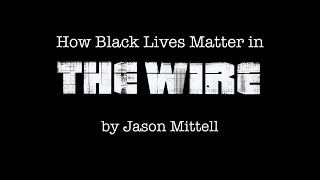
How Black Lives Matter in THE WIRE
A video essay that considers the representations of police brutality against black people as represented in - or erased from - The Wire.
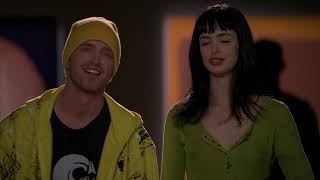
Anatomy of a Relationship: Jesse and Jane
A video essay exploring how Breaking Bad conveys a relationship between characters. Part of “The Chemistry of Character in Breaking Bad” videographic book project.
Courses Taught
AMST 0500
Independent Study
Course Description
Independent Study
Select project advisor prior to registration.
Terms Taught
AMST 0701
Senior Work I
Course Description
Senior Work
(Approval required)
Terms Taught
AMST 0710
Honors Thesis
Course Description
Honors Thesis
For students who have completed AMST 0705, and qualify to write two-credit interdisciplinary honors thesis. on some aspect of American culture. The thesis may be completed on a fall/winter schedule or a fall/spring schedule. (Select a thesis advisor prior to registration)
Terms Taught
FMMC 0104
Current
Television & American Culture
Course Description
Television and American Culture
This course explores American life in the last seven decades through an analysis of our central medium: television. Spanning a history of television from its origins in radio to today’s digital convergence via YouTube and Netflix, we will consider television's role in both representing and constituting American society through a variety of approaches, including: the economics of the television industry, television's role within American democracy, the formal attributes of various television genres, television as a site of gender and racial identity formation, television's role in everyday life, the medium's technological transformations, and television as a site of global cultural exchange. Note to students: this course involves substantial streaming of television for assigned viewing. 3 hrs. lect./disc. / 3 hrs. screen
Terms Taught
Requirements
FMMC 0206
Upcoming
Faking Reality
Course Description
Faking Reality: Mockumentaries, Hoaxes & Pseudo-docs
The line between fiction and nonfiction media has always been blurred, but the rise of reality TV and digital video in the 21st century has expanded both the quantity and scope of works that straddle these categories. In this course we will explore the history, ethics, cultural impacts, and aesthetic possibilities of mockumentaries, hoax media, and other examples of film and television that challenge easy categorization as “truthful” or fictional. We will study a wide range of works, including F is for Fake, The Blair Witch Project, The Office, Borat, American Vandal, and The Rehearsal. The course will culminate in students either producing their own boundary-blurring media project or authoring a critical essay in written or videographic form. (FMMC 101, or FMMC 0102, or FMMC 0103, or 104) 3 hr. lecture / 3 hr. screening.
Terms Taught
FMMC 0334
Videographic Film Studies
Course Description
Videographic Film and Media Studies
Digital video technologies now enable film and media critics to “write” with the same materials that constitute their object of study: moving images and sounds. The rise of video essays means rethinking the rhetorical modes traditionally used in critical writing, and incorporating more aesthetic, poetic, and experimental elements alongside explanation and analysis. In this hands-on course (with no previous video editing experience required), we will both study and produce video essays, exploring how such work can produce new knowledge, create an aesthetic impact, and disseminate film & media criticism to a broader audience. (FMMC 0101, or FMMC 0102, or FMMC 0103, or FMMC 0104 or by approval) 3 hrs. sem.
Terms Taught
FMMC 0355
Theories of Popular Culture
Course Description
Theories of Popular Culture
This writing-intensive course introduces a range of theoretical approaches to study American popular culture, exploring the intersection between everyday life, mass media, and identity and social power. We will consider key theoretical readings and approaches to studying culture, including ideology and hegemony theory, audience studies, subcultural analysis, the politics of taste, and cultural representations of identity. Using these theoretical tools, we will examine a range of popular media and sites of cultural expression, from television to toys, films to music, to understand popular culture as a site of ongoing political and social struggle. (FMMC 0102, or FMMC 0103, or FMMC 0104, or instructor approval) 3 hrs. sem/3 hrs. screen.
Terms Taught
Requirements
FMMC 0360
Current
Film & Media Criticism
Course Description
Key Concepts in Film & Media Criticism
This writing-intensive seminar takes a close look at four key theoretical concepts for film & media criticism: textuality, authorship, genre, and narrative. How do we understand the boundaries between any film “text” and its broader intertextual contexts? How does authorship frame our understanding of the style and ethics of any given film? How do genre categories help us make sense of films and media, as well as their cultural contexts? How do films and media tell stories in distinctive and innovative ways? Through theoretical readings and exemplary screenings, we will learn to become sharper critics of films and media. (FMMC 0101 or FMMC 0102, or FMMC 0103, or FMMC 0104 or instructor's approval) 3 hrs. sem./3 hrs. screen
Terms Taught
Requirements
FMMC 0507
Current
Upcoming
Independent Project
Course Description
Advanced Independent work in Film and Media Culture
Consult with a Film and Media Culture faculty member for guidelines.
Terms Taught
FMMC 0700
Upcoming
Senior Tutorial
Course Description
Senior Tutorial
All FMMC majors must complete this course in their senior year, during which they undertake the process of devising, researching, and developing the early drafts and materials for an independent project in Film and Media in their choice of medium and format. Students will be poised to produce and complete these projects during Winter Term, via an optional but recommended independent study. Prerequisites for projects in specific formats are outlined on the departmental website.
Terms Taught
FMMC 0701
Senior Project
Course Description
Senior Projects
Students may enroll in this project-based independent credit to complete the thesis work started in the fall. Requires faculty approval based on satisfactory progress in the Senior Tutorial. Projects will include a public presentation at the end of Winter or beginning of Spring term.
Terms Taught
FMMC 0707
Upcoming
Senior Independent Work
Course Description
Senior Independent Work
After completing FMMC 0700, seniors may be approved to complete the project they developed during the previous Fall semester by registering for this independent course during the Winter Term, typically supervised by their faculty member from FMMC 0700. Students will complete an independent project in a choice of medium and format, as outlined on the departmental website. This course does not count toward the required number of credits for majors, but is required to be considered for departmental honors. In exceptional cases, students may petition to complete their projects during Spring semester.
Terms Taught
FYSE 1015
Watching the Wire
Course Description
Watching the Wire: Urban America and Serial Television
Frequently hailed as one of television’s great masterpieces, The Wire shines a light on urban decay in 21st-century America, creating a dramatic portrait of Baltimore’s police, drug trade, and other institutions over five serialized seasons. In this course we will watch and discuss this remarkable—and remarkably entertaining—series twenty years after its debut, placing it within the dual contexts of urban American society and television storytelling. This is a time-intensive course (60 hours of TV!), focused on close viewing, critical analysis of race and policing, and research into The Wire’s social contexts, aesthetic practices, and politics of representation.
Terms Taught
Requirements
Academic Degrees
University of Wisconsin – Madison, Department of Communication Arts
Ph.D., August 2000, Media & Cultural Studies Program
M.A., Spring 1996,Media & Cultural Studies Program
Oberlin College, Oberlin, Ohio
B.A. Spring 1992, English and Theater double major
Publications
Books:
How to Watch Television second edition, co-edited with Ethan Thompson (New York University Press, 2020; first edition, 2013). Individual contribution of “Better Call Saul: The Prestige Spinoff.”
Narrative Theory and Adaptation. (Bloomsbury Press, 2017).
Complex TV: The Poetics of Contemporary Television Storytelling (New York University Press, 2015).
Television and American Culture (Oxford University Press, 2010).
Genre and Television: From Cop Shows to Cartoons in American Culture (Routledge, 2004).
Video Essays / Videographic Criticism:
The Videographic Essay: Practice and Pedagogy, co-authored with Christian Keathley and Catherine Grant, 2019. Open-access, multimodal site collecting writings about and examples of videographic work.
“Deformin’ in the Rain: How (and Why) to Break a Classic Film,” Digital Humanities Quarterly 15: 1 (March 2021) - multimodal essay.
“Videographic Criticism as a Digital Humanities Method,” in Debates in Digital Humanities 2019, edited by Matthew Gold and Lauren Klein (University of Minnesota Press, 2019), 224-42.
“Focusing on Hank (and Marie): A Breaking Bad Character Study,” Mise-en-Scène 5:1 (Summer 2020) – videographic essay.
“How Black Lives Matter in The Wire,” Published in NECSUS Journal (May 2019) – videographic essay.
“Adaptation.’s Anomalies,” [in]Transition 3.1 (March 2016) – videographic essay.
Selected Articles and Chapters:
“How Not to Comprehend Television: Notes on Complexity and Confusion,” in Puzzling Stories: The Aesthetic Appeal of Cognitive Challenge in Film, Television and Literature, edited by Steven Willemsen and Miklós Kiss (Berghahn Books, 2022).
“Narrative,” in The Craft of Criticism: Critical Media Studies in Practice, edited by Michael Kackman and Mary Celeste Kearney (Routledge, 2018), 35-46.
“Operational Seriality and the Operation of Seriality,” in The Edinburgh Companion to Contemporary Narrative Theories, edited by Zara Dinnen and Robyn Warhol (University of Edinburgh Press, 2018), 227-38.
“Haunted by Seriality: The Formal Uncanny of Mulholland Drive,” Cinephile 9:1 (Spring 2013).