
Alex Draper
Department Chair (after 6/30) & Professor of Theatre
- Office
- Mahaney Arts Center 333
- Tel
- (802) 443-5806
- adraper@middlebury.edu
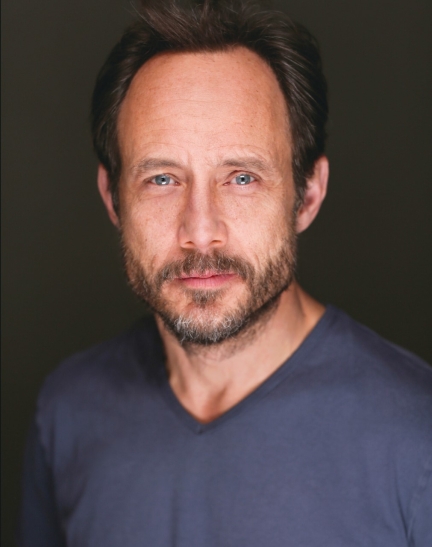
Alex Draper is a professional stage, film and television actor, whose thirty-five-year career includes performing with the Mabou Mines in Paris, France, filming the Bollywood extravaganza Kalapani in the Andeman Islands, and appearing in the New York premieres of Dare Clubb’s Obie Award-winning Oedipus, starring Billy Crudup and Frances McDormand, Erin Courtny’s Obie Award-winning A Map of Virtue, the Presnyakov Brothers’ Terrorism, Neil Simon’s Rose’s Dilemma and Phillip Ridley’s The Pitchfork Disney. He is the co-Artistic Director of the Dogteam Theatre Project, and former Associate Artistic Director of PTP/NYC, with whom he appeared in 21 productions over 35 seasons. He was also a founding member of Blue Light Theatre in NYC (1996-2003), appearing in many of their productions including the revivals of Waiting for Lefty and Golden Boy, both directed by Joanne Woodward. Regional work includes productions at Arena Stage, Yale Rep, the McCarter, Williamstown, the Westport Playhouse, the Huntington, and the Berkshire Theatre Festival. Film and television credits include: The Witch in the Window; No Pay, Nudity; Yellowbrickroad (Best Feature, New York Horror Film Festival); Joshua; Hysterical Blindness; Simply Irresistible; The Photographer; Hard Shell; John Adams; Chicago Med; Taken; The Good Wife; Sex and the City; Suddenly Susan; Ed; Dellaventura; and all the Law and Orders. He received his BA from Middlebury, and his MFA from the Yale School of Drama, where he was the recipient of the Oliver Thorndike Acting Award.
Courses Taught
FMMC 0349
Acting/Directing for theCamera
Course Description
Acting and Directing for the Camera
In this advanced workshop we will focus on the relationship between actors and directors in the context of live action media production (film, television, advertising, web series). Students will gain practical knowledge of actor-director engagement and insight into both facets of this process. Students will also analyze produced screenplays, practice actor-director communication, and direct and perform for the camera. All students will take turns fulfilling the roles of director and performer, culminating in recording and editing workshopped scenes. (FMMC 0105 or THEA 0102)
Terms Taught
Requirements
FYSE 1222
Playing the Part
Course Description
Playing the Part: Text Analysis and the Revelation of Character
In this seminar we will apply the actor’s techniques of text analysis and character development to the study of dramatic literature in the hopes that these tools can illuminate the texts in ways conventional approaches might not. This is not a performance class nor is acting experience a prerequisite. We will read six plays, and, using the technical tenets of Stanislavsky-based method acting, chart the characters’ progress through the script. We will watch plays on film, and travel to see a professional production. 3 hrs. sem.
Terms Taught
Requirements
THEA 0102
Acting I: Beginning Acting
Course Description
Acting I: Beginning Acting
Rigorous physical and psychophysical exercises attempt to break through the cultural and psychological barriers that inhibit an open responsiveness to impulses, to the environment, and to others. Attempt is made to free personal response within improvised scenes and, eventually, within the narrative structure of a naturalistic scene. Attention is given to various theories of acting technique. Students are expected to audition for departmental shows. (First- and second-year students only) 3 hrs. lect./individual labs
Terms Taught
Requirements
THEA 0202
Acting II: Voice for the Actor
Course Description
Acting II: Voice for the Actor
Using the Linklater technique for the voice, students will study the physiological foundations of voice and alignment. By means of interrelated physical and vocal exercises, students will discover ways of changing patterns that restrict a full range of physical and vocal expressiveness. Students will study and present passages from Shakespeare to explore ways in which their new physical and vocal skills may be used to express a greater range of intellectual and emotional understanding. (THEA 0102 and ARDV 0116; Approval required) 4 hrs. lect.
Terms Taught
THEA 0210
Upcoming
Fall Production Studio: Acting
Course Description
Fall Production Studio: Acting
The cast works as part of a company interpreting, rehearsing, and performing a play. Those receiving credit can expect to rehearse four to six nights a week. Appropriate written work is required. Participation in the course is determined by auditions held the previous term. (Approval required) 3 hrs. lect.
Terms Taught
Requirements
THEA 0220
Spring Production Studio: Act
Course Description
Spring Production Studio: Acting
The cast works as part of a company, interpreting, rehearsing, and performing a play. Those receiving credit can expect to rehearse four to six nights a week. Appropriate written work is required. Participation in the course is determined by auditions held during the term prior to the performance. (Approval required) 3 hrs. lect.
Terms Taught
Requirements
THEA 0402
Acting IV: Styles of Acting
Course Description
Acting IV: Styles of Acting
The course will expose students to the rigorous physical, vocal, mental, and emotional demands of "non-naturalistic" acting, beginning with the Greeks, continuing through Shakespeare, Restoration, the eighteenth century, and ending with contemporary absurdist playwrights. Emphasis is first upon an intellectual understanding of the texts, then upon their fullest physical, vocal, and emotional expression. The course is designed for students who have had some prior stage experience. (ARDV 0116, THEA 0102 and an additional performance course) 4 hrs. lect./1hr. screen.
Terms Taught
THEA 0406
Upcoming
20th/21st Century Perf. Aesth
Course Description
Twentieth/Twenty-first Century Performance Aesthetics
This course is an intensive exploration of the evolution of the theory and practice of theatrical experimentation in the 20th and 21st centuries. The Modernist movement irrevocably altered the artist’s relationship to the social, and political order. The ramifications of this change will be addressed throughout the course, with particular emphasis on Brecht, Artaud, and Grotowski. Students will write papers and give presentations on the work of such contemporary artists as Peter Brook, DV8, Robert Wilson, Ariane Mnouchkine, Complicite and Jerzy Grotowski. (Approval required; ARDV 0116 and THEA 0208) 3 hrs. lect./1 hr. disc.
Terms Taught
Requirements
THEA 0500
Upcoming
Intermediate Indep Project
Course Description
Intermediate Independent Project
In consultation with their advisors, theatre majors in design may propose a THEA 0500 Intermediate Independent Project. Preliminary proposal forms approved by the student's advisor will be submitted to the program by March 1st of the preceding academic year for those wanting credit in the fall or winter terms and by October 1st for those wanting credit in the spring term. Projects will conform to the guidelines that are available in the theatre office. Students are required to attend a weekly THEA 0500/0700 seminar.
Terms Taught
THEA 0505
Upcoming
Intermediate Ind. Project
Course Description
Intermediate Independent Project
(Approval Required)
Terms Taught
THEA 0700
Upcoming
Senior Project
Course Description
Senior Independent Project
Senior work is required. In consultation with their advisors, theatre majors may propose a THEA 0700 Independent Project. Preliminary proposal forms approved by the student's advisor will be submitted to the program by March 1st of the preceding academic year for those wanting credit in the fall or winter terms and by October 1st for those wanting credit in the spring term. Projects will conform to the guidelines that are available in the theatre office. Students are required to attend a weekly THEA 0500/0700 seminar.
Terms Taught