Religion RELI

Man and boy on a dusty dirt road following a wagon filled with debris

Film Screening of "Human Flow"

This epic film by renowned artist Ai Weiwei is a detailed and heartbreaking exploration of the global refugee crisis. Captured over the course of a year in 23 countries, the film follows a chain of urgent stories that stretches through Afghanistan, Greece, Iraq, Kenya, Mexico, Turkey, and beyond. From teeming refugee camps to perilous ocean crossings to barbed-wire borders, ‘Human Flow’ witnesses its subjects’ desperate search for safety, shelter, and justice. (2017, dir. Ai Weiwei, 140 min.) Free and open to the public.*

Wilson Hall, McCullough Student Center

Open to the Public

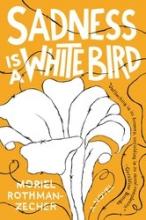
Jewish Studies: Moriel Rothman-Zecher '11 Reading from his novel, "Sadness is a White Bird"

Moriel Rothman-Zecher, ‘11, returns to Middlebury to read from his first novel, Sadness Is a White Bird, a coming-of-age novel of which the Jerusalem Post has said that it “conveys the complexities of Israeli and Palestinian life with passion, nuance and tenderness…” Rothman-Zecher “has shown a fearlessness and vulnerability on these pages that speak to his ability to explore difficult terrain without feeling the need to draw any neat or concise conclusions. It shuns certainty and is open, nuanced, inconclusive and often contradictory. Just like Israeli reality.”

Axinn Center Abernethy Room (221)

Wondering About Wonder: Hindu Temple Ritual, Aesthetics and Creativity

Through her decades-long ethnography of Hindu temple rituals in the city of Bangalore, India, Tulasi Srinivas analyzes wonder as an anthropological concept; moments where ritual enmeshes with global modernity to create wonder- a feeling of amazement at being overcome by the unexpected and sublime. In this talk, Srinivas asks— What is the purpose of wonder and how does it link with creativity? Can it inform our practices of ethnography, our understanding of India, and of ourselves?

Robert A. Jones '59 Conference Room

Open to the Public

Toby Braden Johnson, PhD Lecture: Knowing Guru Nanak: the Janam-Sakhi Narratives and Sikh Pedagogy

Sponsored by:
Religion
The founder of the Sikh Panth (community), Guru Nanak (1469-1539), wrote songs of devotion to express his mission of faith and charity to his early followers. He did not write an autobiography. Therefore, Sikhs learn about Guru Nanak and relate to his life story through a corpus of janam-sakhi (birth stories) narratives that present his life’s story but are not part of the scriptural canon.

Munroe 217

Scott Symposium Visiting Lecturer Mayanthi Fernando

Sponsored by:
Religion
Secularism is often understood as the separation of religion and politics, and France is usually upheld as a model secular nation. But how does French secularism work in practice? Is separation ever possible? Drawing on ethnographic fieldwork in Paris, Professor Mayanthi Fernando examines recent attempts by the French state to secularize Islam by dividing it into “religion” and “culture.” She shows how this is ultimately an impossible task, and how that might reveal something about the nature of secularism itself.

Franklin Environmental Center, The Orchard-Hillcrest 103

Open to the Public

Scott Symposium Talk: Leigh Schmidt, Visualizing Secularism

Sponsored by:
Religion
This lecture examines the formation of American secularism through the art of cartoonist Watson Heston. Looking at Heston’s iconic images provides an opportunity to assess the contours of both secularism and secular studies.

Axinn Center 229

Open to the Public

Scott Symposium Talk: Joseph Blankholm

Sponsored by:
Religion
Is secularism the separation of church and state? Is secularism the absence of religion? What does it mean to be secular? Professor Joseph Blankholm will answer these and other questions as he explains the many meanings of secularism and why they matter for anyone trying to understand the future of American religion—and nonreligion.

Axinn Center 229

Open to the Public