

2027 midd.data Leave Grant Recipients

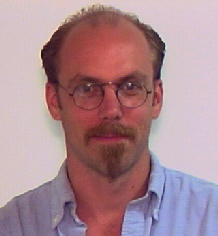
Jeffrey Carpenter
James B. Jermain Professor of Political Economy & Int’l. Law
Department of Economics
Professor Carpenter received a grant that will examine how people decide to divide rewards in group negotiations. Researchers will compare different theories of fairness and strategy, including a new behavioral model called Sequential Equal Shares, to see which best predicts real decisions. By designing bargaining games with different incentives and outcomes, the study aims to better understand how people balance fairness, cooperation, and strategic thinking.
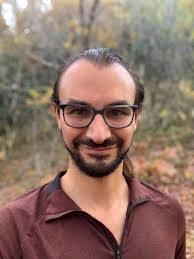
Phil Chodrow
Assistant Professor of Computer Science
Department Computer Science
Assistant Professor Chodrow received a grant to build mathematical models of social hierarchy formation in cooperative interaction networks, analyze their mathematical properties, and fit these models to real data. He will pursue this work in collaboration with anthropologists (who collected the data and bring domain expertise) and a theoretical biologist who has previously worked with him on hierarchy formation models.
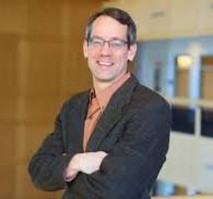
Matthew O. Kimble, Ph.D.
Professor of Psychology
Department of Psychology
Students Perspectives on Meaning and Purpose: Quantitative analysis for qualitative data
Professor Kimble received a grant to investigate how contemporary college students understand and value meaning and authenticity in an era increasingly shaped by digital simulation and generative artificial intelligence (AI). At its core is a long-standing philosophical and psychological question: why do humans seek authentic engagement with life…even when artificial alternatives promise ease, pleasure, or optimization? Drawing on prior empirical work conducted in his lab previously (Kula, Honors Thesis, 2022; Fung, Honors Thesis, 2024) this project will extend this research by applying advanced digital and data-oriented methods to the large-scale analysis of qualitative student responses.
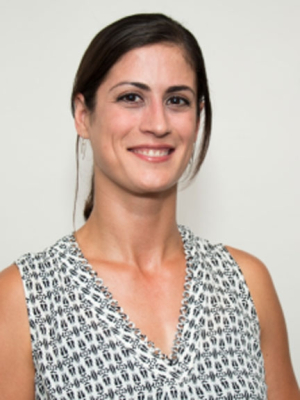
Amanda Crocker, PhD
Program Director of Molecular Biology and Biochemistry Program
Department of Neuroscience
Amanda Crocker (Neuroscience) received a grant to investigate how pain and traumatic brain injury alter behavior. She studies this question in a model organism (Drosophila melanogaster, the fruit fly) that cannot tell us when they are feeling pain or when they have a headache. Instead, she uses high-frame-rate video recording of single flies and machine learning algorithms to track individual flies and quantify behavioral responses across over 1000+ single flies. This produces a rich dataset that can be mined by students in her lab and by researchers outside of Middlebury. Her goal is to develop a set of robust behavioral responses that can tease apart pain perception, learning, memory, and movement associated with brain trauma.
Rachel Joo
Professor of American Studies
Department of American Studies
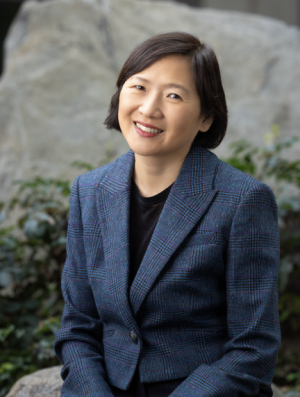
Professor Joo received a grant to investigate the role of social media in changing the relationship between sports and nationalisms in the 2026 FIFA World Cup. Through data collected from the social media posts of influential soccer/football figures and the responses to the posts, she will investigate the discourses of nation that respond to the soccer matches and figures during the event. By coding a variety of social media responses to the World Cup, she intends to offer an evidence-based view on how social media is shaping responses to sporting games, especially with respect to ideas of nation and identity.

Karen Nershi
Assistant Professor of Cybersecurity, Co-Director, Cyber Collaborative
Nonproliferation and Terrorism Studies
Professor Nershi’s project will build the first comprehensive geospatial dataset documenting prior land use at U.S. AI data center sites by using satellite imagery to classify whether data centers are developed on repurposed farmland, industrial properties, or other land types. The project addresses two central questions: which types of land are repurposed for AI data centers and how does this economically impact the surrounding communities? Findings will support a peer-reviewed publication on AI’s physical footprint.
Lana Povitz
Associate Professor of History
Department of History
Image by Miriam Cohen
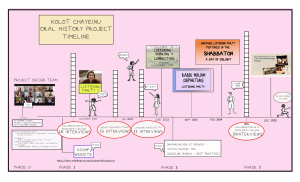
Professor Povitz received a grant for the The Kolot Chayeinu Oral History Project. It is a collaboration between Middlebury College and Kolot Chayeinu, a Jewish congregation in Park Slope, Brooklyn. The project documents the American Jewish progressive life in the late twentieth and early twenty-first centuries through an ever-expanding collection of oral history interviews, most of them conducted by Middlebury students.