

Exploring American Jewry for a Class, and for Myself
| by Lucy Snow ’29

Professor Ted Sasson’s American Jewish Life class piqued my interest when I was searching for courses to take last semester.
Not just because there was a free study trip to New York City included, but because as an American Jew myself, I wanted to broaden my perspectives of the variety of experiences one can have, and why. Growing up deep in the suburbs of Minneapolis, Minnesota, I can’t say I knew many Jewish people. My Jewish experiences were limited to Shabbat dinners with my grandmother, who moved to Minnesota from the East Coast, and a Jewish day camp I attended in elementary school. The most I ever went to synagogue was for my cousins’ bar mitzvahs.
The class itself was not quite what I expected; it was more anthropological and less religious. Throughout learning about the history of Jewish people in America, the different denominations and movements, antisemitism, and demography, my fellow students and I were asked to think about the question of what it means to be Jewish today. People of different ages, backgrounds, and denominations will have vastly different answers. My family, for instance, fled the Ukraine area in the early 20th century due to the Russian pogroms there. After hearing about the histories of families who, like mine, had arrived in New York and settled in across the East Coast so their descendants could have freedom of religion and expression, I felt more comfortable claiming my own story and place as an American Jew.
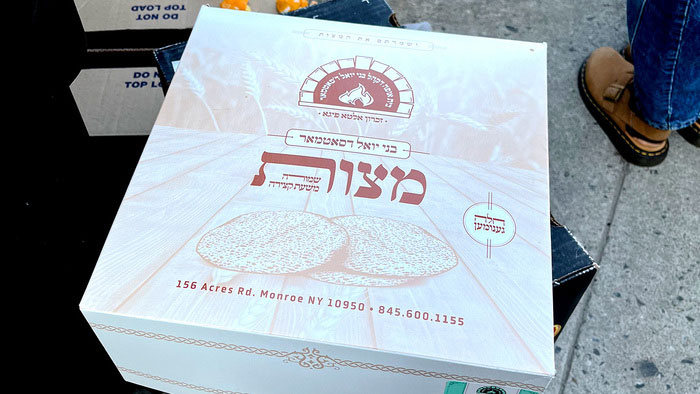
The study tour provided an immersive experience. We went to services at two synagogues, B’nai Jeshurun in the Upper West Side and Kolot Chayeinu in Brooklyn. They had very distinct but related visions of the modern Jewish community. B’nai Jeshurun was a religious community focused on justice and engagement, while Kolot Chayeinu was a radical and accepting community based in religion. Both very clearly aspired to create belonging and had serious commitments to and interpretations of Judaism. They were both compelling to me personally, with their lively singing and sermons and distinct interiors, but what interested me most was the people. These New Yorkers reminded me of my cousins, my aunts and uncles, and my grandparents.

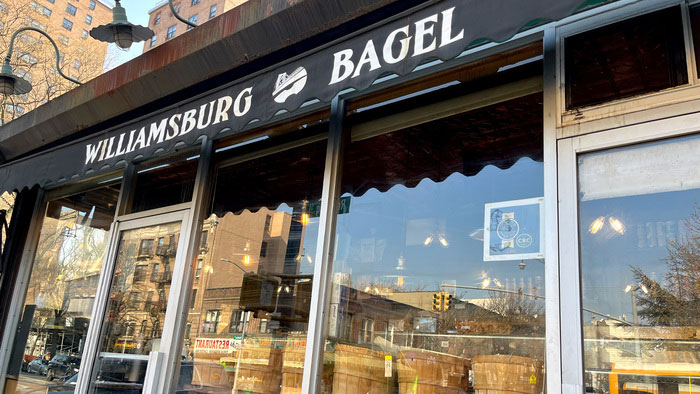
The next part of the trip, a guided tour through Hasidic Williamsburg, was illuminating in a different way. Walking through the streets and seeing the blossoming trees, the balconies stacked in a way that left the sky open for Sukkot, the posters in Yiddish (my grandfather’s first language), was thought-provoking.
As with any other culture, Jews are not a monolith. We could share an ethnic background and a religion, but the ways we live our lives today can be vastly different. Seeing all these interpretations of American Jewish life through both an academic and a personal lens made me feel like my own interpretation of being an American Jew was just as good, despite never having had a bat mitzvah or being a synagogue member.
If you’re interested in learning more about Hasidic Williamsburg or booking your own tour, check out the content from our fantastic tour guide, Frieda Vizel, at her YouTube channel.