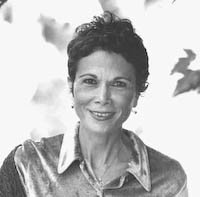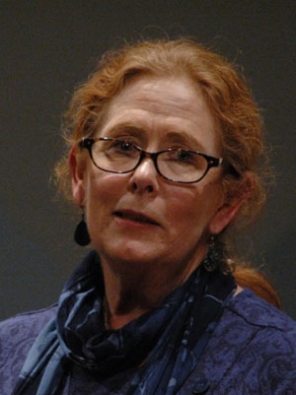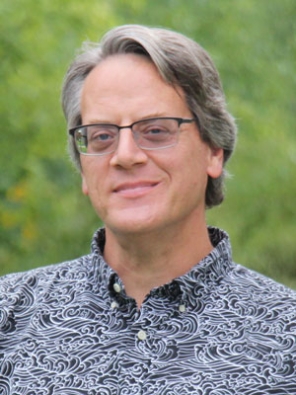
Deborah Evans
Visiting Assistant Professor of American Studies, Faculty co-Head, Wonnacott Commons
Email: devans@middlebury.edu
Phone: work802.443.2099
Office Hours: Spring Term: Wednesday 1:00-3:30 or by appointment
Download Contact Information
Deborah Evans earned a B.A. from the University of Michigan, an M. A. and Ph. D. from the University of North Carolina at Chapel Hill, and has taught at Middlebury since 1996. Her regular course offerings include 19th century American literature, women's writing, and studies in American regionalism--particularly of the American South and West. Her current research interests revolve around intersections of gender and race in American literature and culture, with a focus on the captivity narrative. She served two terms as Faculty Curator of the Abernethy collection of American literature and for the past six years has worked in the Student Life division as co-head of Wonnacott Commons.
Courses
Courses offered in the past four years.
▲ indicates offered in the current term
▹ indicates offered in the upcoming term[s]
AMST 0231 - Tourism in American Culture ▲
See the U.S.A.: The History of Tourism in American Culture
In this course, we will explore the history and evolution of American tourism, beginning in the 1820s, when middle-class tourists first journeyed up the Hudson River valley, and ending with our contemporary and continuing obsession with iconic destinations such as Graceland, Gettysburg, and the Grand Canyon. We will explore how the growth of national transportation systems, the development of advertising, and the rise of a middle class with money and time to spend on leisure shaped the evolution of tourism. Along the way, we will study various types of tourism (such as historical, cultural, ethnic, eco-, and 'disaster' tourism) and look at the creative processes by which places are transformed into 'destinations'. Our texts will come from visual art, travel literature, material culture, and film and television. We will consider their cultural meaning and reflect on our own motivations and responses as tourists, and by so doing contemplate why tourism was-and still is-such an important part of American life. 3 hrs. lect.
Fall 2013
AMST 0255 - Imagining the American West
Imagining the American West
Wallace Stegner has suggested that the West, "the last, best place," offers the American imagination a "geography of hope." This course will examine both the construction of the West as a place of romance, opportunity and individual freedom and how that idea was alternately sustained or questioned. In doing so, we will explore a selection of the diverse writings on the trans-Mississippi western American experience—exploration literature, the cowboy Western, women's fiction, the "Hollywood" novel, contemporary Native American literature, etc. Readings will be supplemented by a study of relevant painting and sculpture, film, television, and music. Authors may include: Harte, Crane, Twain, Norris, Wiser, Cather, Austin, Steinbeck, West, Stegner, Silko, McCarthy; films by Ford, Peckinpah and Eastwood. (Students who have taken AMLT 0340 Regionalism: The American West are not eligible to register for this course.) 3 hrs. lect./disc.
Spring 2009
AMST 0500 - Independent Study ▲ ▹
Independent Study
Select project advisor prior to registration.
Spring 2009, Fall 2009, Winter 2010, Spring 2010, Fall 2010, Winter 2011, Spring 2011, Fall 2011, Winter 2012, Spring 2012, Fall 2012, Winter 2013, Spring 2013, Fall 2013, Spring 2014
AMST 0700 - Senior Essay
Senior Essay
For students who have completed AMST 0400 and are not pursuing an honors thesis. Under the guidance of one or more faculty members, each student will complete research leading toward a one-term, one-credit interdisciplinary senior essay on some aspect of American culture. The essay is to be submitted no later than the last Thursday of the fall semester. (Select project advisor prior to registration)
Fall 2009, Fall 2010, Fall 2011, Spring 2012
AMST 0710 - Honors Thesis ▹
Honors Thesis
For students who have completed AMST 0705, and qualify to write two-credit interdisciplinary honors thesis. on some aspect of American culture. The thesis may be completed on a fall/winter schedule or a fall/spring schedule. (Select a thesis advisor prior to registration)
Spring 2009, Fall 2009, Winter 2010, Spring 2010, Fall 2010, Winter 2011, Spring 2011, Fall 2011, Winter 2012, Spring 2012, Winter 2013, Spring 2013, Spring 2014
AMST 1012 - The West on Film
Hollywood’s West: The American West on Film
From its beginnings the Hollywood western has presented an imaginative geography, a powerful popular fantasy expressing deep truths, and perhaps still deeper desires about American identity. Initially the western reasserted 19th century America’s optimistic vision of manifest destiny; ultimately, many westerns challenged that optimism, often explicitly presenting racial, sexual, and political tensions. Over time, westerns have been re-defined, re-invented and expanded, dismissed, re-discovered, and spoofed. Working with a broad range of films, including Stagecoach, High Noon, Pat Garrett and Billy the Kid, Unforgiven, Lone Star, Blazing Saddles—and perhaps even the recent Cowboys vs. Aliens—we will explore the ways in which westerns have both shaped and reflected the dominant social and political desires and anxieties of their respective eras.
Winter 2013
CRWR 0560 - Special Project: Writing ▲ ▹
Special Project: Creative Writing
Approval Required.
Fall 2012, Spring 2013, Fall 2013, Spring 2014
CRWR 0701 - Senior Essay: Creative Writing ▲ ▹
Senior Essay: Creative Writing
Discussions, workshops, tutorials for those undertaking one-term projects in the writing of fiction, poetry, or creative nonfiction. (Formerly ENAM 0701)
Spring 2013, Fall 2013, Spring 2014
CRWR 0711 - Senior Thesis: Creative Writ. ▲ ▹
Senior Thesis: Creative Writing
Discussions, workshops, tutorials for those undertaking two-term projects in the writing of fiction, poetry, or creative nonfiction. (Formerly ENAM 0711)
Spring 2013, Fall 2013, Spring 2014
ENAM 0206 / AMST 0206 - 19th Century American Lit. ▲
Nineteenth-Century American Literature (II, AL)
This course will examine major developments in the literary world of 19th century America. Specific topics to be addressed might include the transition from Romanticism to Regionalism and Realism, the origins and evolution of the novel in the United States, and the tensions arising from the emergence of a commercial marketplace for literature. Attention will also be paid to the rise of women as literary professionals in America and the persistent problematizing of race and slavery. Among others, authors may include J. F. Cooper, Emerson, Melville, Douglass, Chopin, Whitman, Dickinson, Twain, Hawthorne, Stowe, Alcott, Wharton, and James. . 3 hrs. lect./disc.
Spring 2010, Spring 2011, Spring 2012, Spring 2013, Fall 2013
ENAM 0255 - Imagining the American West
Imagining the American West
Wallace Stegner has suggested that the West, "the last, best place," offers the American imagination a "geography of hope." This course will examine both the construction of the West as a place of romance, opportunity and individual freedom and how that idea was alternately sustained or questioned. In doing so, we will explore a selection of the diverse writings on the trans-Mississippi western American experience—exploration literature, the cowboy Western, women's fiction, the "Hollywood" novel, contemporary Native American literature, etc. Readings will be supplemented by a study of relevant painting and sculpture, film, television, and music. Authors may include: Harte, Crane, Twain, Norris, Wiser, Cather, Austin, Steinbeck, West, Stegner, Silko, McCarthy; films by Ford, Peckinpah and Eastwood. (Students who have taken AMLT 0340 Regionalism: The American West are not eligible to register for this course.) 3 hrs. lect./disc.
Spring 2009
ENAM 0342 / AMST 0342 - Southern American Literature
Southern American Literature
In William Faulkner's Absolom, Absolom! Canadian Shreve McCannon commands his roommate, Mississippian Quentin Compson, "Tell about the South. What's it like there. What do they do there. Why do they live there. Why do they live at all?" Our course will take on writers who want to "tell about the South" in the post-Civil War era and beyond, as they seek to help re-define and revitalize their region. We will focus our regional exploration on the "Southern Renascence," when writers and theorists like the Agrarians re-examined Southern history and reconsidered their role in relation to their regional community. Authors including William Faulkner, Zora Neale Hurston, Robert Penn Warren, Eudora Welty, and Tennessee Williams developed a new awareness of the restrictions of racial and gender roles, an interest in literary experimentation, and an increasingly realistic presentation of social conditions in the south. We will consider the legacy of these writers in later 20th century texts by authors such as Flannery O'Connor, Walker Percy, Alice Walker, Cormac McCarthy, Ernest Gaines, Randall Kenan and even relative newcomers such as Jackson Tippett McCrea. 3 hrs. lect./disc.
Fall 2010
ENAM 0448 - Portraits of the Lady
Portraits of the Lady: American Literature at a Moment of Transition (II AL)
From the end of the Civil War to the close of WWI, America was obsessed with issues of national identity. Cultural changes abounded: accelerating immigration and urbanization, intensifying class conflict, and advances in the social and physical sciences. In this transitional era, Americans sought a lost cultural homogeneity, as illusory as that may have been. One way to satisfy that longing was to depict ideas and ideals about American women. Images of women—literary and pictorial—became a way to represent the values of the nation and codify the fears and desires of its citizens. In this seminar we will consider the works of writers contemplating the position of the American woman, including Edith Wharton, Henry James, William Dean Howells, Kate Chopin, and Willa Cather. In addition, in keeping with the era's interest in realism and its focus on the visual, we will examine representations of women in painting, portraiture, sculpture, photography, and popular media. 3 hrs. sem.
Fall 2012
ENAM 0500 - Special Project: Lit
ENAM 0560 - Special Project: Writing
Special Project: Creative Writing
(Approval Required)
Fall 2009, Fall 2010, Fall 2011
ENAM 0700 - Senior Essay: Critical Writing ▲ ▹
Senior Essay: Critical Writing
Individual guidance and seminar (discussions, workshops, tutorials) for those undertaking one-term projects in literary criticism or analysis. All critical essay writers also take the essay workshop (ENAM 700Z) in either Fall or Spring Term.
Spring 2009, Fall 2009, Spring 2010, Fall 2010, Spring 2011, Fall 2011, Spring 2012, Fall 2012, Spring 2013, Fall 2013, Spring 2014
ENAM 0701 - Senior Essay: Creative Writing
Senior Essay: Creative Writing
Discussions, workshops, tutorials for those undertaking one-term projects in the writing of fiction, poetry, or creative nonfiction.
Spring 2009, Fall 2009, Spring 2010, Fall 2010, Spring 2011, Fall 2011, Spring 2012
ENAM 0710 - Senior Thesis: Critical Writ. ▲ ▹
Senior Thesis: Critical Writing
Individual guidance and seminar (discussions, workshops, tutorials) for those undertaking two-term projects in literary criticism or analysis. All critical thesis writers also take the thesis workshop (ENAM 710z) in both Fall and Spring terms.
Spring 2009, Fall 2009, Winter 2010, Spring 2010, Fall 2010, Winter 2011, Spring 2011, Fall 2011, Winter 2012, Spring 2012, Spring 2013, Fall 2013, Spring 2014
ENAM 0711 - Senior Thesis: Creative Writ.
Senior Thesis: Creative Writing
Discussions, workshops, tutorials for those undertaking two-term projects in the writing of fiction, poetry, or creative nonfiction.
Spring 2009, Fall 2009, Winter 2010, Spring 2010, Fall 2010, Winter 2011, Spring 2011, Fall 2011, Winter 2012, Spring 2012
FYSE 1336 - Tell About the South
“Tell About the South”: Exploring Southern Cultures*
In William Faulkner's novel Absalom, Absalom!/, Southerner Quentin Compson's Harvard roommate says to him: "Tell about the South. What's it like there. What do they do there. Why do they live there. Why do they live at all?" These questions, posed by a Canadian, underpin our class study. In this seminar we will investigate the widespread perception of the South as a distinctive region that may--or may not--be in jeopardy of disappearing into a more homogenous national identity. By examining southern culture through a variety of disciplinary lenses, we will begin to explore why, how, and with what results this regional identity has evolved. Together we will explore the South’s social, economic, and cultural development, focusing on artistic representations of the region in literature, film, photography, music, and popular culture.
Fall 2011
FYSE 1367 - Remembering the Civil War
Confederates in Our Attic: Remembering the Civil War
“The Civil War is our felt history—history lived in the national imagination,” wrote Robert Penn. Certainly, the Civil War occupies a prominent place in our national memory and has served to both unite and divide Americans for the past 150 years. In this seminar we will examine the cultural, social, and intellectual terrain of myth, manners, and historical memory of the American South. We will focus particularly on the ways in which Americans have chosen to remember their civil war through literature, (Gurganus’ The Oldest Living Confederate Widow Tells All, Frazier’s Cold Mountain), film (Gone with the Wind, Glory, Ken Burns’ Civil War, Sherman’s March, C. S. A./), and other visual arts (including works by Kara Walker, and civil war photography from Brady to the present). We will also consider institutions, places, and objects associated with historical memory (Gettysburg, Richmond’s Monument Avenue, Stone Mountain, disputes over displays of the Confederate flag) with an eye toward exploring the war’s presence in the collective imagination of the nation. 3 hrs. sem.
Fall 2012