Middlebury Language Schools
Return to Language Schools Home
 

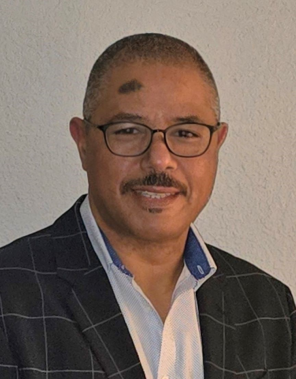
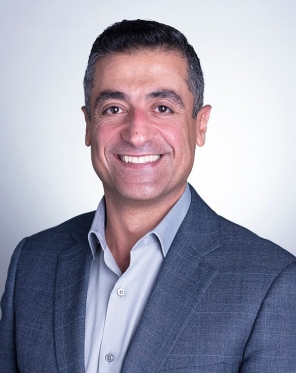
Hebatalla Salem

Faculty

Email: 
Phone: work802.443.2006
Download Contact Information

Hebatalla Salem holds an M.A. in Teaching Arabic as a Foreign Language from the American University in Cairo, Egypt, where she also earned a B.A. in mass communications with a minor in psychology. She currently teaches various levels of Egyptian Colloquial and Modern Standard Arabic at AUC. She has collaborated in developing materials for teaching Modern Standard and Egyptian Colloquial Arabic, especially to beginners. She has also participated in developing computer-assisted teaching materials, a web site for reading materials, and listening materials for Aswat Arabia. She is coauthor of a book on Colloquial Arabic that is being developed at AUC.


Courses

Courses offered in the past four years.
indicates offered in the current term
indicates offered in the upcoming term[s]

ARBC 3301 - High Intermediate Arabic      

Students at this level have a broader range of vocabulary, more fluency in speaking, and more advanced skills in Arabic than students at the regular Intermediate Arabic level. The main objective of this course is to move students in a short period of time across the threshold of the high intermediate level of proficiency and provide opportunities and learning strategies towards the advanced level of proficiency. This level is characterized by extensive readings and discussions on a multitude of political, social, cultural, and literary topics. Writing assignments are geared toward stylistic and aesthetic aspects of the Arabic language. Students produce lengthy expository and argumentative discourse. Attending lectures and films and participating in follow-up discussion sessions either with their instructor or the visiting lecturer are regular features of class activities. Listening activities focus on authentic materials of considerable length and content. At this level, students choose one of the colloquial dialects offered in the School. The objective is to equip students with the necessary conversational skills that would enable them to engage in meaningful discourse with educated Arabs in a medium that is not considered artificial or unfamiliar in the Arab World. The study of the dialect is uniquely integrated into the general curriculum emphasizing the linguistic realities in the Arab World. Work outside of class requires between four to five hours a day. (1 unit)

Required Texts:

1) Connectors in Modern Standard Arabic, by Al-Warraki et al, AUC Press, 1994.

2) Media Arabic, by Elgibali et al, AUC Press, 2007.

3) Business Arabic, Advanced Leve/l, by Rammuny, University of Michigan Press, 2000.

4) /The Hans Wehr Dictionary of Modern Written Arabic, Spoken Languages Services.

A variety of additional texts selected by the instructors, including fiction and nonfiction.

Summer 2011

More Information »

ARBC 3302 - High Intermediate Arabic      

Students at this level have a broader range of vocabulary, more fluency in speaking, and more advanced skills in Arabic than students at the regular Intermediate Arabic level. The main objective of this course is to move students in a short period of time across the threshold of the high intermediate level of proficiency and provide opportunities and learning strategies towards the advanced level of proficiency. This level is characterized by extensive readings and discussions on a multitude of political, social, cultural, and literary topics. Writing assignments are geared toward stylistic and aesthetic aspects of the Arabic language. Students produce lengthy expository and argumentative discourse. Attending lectures and films and participating in follow-up discussion sessions either with their instructor or the visiting lecturer are regular features of class activities. Listening activities focus on authentic materials of considerable length and content. At this level, students choose one of the colloquial dialects offered in the School. The objective is to equip students with the necessary conversational skills that would enable them to engage in meaningful discourse with educated Arabs in a medium that is not considered artificial or unfamiliar in the Arab World. The study of the dialect is uniquely integrated into the general curriculum emphasizing the linguistic realities in the Arab World. Work outside of class requires between four to five hours a day. (1 unit)

Required Texts:

1) Connectors in Modern Standard Arabic, by Al-Warraki et al, AUC Press, 1994.

2) Media Arabic, by Elgibali et al, AUC Press, 2007.

3) Business Arabic, Advanced Leve/l, by Rammuny, University of Michigan Press, 2000.

4) /The Hans Wehr Dictionary of Modern Written Arabic, Spoken Languages Services.

A variety of additional texts selected by the instructors, including fiction and nonfiction.

Summer 2011

More Information »

ARBC 3303 - High Intermediate Arabic      

Students at this level have a broader range of vocabulary, more fluency in speaking, and more advanced skills in Arabic than students at the regular Intermediate Arabic level. The main objective of this course is to move students in a short period of time across the threshold of the high intermediate level of proficiency and provide opportunities and learning strategies towards the advanced level of proficiency. This level is characterized by extensive readings and discussions on a multitude of political, social, cultural, and literary topics. Writing assignments are geared toward stylistic and aesthetic aspects of the Arabic language. Students produce lengthy expository and argumentative discourse. Attending lectures and films and participating in follow-up discussion sessions either with their instructor or the visiting lecturer are regular features of class activities. Listening activities focus on authentic materials of considerable length and content. At this level, students choose one of the colloquial dialects offered in the School. The objective is to equip students with the necessary conversational skills that would enable them to engage in meaningful discourse with educated Arabs in a medium that is not considered artificial or unfamiliar in the Arab World. The study of the dialect is uniquely integrated into the general curriculum emphasizing the linguistic realities in the Arab World. Work outside of class requires between four to five hours a day. (1 unit)

Required Texts:

1) Connectors in Modern Standard Arabic, by Al-Warraki et al, AUC Press, 1994.

2) Media Arabic, by Elgibali et al, AUC Press, 2007.

3) Business Arabic, Advanced Leve/l, by Rammuny, University of Michigan Press, 2000.

4) /The Hans Wehr Dictionary of Modern Written Arabic, Spoken Languages Services.

A variety of additional texts selected by the instructors, including fiction and nonfiction.

Summer 2011

More Information »

ARBC 3304 - High Intermediate Arabic      

Students at this level have a broader range of vocabulary, more fluency in speaking, and more advanced skills in Arabic than students at the regular Intermediate Arabic level. The main objective of this course is to move students in a short period of time across the threshold of the high intermediate level of proficiency and provide opportunities and learning strategies towards the advanced level of proficiency. This level is characterized by extensive readings and discussions on a multitude of political, social, cultural, and literary topics. Writing assignments are geared toward stylistic and aesthetic aspects of the Arabic language. Students produce lengthy expository and argumentative discourse. Attending lectures and films and participating in follow-up discussion sessions either with their instructor or the visiting lecturer are regular features of class activities. Listening activities focus on authentic materials of considerable length and content. At this level, students choose one of the colloquial dialects offered in the School. The objective is to equip students with the necessary conversational skills that would enable them to engage in meaningful discourse with educated Arabs in a medium that is not considered artificial or unfamiliar in the Arab World. The study of the dialect is uniquely integrated into the general curriculum emphasizing the linguistic realities in the Arab World. Work outside of class requires between four to five hours a day. (1 unit)

Required Texts:

1) Connectors in Modern Standard Arabic, by Al-Warraki et al, AUC Press, 1994.

2) Media Arabic, by Elgibali et al, AUC Press, 2007.

3) Business Arabic, Advanced Leve/l, by Rammuny, University of Michigan Press, 2000.

4) /The Hans Wehr Dictionary of Modern Written Arabic, Spoken Languages Services.

A variety of additional texts selected by the instructors, including fiction and nonfiction.

Summer 2011

More Information »

The Arabic School

Sunderland Language Center
Middlebury College
P: 802.443.2006
F: 802.443.2075

Mailing address
Arabic School
14 Old Chapel Road
Middlebury College
Middlebury, VT  05753

Oliver Carling, Coordinator
arabicschool@middlebury.edu