Middlebury Language Schools
Return to Language Schools Home
 

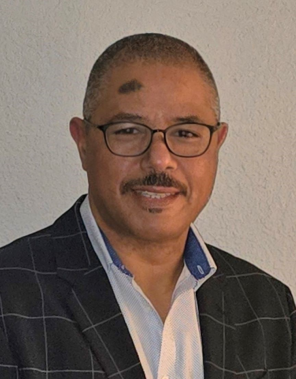
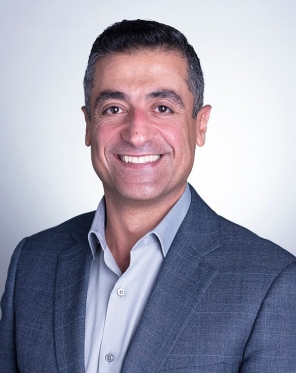
Mahmoud Nahla

Faculty

Email: 
Phone: work802.443.2006
Download Contact Information

Mahmoud Nahla received his Ph.D. in Arabic linguistics from Alexandria University in Egypt. He has taught in the Department of Arabic Language in the Faculty of Arts at Alexandria University since 1974. In 2009 he became director of the Linguistic Studies and Translation Institute. Since 2008 he has been a member of the academic committee to promote professors for all Egyptian universities. From 2004 to 2008 he served as Vice Dean for Graduate Studies and Research at Alexandria University, and from 2002 to 2008 he was the director of a TAFL center. He has refereed the King Faisal International Prize, and his research interests include theoretical and applied linguistics as well as pedagogy.


MiddTags:

Courses

Courses offered in the past four years.
indicates offered in the current term
indicates offered in the upcoming term[s]

ARBC 3401 - Advanced Arabic      

Students accepted at this level are expected to have mastered language mechanics and possess the high intermediate level of proficiency in Modern Standard Arabic. The course is designed to enable students to attain solid, advanced level proficiency or higher in the various language skills. Readings at this level are extensive and varied in terms of genres and academic interests. They consist exclusively of authentic materials on various contemporary and classical topics in language, literature, and the social sciences. Chapters from books, novels, and lengthy articles form the backbone of this course. Students analyze the stylistic features of different genres and texts. Special emphasis is placed on understanding the nuances of the language and the use of idiomatic expressions and rhetorical devices. Home assignments are varied and typically consist of attending or watching a recording of a lecture, reading a chapter from a book and making an oral presentation in class based on that reading, engaging in a panel discussion with other classmates and one or more of the other instructors in the School, or watching a live TV broadcast (via satellite) of a cultural, historical, political, or religious nature. At the advanced level, students also study the basic structures and phonological system of one of the major colloquial dialects. Students are encouraged to adopt the same linguistic medium that intellectual and educated native speakers of Arabic adopt in their conversations on academic topics. The study of the dialect is uniquely integrated into the general curriculum emphasizing the linguistic realities in the Arab World. Work outside of class requires between four to five hours a day. (1 unit)

Required Texts:

1) Media Arabic, by Elgibali et al, AUC Press, 2007.

2) Business Arabic, Advanced Level, by Rammuny, University of Michigan Press, 2000.

3) The Hans Wehr Dictionary of Modern Written Arabic, Spoken Languages Services.

A variety of additional texts selected by the instructors, including novels, short stories, poetry, and nonfiction.

Summer 2009, Summer 2010, Summer 2011

More Information »

ARBC 3402 - Advanced Arabic      

Students accepted at this level are expected to have mastered language mechanics and possess the high intermediate level of proficiency in Modern Standard Arabic. The course is designed to enable students to attain solid, advanced level proficiency or higher in the various language skills. Readings at this level are extensive and varied in terms of genres and academic interests. They consist exclusively of authentic materials on various contemporary and classical topics in language, literature, and the social sciences. Chapters from books, novels, and lengthy articles form the backbone of this course. Students analyze the stylistic features of different genres and texts. Special emphasis is placed on understanding the nuances of the language and the use of idiomatic expressions and rhetorical devices. Home assignments are varied and typically consist of attending or watching a recording of a lecture, reading a chapter from a book and making an oral presentation in class based on that reading, engaging in a panel discussion with other classmates and one or more of the other instructors in the School, or watching a live TV broadcast (via satellite) of a cultural, historical, political, or religious nature. At the advanced level, students also study the basic structures and phonological system of one of the major colloquial dialects. Students are encouraged to adopt the same linguistic medium that intellectual and educated native speakers of Arabic adopt in their conversations on academic topics. The study of the dialect is uniquely integrated into the general curriculum emphasizing the linguistic realities in the Arab World. Work outside of class requires between four to five hours a day. (1 unit)

Required Texts:

1) Media Arabic, by Elgibali et al, AUC Press, 2007.

2) Business Arabic, Advanced Level, by Rammuny, University of Michigan Press, 2000.

3) The Hans Wehr Dictionary of Modern Written Arabic, Spoken Languages Services.

A variety of additional texts selected by the instructors, including novels, short stories, poetry, and nonfiction.

Summer 2009, Summer 2010, Summer 2011

More Information »

ARBC 3403 - Advanced Arabic      

Students accepted at this level are expected to have mastered language mechanics and possess the high intermediate level of proficiency in Modern Standard Arabic. The course is designed to enable students to attain solid, advanced level proficiency or higher in the various language skills. Readings at this level are extensive and varied in terms of genres and academic interests. They consist exclusively of authentic materials on various contemporary and classical topics in language, literature, and the social sciences. Chapters from books, novels, and lengthy articles form the backbone of this course. Students analyze the stylistic features of different genres and texts. Special emphasis is placed on understanding the nuances of the language and the use of idiomatic expressions and rhetorical devices. Home assignments are varied and typically consist of attending or watching a recording of a lecture, reading a chapter from a book and making an oral presentation in class based on that reading, engaging in a panel discussion with other classmates and one or more of the other instructors in the School, or watching a live TV broadcast (via satellite) of a cultural, historical, political, or religious nature. At the advanced level, students also study the basic structures and phonological system of one of the major colloquial dialects. Students are encouraged to adopt the same linguistic medium that intellectual and educated native speakers of Arabic adopt in their conversations on academic topics. The study of the dialect is uniquely integrated into the general curriculum emphasizing the linguistic realities in the Arab World. Work outside of class requires between four to five hours a day. (1 unit)

Required Texts:

1) Media Arabic, by Elgibali et al, AUC Press, 2007.

2) Business Arabic, Advanced Level, by Rammuny, University of Michigan Press, 2000.

3) The Hans Wehr Dictionary of Modern Written Arabic, Spoken Languages Services.

A variety of additional texts selected by the instructors, including novels, short stories, poetry, and nonfiction.

Summer 2009, Summer 2010, Summer 2011

More Information »

ARBC 3404 - Advanced Arabic      

Students accepted at this level are expected to have mastered language mechanics and possess the high intermediate level of proficiency in Modern Standard Arabic. The course is designed to enable students to attain solid, advanced level proficiency or higher in the various language skills. Readings at this level are extensive and varied in terms of genres and academic interests. They consist exclusively of authentic materials on various contemporary and classical topics in language, literature, and the social sciences. Chapters from books, novels, and lengthy articles form the backbone of this course. Students analyze the stylistic features of different genres and texts. Special emphasis is placed on understanding the nuances of the language and the use of idiomatic expressions and rhetorical devices. Home assignments are varied and typically consist of attending or watching a recording of a lecture, reading a chapter from a book and making an oral presentation in class based on that reading, engaging in a panel discussion with other classmates and one or more of the other instructors in the School, or watching a live TV broadcast (via satellite) of a cultural, historical, political, or religious nature. At the advanced level, students also study the basic structures and phonological system of one of the major colloquial dialects. Students are encouraged to adopt the same linguistic medium that intellectual and educated native speakers of Arabic adopt in their conversations on academic topics. The study of the dialect is uniquely integrated into the general curriculum emphasizing the linguistic realities in the Arab World. Work outside of class requires between four to five hours a day. (1 unit)

Required Texts:

1) Media Arabic, by Elgibali et al, AUC Press, 2007.

2) Business Arabic, Advanced Level, by Rammuny, University of Michigan Press, 2000.

3) The Hans Wehr Dictionary of Modern Written Arabic, Spoken Languages Services.

A variety of additional texts selected by the instructors, including novels, short stories, poetry, and nonfiction.

Summer 2009, Summer 2010, Summer 2011

More Information »

ARBC 6508 - Contemp Arab Literature      

Contemporary Arab Literature (Graduate Level)

This course is designed for very advanced students who have completed at least four years of Arabic. It is especially suited to graduate students, junior scholars, and those whose primary teaching and research are conducted in Arabic. Students explore various aspects of contemporary Arab societies including art, literature, media, and culture. They study classical and modern poetry, short stories, novels, and contemporary political discourses. Students in this course have regular and frequent opportunities to expand their vocabulary in a broad range of debates and discussions surrounding these disciplines, and in the context of the Middlebury College's Arabic-only environment. Classes feature daily discussions as well as meetings with visiting scholars that work together to provide unparalleled exposure to high level Arabic. In addition, students review grammar and hone their writing skills by completing short daily essays, papers and final research projects. (2 units)

Summer 2008

More Information »

The Arabic School

Sunderland Language Center
Middlebury College
P: 802.443.2006
F: 802.443.2075

Mailing address
Arabic School
14 Old Chapel Road
Middlebury College
Middlebury, VT  05753

Oliver Carling, Coordinator
arabicschool@middlebury.edu