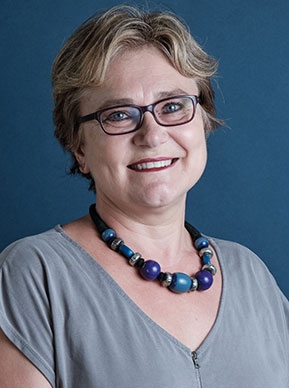
Fady Fadel
Faculty
Email: ffadel@middlebury.edu
Phone: work802.443.5526
Download Contact Information
Fady E. FADEL has a Ph.D. in Public Law from the University of René Descartes, Paris 5 - France. He is the Dean of the American Business School of Paris since November 2011, and he is professor of International Law and Political Science.
He is also a invited professor at Middlebury Collegue in Vermont – USA and an invited Lecturer at the University of Sherbrooke, Canada. He is former vice-president and general secretary of Antonine University in Lebanon (2000-2011).
He led his research works of doctorate on the administrative reform and the reform of the public service inLebanonand in the Arab countries.
In parallel and since 2005, Mr. Fadel makes researches on the pacific regulation of the international conflicts, the legal and political analysis of the UN Security Council's resolutions, and the peacekeeping's operations, the Special Tribunal for Lebanon and the Arab Spring phenomenon. He published in 2006 on the action of the Security Council inLebanon(1948-1986) and in 2009 on the Lebanese terms towards the international policy.
He is the president of the international conferences on the UNIFIL (Peacekeeping Operations in Lebanon), Lebanon at the UNSC and on the International Justice in December, 2008, 2009 and 2010. He co-steers the proceedings of these colloquium. He has numerous publications on the UNIFIL, on the system of collective security, on the Arab revolutions and on the international penal courts.
Courses
Courses offered in the past four years.
▲ indicates offered in the current term
▹ indicates offered in the upcoming term[s]
FREN 6650 - Mediterranean:Religion & Peace ▹
Religions, Peace and Security in the Mediterranean Region / Religion, paix, et sécurité dans la region méditerranéenne.
The longest non-resolved armed conflict of the XXth century, and probably of the XXIth century, is in the Mediterranean Region. It is not about a tension or about a dispute between two countries, but rather about a conflict among many countries of the region. The advent of the Arab Spring permits a new glance at the democratization of the Arab societies and their commitment (or not) to an inter-religious and inter-state long- term peace. In this context, we will first examine the various stages of the diverse conflicts and their evolution in the Middle East region. Secondly, by studying resolutions of the UN concerning these issues, we will analyse the experiences and the challenges and their implications for international relations, including the U.S.. Finally, we shall observe the complexities of connections between the religious and cultural minorities within these Mediterranean countries.
Besides regular credits this course may also count for one unit (i.e. 3 credits) in the M.A. in Mediterranean Studies program.
Civ Cul & SocSummer 2012
FREN 6689 - Religions Mediterranean World
Les Religions dans le monde méditerranéen / Religions of the Mediterranean World
Lined by three continents (Asia, Africa and Europe) and geostrategic space, the Mediterranean Sea was during several millenniums the centre of the world. Besides, being cradle of three monotheist religions and art of living, zone of conflict, crossroads of exchanges and migration, the Mediterranean Sea saw asserting itself, more than in quite other region of the planet, the numerous and glorious civilizations.
In this course, we are going to see that the Mediterranean Sea is the history of a tension between two modes of knowledge (the reason and the faith) on one hand, and the collection of their possible retrievable, between a shore and other one of the Mediterranean Sea on the other hand. In this trail, we are going to examine how the religious thoughts of both shores tend to approach the interactions of civilizations and to question these multiple interferences, which not only made all the history of the Mediterranean Sea, but which direct still widely its future.
No previous knowledge required.
Required Text: an electronic support will be provided.
(Besides regular credits this course may also count for one unit (i.e. 3 credits) in the M.A. in Mediterranean Studies program)"
Civ Cul & SocSummer 2009, Summer 2010, Summer 2011