Middlebury Language Schools
Return to Language Schools Home
 
mills_french_11_12
French School at Mills
2012 Flyer

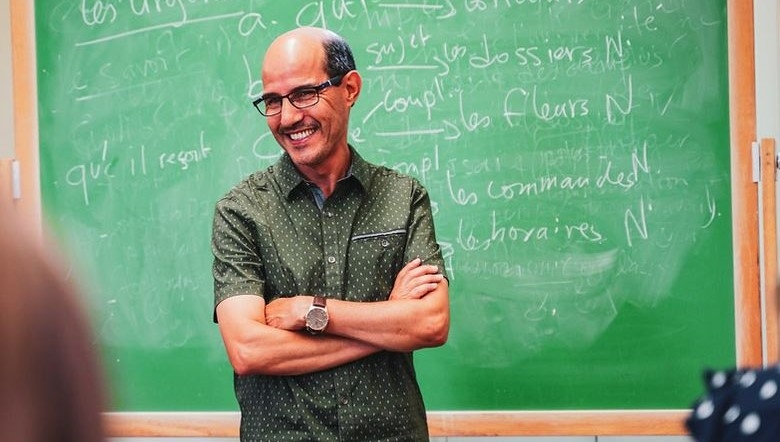
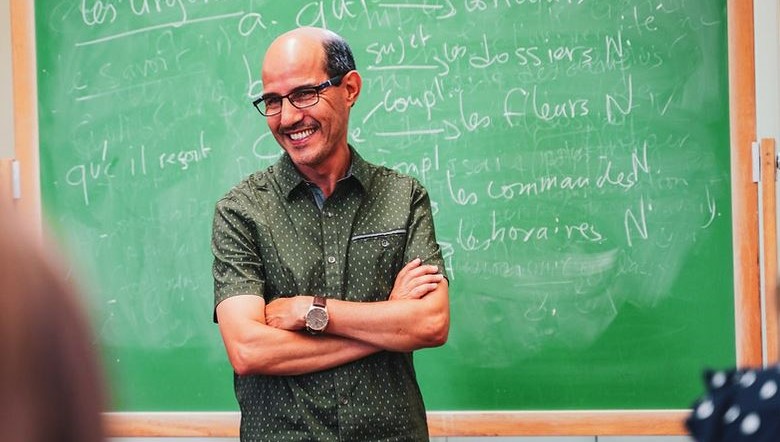
Laureate of the « agrégation » prepared at the French  grande école, the Ecole Normale Supérieure ; assistant professor in Classical French Literature at Aix-Marseille University and at the American Center of Aix and  Marseille ; president of the North American Society for Seventeenth Century French Literature (NASSCFL), member of the jury for Polytechnic University, member of the Research Center on Travel literature (CRLV), member of the  Interdisciplinary Center for Literary Studies of Aix-Marseille (CIELAM), and of the International Center for Encounters on the XVII Century (C.I.R. 17), chief editor for numerous anthologies of international conference papers, author of a published doctoral thesis entitled Voguer vers la modernité (Paris, PUPS, 2012, 880 p.), of some fifty articles on travel literature, on 17th century French literature and on the confusion of genre.

At the moment Madame Requemora-Gros is preparing her professorial thesis, a pre-requisite for receiving accreditation to supervise research.


Courses

Courses offered in the past four years.
indicates offered in the current term
indicates offered in the upcoming term[s]

FREN 6525 - Intro to Literary Analysis      

Lire, comprendre, écrire le voyage: méthodes d'analyses textuelles / Reading, understanding, and writing about travel: methods of textual analysis

This course will help social science and literary students master analytical and textual methodologies. These methodologies will allow students to read and comprehend texts in depth while developing their written analytical skills by performing methodological exercises such as summaries, technical explanations, close readings, argumentative dialectical essay, reading analyses or oral thematic presentations.

In these exercises, we will study tropes on the Other in literature, anthropology, sociology, and politics. What representation and images of travel, the foreign and the Other, stem from the French reader’s perspective? And who is this Other? Etymologically “the one who is not here”, the Other can be the neighbor, the opposite sex, the foreigner -- whoever is different. And what usage is made of such fluctuating representations? In a quest for travel and alterity through different texts spanning the 16th to the 21st centuries, we will explore the anthropological, sociological, political, stylistical, poetical, critical and ideological renewal of transcribed viewpoints of human identity and French clichés. To this end, we will study textual excerpts from different horizons might they be geographical, political, sociological, anthropological or historical.

Required texts :
1) A coursepack comprised of diverse argumentative texts (including Le Passeur, short story by Le Clézio)
2) Le Supplément au Voyage de Bougainville, Denis Diderot, LGF Libretti 13809 ISBN 2253138099
3) La Théorie du Voyage, Michel Onfray, LGF LDP Biblio essai 4417 ISBN 2253084419
4) Le Roi de Kahel (Tierno Monénembo), Seuil Cadre Rouge, ISBN 2020851671 5) La Ronde, JMG Le Clézio, éd. Folio/ Gallimard, ISBN 978 207038237 8

Final grade: Will be determined by five written exercises (60%) and two oral presentations (40%) "

Lit Theory/Analysis Pedagogy

Summer 2008, Summer 2009, Summer 2010, Summer 2011, Summer 2012

More Information »

FREN 6543 - The Post-Molierists      

Comment écrire une comédie après Molière ? Les post-moliéresques, de Molière à Marivaux. / Is it possible to pen a comedy after Molière ? The post-Molièrists, from Molière to Marivaux

How is it possible to think about comedy after Molière? What are the necessary methods to represent, conceive, and bring to life a comic play after Molière’s ingenious innovations, after the revival of the farce, after the invention of classical morals in “La Grande Comédie”, after the creation of the ballet comedy, after the victories at the end of so many quarrels, after so much comic and satiric brilliance, after such a supreme theatric genius? This is the challenge which the “post-Molièrists”, Regnard and Lesage, confronted as best they could, before Marivaux reworked the definition of comedy. Their response is simple but efficient as they imagined a theatrical reproduction of a party, a pot-pourri comedy, the elaborate recreation and imitation at the heart of a light-hearted knowledge, bitter, dark, and philosophical.

This in-depth study of classical theater offers two tracks, one methodological (section A) and the other literary (section B). Section A will help literature and social science students learn to master analytical and textual methodologies that will allow them to read and comprehend a variety of texts in depth while at the same time developing their analytical writing skills by performing methodological exercises such as summaries, syntheses, technical explanations, close readings, argumentative dialectical essays, and thematic oral presentations. Section B presents an academic exploration of the evolution of French comedy during the 17th and 18th centuries, combining the historical, literary, theatrical, cultural, philosophical, and social perspectives. In both cases, the course will be accompanied by the texts as well as different versions of the play represented on the screen.

Texts: 1) Dom Juan (Molière)

2) Les Fourberies de Scapin (Molière)

3) Le Bourgeois gentilhomme (Molière)

4) Le Légataire universel (Regnard)

5) Turcaret (Lesage)

6) L’île des Esclaves (Marivaux)

N.B Students who choose section A can validate their credits in methodology (equivalent to 6525).

Literature Pedagogy

Summer 2009

More Information »

FREN 6616 - Exoticism in 17-19C Theater      

(Section A – Methodology ; Section B – Literature)

The theatrical genre, characterized by a self-contained scene, traditionally ruled by unity of place, time and action, does not seem to lend itself to bigger spaces and location changes. However, since the beginning of the 17th century, some French playwrights have opened the scene to the representation of other parts of the world. Du Hamel was the first to set his action in Canada. The great playwrights Molière and Racine were interested in the Orient. Marivaux chose to set his plays in idealistic versions of the real world, creating the genre of utopian theater which challenges the traditional unity of place, time and action. Jules Verne adapted his fictional series of travel novels, Voyages Extraordinaires, to be played on stage. It’s theater inspired by world exploration, plays enacted on a stage yet depicting a larger world, that students in this literature class will explore, reading plays written from the 17th century to the 19th century.

Students can choose to take either a methodological section (6616A) or a literary section (6616B) of this course. The first option, section A, offers literary and social science students an opportunity to master analytical methods and textual commentaries that will allow them to read and understand a variety of theatrical texts, all while enhancing their analytical writing skills through various methodological exercises. These include summaries, literary comparisons, technical explanations, textual commentaries, argumentative dialectical essays, reading analyses and oral presentations. The second option, section B, offers students the opportunity to study the historic, literary, dramatic, cultural, philosophical and social evolution of the theatrical genre in France from the 17th to the 19th centuries in great depth. In both sections, students will read the plays and watch different film productions of each work as well.

Works to be studied:
Le Bourgeois gentilhomme by Molière
Bajazet by Racine

N.B Students who choose section A can validate their credits in methodology (equivalent to 6525).

Literature Pedagogy

Summer 2010

More Information »

FREN 6681 - Comedy & Society      

Comedy & Society, Comedy and the Human Condition

Section A: Methodology - Section B: Literature

Through analysis of five significant comedies (Molière through Ionesco : Dom Juan – Le Mariage de Figaro – La guerre de Troie n’aura pas lieu – Caligula – Rhinocéros-), the course will examine this literary genre in relation to its audiences, to the society which it mirrors, as well as to the different dramatic esthetics which it embodies. We will look at how the social dimension and the vision of man are associated, in as much as {or given that}they are expressed according to different representations in classical theatre or in more contemporary theatre.

Students can choose to take either a methodological section or a literary section of this course.

The first option, section A, offers literary and social science students an opportunity to master analytical methods and textual commentaries that will allow them to read and understand a variety of theatrical texts, all while enhancing their analytical writing skills through various methodological exercises. These include summaries, literary comparisons, technical explanations, textual commentaries, argumentative dialectical essays, reading analyses and oral presentations.

The second option, section B, offers students the opportunity to study the historic, literary, dramatic, cultural, philosophical and social evolution of French comedy from the 17th to the 20th century in great depth.
In both sections, students will read the texts and watch different film productions of each work as well.

N.B Students who choose section A can validate their credits in methodology (equivalent 6525).

Required texts:
1) Giraudoux, La Guerre de Troie n'aura pas lieu, éd., Grasset, le livre de poche, ISBN 2 – 253 – 00489 – 8
2) Camus, Caligula, éd., Folio/Gallimard, ISBN 978 – 2 – 07 – 036064 – 2
3) Ionesco, Rhinocéros, éd., Folioplus/Gallimard, ISBN 978 – 2 – 07 – 033880 - 1
4) Beaumarchais, Le Mariage de Figaro, Paris, Pocket classique, 2010, ISBN-10: 2266210432, ISBN-13: 978-2266210430.
5) Molière, Dom Juan, Paris, Garnier Flammarion, 1998, ISBN-10: 2080709038, ISBN-13: 978-2080709035

"

Literature Pedagogy

Summer 2012

More Information »

FREN 6683 - Classical Fr Lit through Film      

From Text to Screen: Classical French Literature Experienced through Film

Classical French literature is often considered old fashioned, sclerotic and much too invaluable to be studied yet again. Nevertheless, numerous directors and producers continue to accept the challenge—at the same time aesthetic and political—of adapting and conceptualizing literature though images. This course proposes studying the complexities of the novel, comedy and dramatic 17th century poetry, by way of seminal works: How do we envisage Madame de La Fayette today, from La Princesse de Clèves to La belle Personne (C. Honoré) through the eponymous film by J. Delannoy, La Lettre (M. de Oliveira) or even La Fidelité (A. Zulawski)? Or what do we make of the recent adaptation of La Princesse de Montpensier by B. Tavernier? How do comedy stars such as Smaïn, after R. Coggio or P. Fox, in Les Fourberies de Scapin, or Michel Serrault and Jean-Marie Bigard, before B. Lazar in Le Bourgeois gentilhomme, succeed in making us laugh with Molière? Furthermore, what do we continue to make of ancient tragedy after its Racinian production, as P. Chéreau, P. Jordan or B de Coster did for Phèdre? The ambitious goal of this course involves rethinking classicism to arrive at a better understanding of the present.

Students can choose to take either a methodological section (A) or a literary section (B) of this course. The first option, section A, offers literary and social science students an opportunity to master analytical methods and textual commentaries that will allow them to read and understand a variety of theatrical texts, all while enhancing their analytical writing skills through various methodological exercises. These include summaries, literary comparisons, technical explanations, textual commentaries, argumentative dialectical essays, reading analyses and oral presentations.

The second option, section B, offers students the opportunity to study the historic, literary, dramatic, cultural, philosophical and social evolution of screen adaptations of French literature of the 17th century in great depth.
In both sections, students will read the texts and watch different film productions of each work as well.

Required Texts:
1. Le Bourgeois gentilhomme and Les Fourberies de Scapin by Molière
2. La Princesse de Clèves and La Princesse de Montpensier by Madame de La Fayette
3. Phèdre by Racine

Literature

Summer 2011

More Information »

FREN 6769 - Poetry of Modernity      

Poertry of Modernity, the Modernity of Poetry

The practice of poetry, common in France since its beginnings, experienced important renovation, first in the seventeenth century and then in the nineteenth, proving its capacity for metaphamorphosis, from Barocco to Classicisme, then from Classicisme to Modernity, and the intelligence of its play with styles, genres, and ideas. Our emphasis in this course will be on demonstrating these developments and explaining them. To accomplish this we will use five major anthologies, touchstones of these transformations: Art poétique by Boileau, Fables et Contes of La Fontaine, Alcools, by Guillaume Apollinaire, Charmes, by Paul Valéry, and Le Roman inachevé, by Louis Aragon.

Students can choose to take either a methodological section (A) or a literary section (B) of this course.

The first option, section A, offers literary and social science students an opportunity to master analytical methods and textual commentaries that will allow them to read and understand a variety of theatrical texts, all while enhancing their analytical writing skills through various methodological exercises. These include summaries, literary comparisons, technical explanations, textual commentaries, argumentative dialectical essays, reading analyses and oral presentations.
The second option, section B, offers students the opportunity to study the historic, literary, cultural, philosophical and social evolution of French poetry from the 17th to the 20th century in great depth.

Required texts:
1) Apollinaire, Alcools, coll. Poésie/Gallimard
2) Valéry, Charmes, in Poésies, coll. Poésie/Gallimard, ISBN 2 – 07 – 030282 – 2
3) Aragon, Le Roman inachevé, coll.Poésie/Gallimard, ISBN 978 – 2 – 07 – 030011 - 2
4) Boileau, Art poétique, t. 2, Sylvain Menant éd., Paris, Fammarion, 1998, GF 206, ISBN 2080702068
5) La Fontaine, Fables, Jean-Charles Darmon éd., Paris, Le Livre de Poche, 2002, ISBN-10: 2253010049, ISBN-13: 978-2253010043
6) La Fontaine, Contes libertins, Paris, Librio, 2004, n°622, ISBN 2290332275

Literature

Summer 2012

More Information »

FREN 6900 - Research Paper      

Summer 2009

More Information »

The French School

Sunderland Language Center
Middlebury College
P: 802.443.5526
F: 802.443.2075

Mailing address
French School
14 Old Chapel Road
Middlebury College
Middlebury, VT  05753

Sheila Schwaneflugel, Coordinator
sschwaneflugel@middlebury.edu