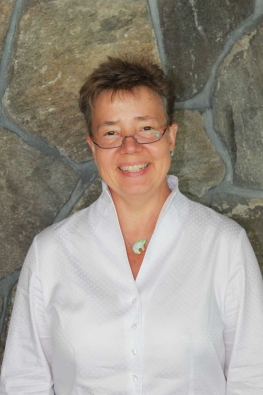
Hans-Michael Speier
German School Faculty
Michael Speier,
lebt als Autor und Literaturwissenschaftler hauptsächlich in Berlin, wo er aufgewachsen ist. Er hat in Berlin, Heidelberg, Paris und Chicago studiert und an der Freien Universitär Berlin mit einer literaturwissenschaftlichen Arbeit über Jean Paul promoviert. Danach lehrte er an der Freien Universität Berlin sowie an Universitäten in den USA und Deutschland (und demnächst in Japan). Seit 1997 ist er auch Adjunct Professor an der University of Cincinnati.
• Neben Aufsätzen hat er u.a. folgende wissenschaftlichen Bücher publiziert:
• Die Ästhetik Jean Pauls in der Dichtung des deutschen Symbolismus, 1979
• Kehr um im Bild, 1983.
• Im Übersetzen leben. Übersetzen und Textvergleich.1986.
• Poesie der Metropole, 1990
Interpretationen zu Gedichten von Paul Celan (Reclam Verlag), :2002
Er ist Herausgeber mehrerer Lyrik-Anthologien sowie Gründer und Herausgeber des Paul-Celan-Jahrbuchs und der Literaturzeitschrift Park.
Seine Gedichte wurden in zwölf Sprachen übersetzt und in über 40 Anthologien gedruckt. Er hat bisher acht Gedichtbände veröffentlicht; zuletzt: scherbenschnitte (1999), wüste pfade (2004) und welt/raum/reisen (2007). Für seine literarische Arbeit erhielt er 2007 den Schiller-Preis der Deutschen Schillerstiftung Weimar sowie zahlreiche Auszeichnungen, wie das Alfred-Döblin-Stipendium der Akademie der Künste Berlin und das Herman-Hesse-Stipendium. Er war als Writer-in-residence nach Frankreich, Amsterdam, Budapest und in die USA (Dartmouth College, Miami University) eingeladen und hat an internationalen Poesiefestivals, unter anderem in Medellín, Buenos Aires, Zürich, Belgrad, Malmö und Luxemburg teilgenommen.
Er unterrichtet an der Summer School von Middlebury seit 1998.
Courses
Courses offered in the past four years.
▲ indicates offered in the current term
▹ indicates offered in the upcoming term[s]
GRMN 6610 - Intro Literary Analysis ▹
An Introduction to Literary Analysis (“Schreibprozesse”)
This course combines creative writing in German with literary theory. It is designed to develop aesthetic sensibilities by looking at sample literary texts and the methods they use to create their effects. While literary forms are too multifaceted to be reproduced according to a formula, there are nevertheless some techniques and forms of writing that can be garnered from exemplary literary texts and practiced in one’s own creative writing. What do metaphors, allegories, poems, stories, or dramatic scenes of others ‘feel’ like if they are read or if they are written by oneself? How is day-to-day story telling transformed into ‘literary’ story telling? What makes images into a poem, or a text into a film?
We will work on forms of metaphor and explore theories of metaphor and the creation of metaphors, then turn them into practice by writing examples ourselves. We will explore modern allegories by analyzing poems by H.M. Enzensberger and Sarah Kirsch, the sound and tonal qualities of poems by looking at H. Ball or Ernst Jandl,. We will write examples of both ourselves as a kind of practice. We will also look into the use of paintings as models for literary texts.. We will compare quotidian narration and literary narration by looking at examples by Kafka, Fühmann, and Bachmann. In all these instances, we will write short examples of the poetic forms and narratives that we have studied and discussed. Finally, we will also consider how to move from a novel to the film version of the novel (Döblin’s Berlin Alexanderplatz).
A reader will be made available.
LiteratureSummer 2009, Summer 2010, Summer 2011, Summer 2012
GRMN 6646 - Celan & Bachmann ▹
Paul Celan - Ingeborg Bachmann
Celan and Bachmann are two of the most important authors of the second half of the 20th century. Almost exact contemporaries, they made significant contributions to the development of the literature of the Federal Republic, and their longstanding personal relationship can at least partially explain the aesthetic similarities between their works.
The goal of the seminar is to gain familiarity with the two authors’ works, by means of intensive close readings, as well as with their theoretical writings. Selections of Celan’s poetry, from Der Sand aus den Urnen to Schneepart will be discussed along with poems from Bachmann’s poetry collections Die gestundete Zeit and Anrufung des Grossen Bären, her short prose fiction (e.g., Simultan), and the novel Malina. Selections from their respective theoretical works (Bachmann’s Frankfurter Vorlesungen and Celan’s speeches upon accepting the Bremen and Büchner literary prizes) will also be considered. Letters and films will shed light on the biographical background and illustrate relationships to other writers. The course will, then, not only study the works of the two authors, but also offer new insights into their position in German literature of the 20th century.
Required texts: Paul Celan: Ausgewählte Gedichte / Zwei Reden. Nachwort Beda Allemann. Suhrkamp Verlag, Berlin; Ingeborg Bachmann: Gedichte, Erzählungen, Hörspiel, Essays. Pieper Verlag, München; Wolfgang Emmerich: Paul Celan (rororo Monographien), Rowohlt Verlag; Hans Höller: Ingeborg Bachmann (rororo Monographien), Rowohlt Verlag.
LiteratureSummer 2012
GRMN 6652 - Berlin-Cult Metro: 1900-2000
Berlin – Cultural Metropolis: 1900-2000 (Seminar)
Berlin occupies an exceptional place in German history. The course explores selected chapters from different periods and areas of Berlin’s cultural history such as Berlin expressionism; die goldenen Zwanziger Jahre; clubs, cabarets and revues; Berlin as Cinematic center of Germany: Jewish Life in Berlin; Literatur Cafés; Berlin during the 3rd Reich; art districts (Prenzlauer Berg and Kreuzberg); the building and fall of the wall; and the cultural profile of present-day Berlin. In addition to literary texts, examples are drawn from the fine arts, music and film.
Required text: A prepared reader will be made available
Recommended text: Hans Michael Speier, Berlin mit deinen frechen Feuern. 100 Berlin Gedichte (Reclam).
Area StudiesSummer 2009
GRMN 6680 - German Romanticism
German Romanticism
The Kunstmärchen is used as an introduction into the literature and culture of the German Romantik. Compared to the Volksmärchen, the Kunstmärchen is characterized by self-reflection and a utopian perspective, and it contains essential elements of romantic fiction. In addition to the analysis of the texts, central concepts and topics of romanticism are explored such as: Romantic irony, Universalpoesie, magic, nature symbolism, the Doppelgänger motif, and the role of madness and dream. The discussion includes poetry, short theoretical essays as well as examples from painting and music. (1 unit)
Required texts: Gerhard Kaiser, Literarische Romantik , 2010 (Vandenhoek & Ruprecht); Ludwig Tieck, Der blonde Eckbert. Der Runenberg (Reclam, UB 7732); E.T.A. Hoffmann, Der goldene Topf (Reclam, UB 101); Friedrich de la Motte Fouqué, Undine(Reclam,UB 492); Adelbert von Chamisso, Peter Schlehmihls wundersame Geschichte (Reclam, UB 93)
LiteratureSummer 2008, Summer 2011
GRMN 6681 - Seminar: Faust
Faust
Goethe’s Faust is considered to be a pivotal work of German literature. For about 200 years it has remained in the public consciousness and maintained in the public an amazing vigour and actuality. The major focus of this seminar about Faust 1 is a careful analysis of the text which will consider structure, style, and language as well as aspects of versification and dramaturgy. Origin and sources will be discussed as well biographical and historical background and the place of the drama in Goethe’s Gesamtwerk. Film versions of famous Faust productions will be compared, and different critical responses to Faust will be explored as well as the “modernity” of the play.
Required Text : Johann Wolfgang von Goethe, Faust: Der Tragödie Erster Teil. (Reclam Nr.1.); Ulrich Gaier, /Kommentar zu Goethes Faust. (Reclam Nr. 8183)
LiteratureSummer 2010
GRMN 6684 - Gn Poetry 20th Cent
Poetry in the 20th Century - Lyrik des 20. Jahrhunderts
The seminar explores changing concepts and traditions of German poetry in the 20th century and focuses on exemplary analysis of poetic texts by poets including Hofmannsthal, Rilke, Benn, Brecht, Bachmann, Celan, Enzensberger and Grass as well as texts known as konkrete Poesie. The course introduces basic concepts and terminology used for literary analysis and demonstrates different methodological approaches to the interpretation of poetic text. Authors will be introduced with their literary and historical background.
Required texts: Deutsche Lyrik. Eine Anthologie. Hg. von Hanspeter Brode (Suhrkamp); Dieter Burdorf, Einführung in die Gedichtanalyse (Verlag J.B. Metzler).
Summer 2008