Middlebury Language Schools


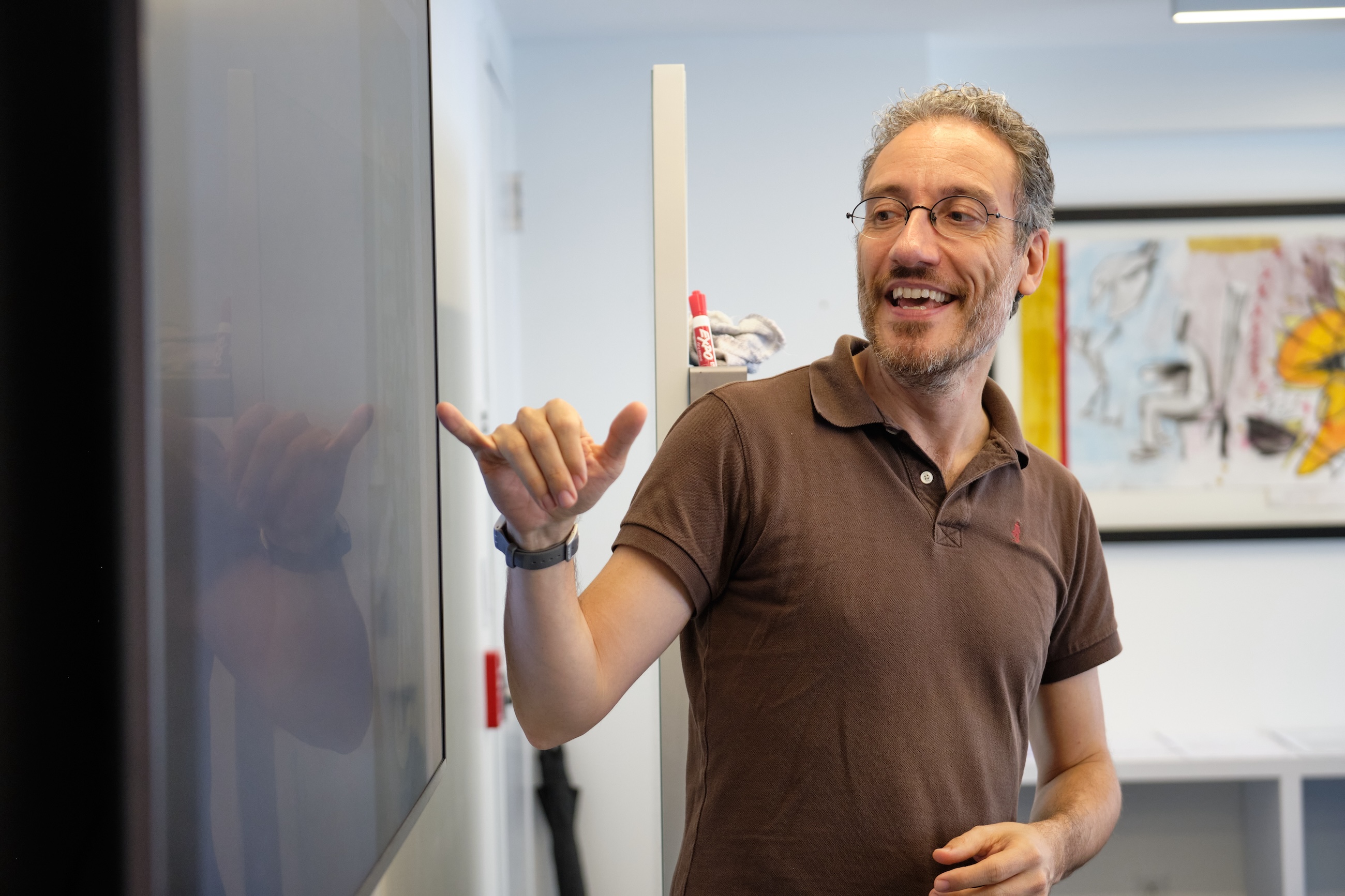
Federico Pacchioni

Italian School Faculty

Ph.D. in Italian from Indiana University Bloomington. He is currently an Associate Professor of Italian at Chapman University. His research has been primarily in Italian cinema, literature, and popular theatre, often addressing inter-art relationships. He is the author of articles on Federico Fellini, Pier Paolo Pasolini, and Giuseppe Tornatore, and on the Italian puppet theatre. He is currently working on a book manuscript about the creative partnerships between Fellini and a number of writers. He is also researching intermedial dynamics linking Italian puppetry with film and literature.


Courses

Courses offered in the past four years.
indicates offered in the current term
indicates offered in the upcoming term[s]

ITAL 3415 - Survey Italian Lit & Culture      

Survey of Italian Literature and Culture

This course focuses on a number of authors who have embodied and shaped the literature and culture of Italy, from the Middle Ages until modern times. Students will analyze significant works by authors such as Dante, Petrarch, Boccaccio, Machiavelli, Ariosto, Marino, Manzoni, Leopardi, Verga, Pirandello, Ungaretti, Calvino. The readings will serve as a starting point for conversation and a basis for analyzing the authors' style and the historical context of their works. A central objective of the course is to enrich the study of literature and to improve the students’ ability to express themselves with accuracy and ease both in speaking and in writing. Therefore, the study of the texts will be carried out through oral and written exercises and activities.

Required Texts: PDF and additional material for the course will be provided by the instructor.

Summer 2012

More Information »

ITAL 3419 - Modern Italian Filmmakers      

The Art of the 20th Century that Diffused Italian Culture throughout the World

This course seeks to illustrate to students the role and importance of Italian cinema in its evolution from the postwar period through our own day. There has been no other art that has marked itself or spread knowledge like the many masterpieces and huge successes that emerge from the Italian cinematographic tradition. What's more, these films have contributed historically to the birth of an industry that produced between 250 and 260 works per year in the 50s and 60s, making it the second most fecund in world after the United States. The diffusion of this cinematography reported to the world the plight of a nation that was defeated, ravaged by war and hated by the victorious nations. Unexpectedly and with accents of verity never before realized, this cinema revealed to the eyes of stupefied viewers around the world another Italy. We owe it to a handful of films if at the end of the 1940s and the beginning of the 1950s our nation re-acquired a measure of dignity for its ability to speak, with a style never seen before, of the disaster it had experienced, of its tragedy and also its will to rebirth and redemption.

Roberto Rossellini's 'trilogy of war' (Roma città aperta, Paisà, and Germania anno zero) and the three films of Vittorio DeSica (Sciuscià, Ladri di biciclette, and Umberto D), together with the masterpieces of Luchino Visconti, Giuseppe De Santis, Mario Monicelli, Pietro Germi, Federico Fellini, Luigi Comencini, Mauro Bolognini, Paolo Pietrangeli and so many others, were able to speak of hell and the rebirth, desperation and the smile of resilience. The school of neorealism influenced the nouvelle vague, the English free cinema, the new Brazilian cinema and the enthusiasm of the young American directors of the 1970s who drew inspiration from its productions. Fourteen films, identified as being among the most important in the Italian production between 1945 and our own day, will serve as the fil rouge of the course. Through the study of these films, we will confront and illustrate the society, culture, taste and style that have characterized Italy over the past seventy years of her secular history.

Required Texts:
PDF and additional material for the course will be provided by the instructor.

Summer 2012

More Information »