

Fostering Dialogue and Growth: Conflict Analysis Peer Facilitators
Conflict Analysis Peer Facilitators are a cohort of CCE-supported students who completed an intensive month-long training in conflict management, facilitation, leadership, and group dynamics. Their role is to support CCE summer programs — including Language Access, Privilege & Poverty, CCE Experiential Learning Fellows, Projects for Peace, Social Impact Corps, and many other CCE-sponsored and CCE-supported initiatives — while also facilitating Conflict Styles workshops for student groups throughout the academic year.
Conflict Analysis Peer Facilitators had their first major “Conflict Styles” workshop that brought together students participating in CCE summer programs to explore conflict and communication.
This summer marks the beginning of their work as facilitators, as their first major “Conflict Styles” workshop brought together students participating in CCE summer programs to explore conflict and communication.
During the workshop, participants reflected on their own approaches to conflict and learned how conflict styles can shift depending on context, relationships, culture, and environment. Together, they explored the five major conflict styles — competing, avoiding, harmonizing, collaborating, and compromising — while discussing the strengths and limitations of each approach. Participants considered when each style may be most effective, how to recognize conflict styles in others, and how to respond productively in moments of tension.
The workshop also focused on the intersections between cultural dimensions and conflict styles, encouraging students to think critically about how culture influences the expression and perception of conflict. Through group discussions and scenario-based activities, participants applied these concepts to real-life situations and reflected on the ways conflict can shape teamwork, communication, and relationships
One reflection question asked participants to consider: based on your own experiences, what is one strength of your group’s conflict style, and what is one challenge it may create when working collaboratively?
Beyond the workshop itself, the Conflict Analysis Peer Facilitator training emphasizes self-reflection, leadership development, and relationship-building. Throughout the month-long program, facilitators examined their own experiences with conflict, reflected on how people navigate tensions within groups and relationships, and explored ways to transform conflict into opportunities for growth, understanding, and productive dialogue.
The facilitators did an incredible job leading thoughtful conversations, creating engaging activities, and fostering an environment where participants felt comfortable reflecting, learning, and sharing their perspectives. We are excited to see the impact they will continue to make across CCE programs throughout the summer and academic year!
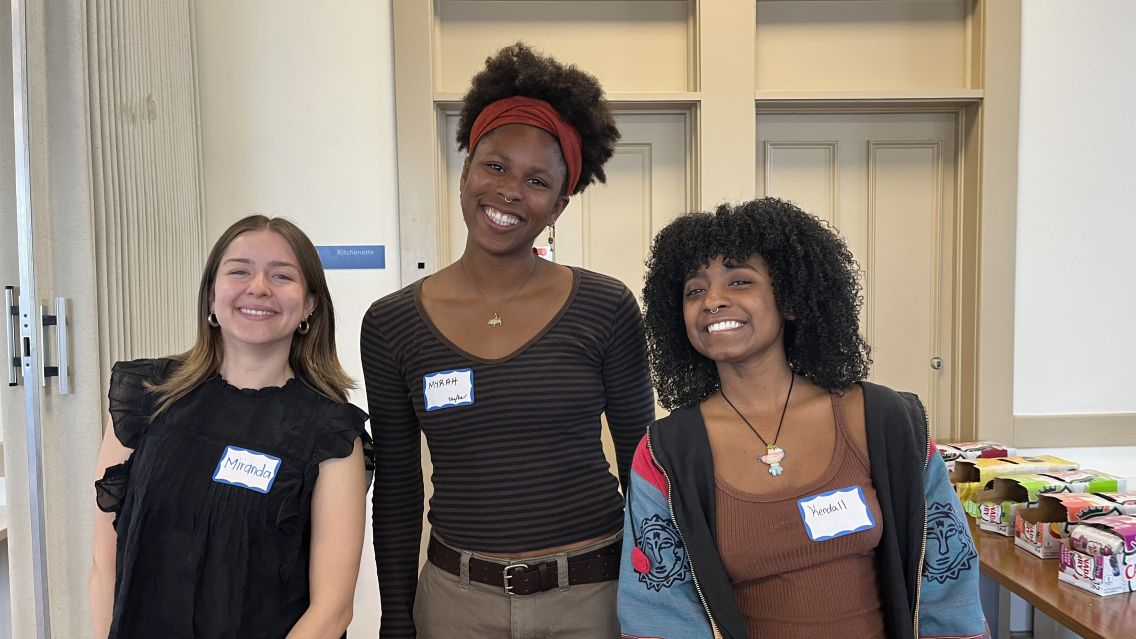
Check out the video for snippets from the workshop and hear reflections on the Conflict Analysis Peer Facilitator training from Miranda Talavera ‘27, Myrah Valmyr ‘27, and Kendall Clayton ‘26.5 as they share their experiences, insights, and what this work has meant to them.