

RCGA J-Term Speaker Series
The Rohatyn Center for Global Affairs J-Term Speaker Series features Middlebury College winter term faculty examining some of the most challenging issues in their areas of expertise.
January 12, 2026 (Monday)
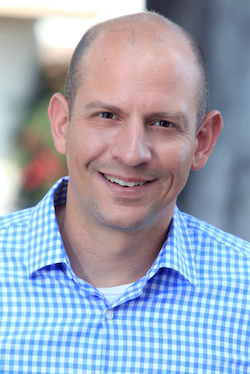
3:30 pm- Robert A. Jones ‘59 Conference Room (RAJ CON)Jason Blazakis.
“Label First, Evidence Later: Terrorism Designations, Venezuela, and Trump’s War on ‘Antifa’”
This talk explores how the label “terrorist” is made—and weaponized. Professor Blazakis directed efforts related to the crafting of the “terrorist list” for more than a decade as head of the office that sanctioned terrorists pursuant to various legal authorities of the Secretary of State. He will unpack how terrorist designations are created in law and practice: who makes these decisions, what evidentiary standards are (supposed to be) applied, and how listings are an important tool of economic warfare and now, during the Trump Administration, domestic politics. From there, Professor Blazakis will examine how the Trump administration pushed this tool in controversial new directions, including efforts to label foreign drug cartels as terrorists, moves that intersected with U.S. policy toward Venezuela, and rhetoric about treating “Antifa” as a terrorist organization.
Jason Blazakis is a Professor of the Practice at the Middlebury Institute of International Studies at Monterey and Director of the Center on Terrorism, Extremism, and Counterterrorism.
January 14, 2026 (Wednesday)
3:30 pm- Robert A. Jones ‘59 Conference Room (RAJ CON)Jeffrey Lewis and Sam Lair
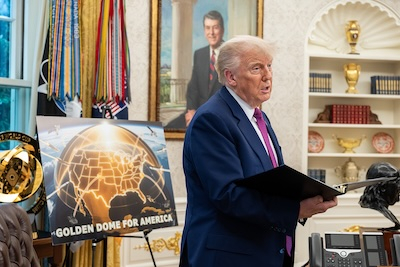
“Nothing New Under the Golden Dome: Space-Based Interceptors and Strategic Defenses in the Trump Administration”
The Golden Dome program is quickly becoming the signature defense program of Trump’s second term. A central element of Golden Dome has become space-based interceptors. Sam Lair and Jeffrey Lewis will discuss the history of space-based interceptors, the difficulties associated with building and sizing a constellation of such interceptors, and the challenges they pose for the nuclear balance between the U.S. and its adversaries in the 21st century.
Dr. Jeffrey Lewis is the director of the East Asia Nonproliferation Program at CNS. Before coming to CNS, he was the director of the Nuclear Strategy and Nonproliferation Initiative at the New America Foundation. Find out more here.
Sam Lair is a Research Associate at the James Martin Center for Nonproliferation Studies (CNS) where he studies North Korean defense industrial capabilities using open source methods as part of the New Tools Team. Find out more here.
January 21, 2026 (Wednesday)
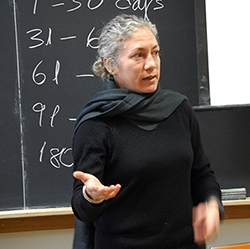
3:30 pm- Robert A. Jones ‘59 Conference Room (RAJ CON)Elizabeth Toder ‘90
“Extending Financial Services to the Unbanked Around the World and in Addison County”
Join Elizabeth Toder, an experienced international development professional, Class of 1990, through a highlight of different interventions and tools used for poverty alleviation, financial inclusion, and the extension of financial services to the unbanked. Using examples drawn from emerging markets and a data set from Addison County, she will provide a survey of the use of microfinance, microinsurance, and digital financial services to achieve these goals.
Elizabeth Toder is a senior multilingual project manager with 25 years’ experience designing and managing strategic partnerships in developing markets.
January 22, 2026 (Thursday)
3:30 pm- Robert A. Jones ‘59 Conference Room (RAJ CON)Stephen Herzog
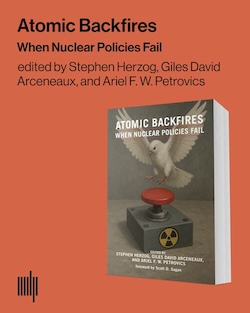
”Atomic Backfires: When Nuclear Policies Fail”
The existential risks posed to the world by nuclear weapons are growing. Efforts to halt nuclear proliferation, manage crises, promote arms control, and build alliances are all considered fundamental to reducing the likelihood of nuclear catastrophe. Yet, no tool is guaranteed to succeed and some may even have unanticipated, counterproductive consequences for international security.
In a field fixated on finding solutions, Atomic Backfires, edited by Stephen Herzog, Giles David Arceneaux, and Ariel F. W. Petrovics, provocatively takes the opposite tack. An impressive group of contributors calls for close scrutiny of “standard operating procedures” in nuclear politics. They warn decision makers, scholars, and students not to lose sight of the drivers and often calamitous effects of failed nuclear policies. The volume’s authors aim to provide insights for navigating the difficult nuclear choices pursued in Washington, D.C., and other capitals around the globe.
Stephen Herzog, Professor of the Practice at the James Martin Center for Nonproliferation Studies at the Middlebury Institute of International Studies at Monterey. Dr. Herzog is lead editor of Atomic Backfires: When Nuclear Policies Fail (MIT Press, 2025).