Middlebury Language Schools
Return to Language Schools Home
 

Video Postcard

mls_summer_2011outside%20shot

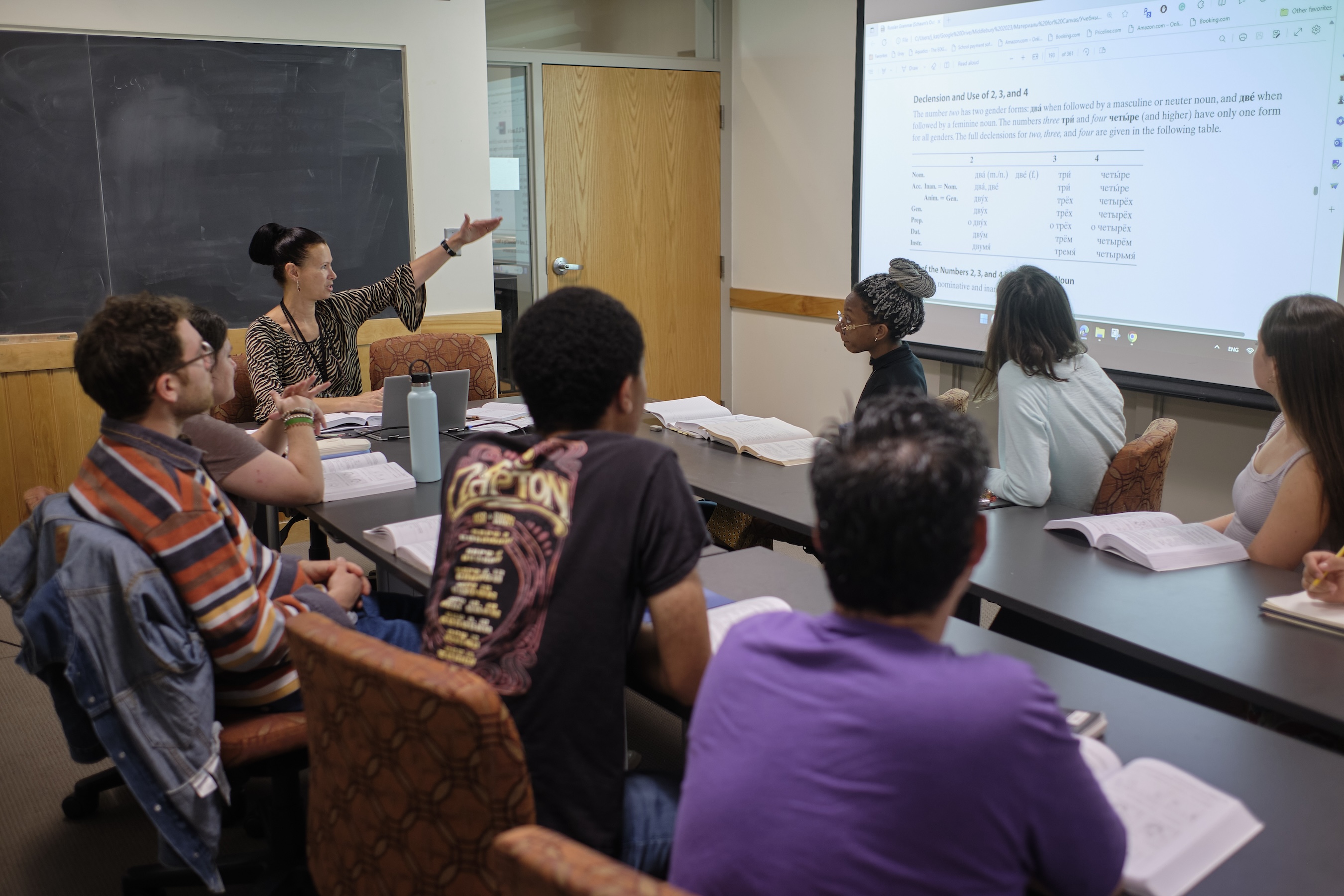
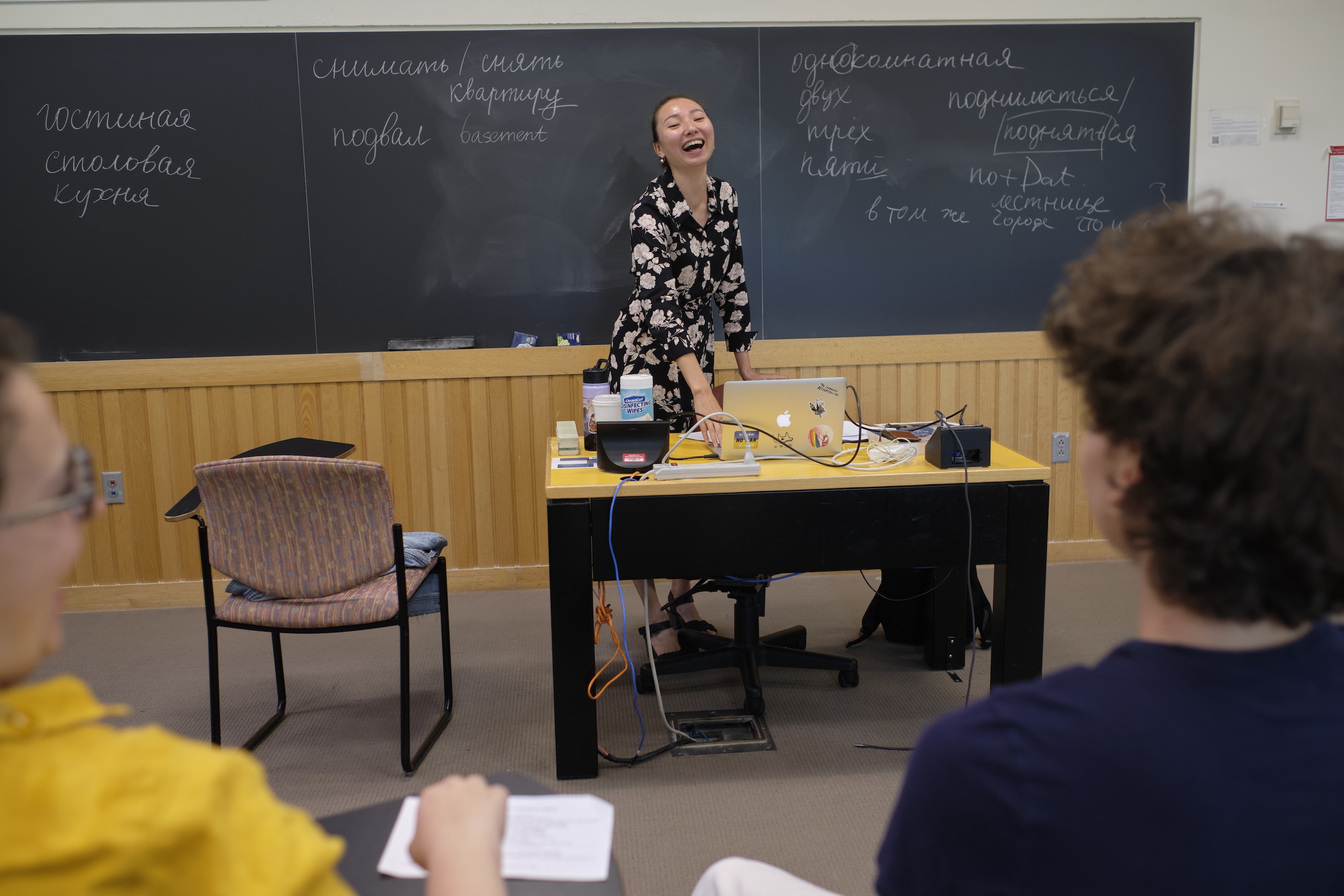
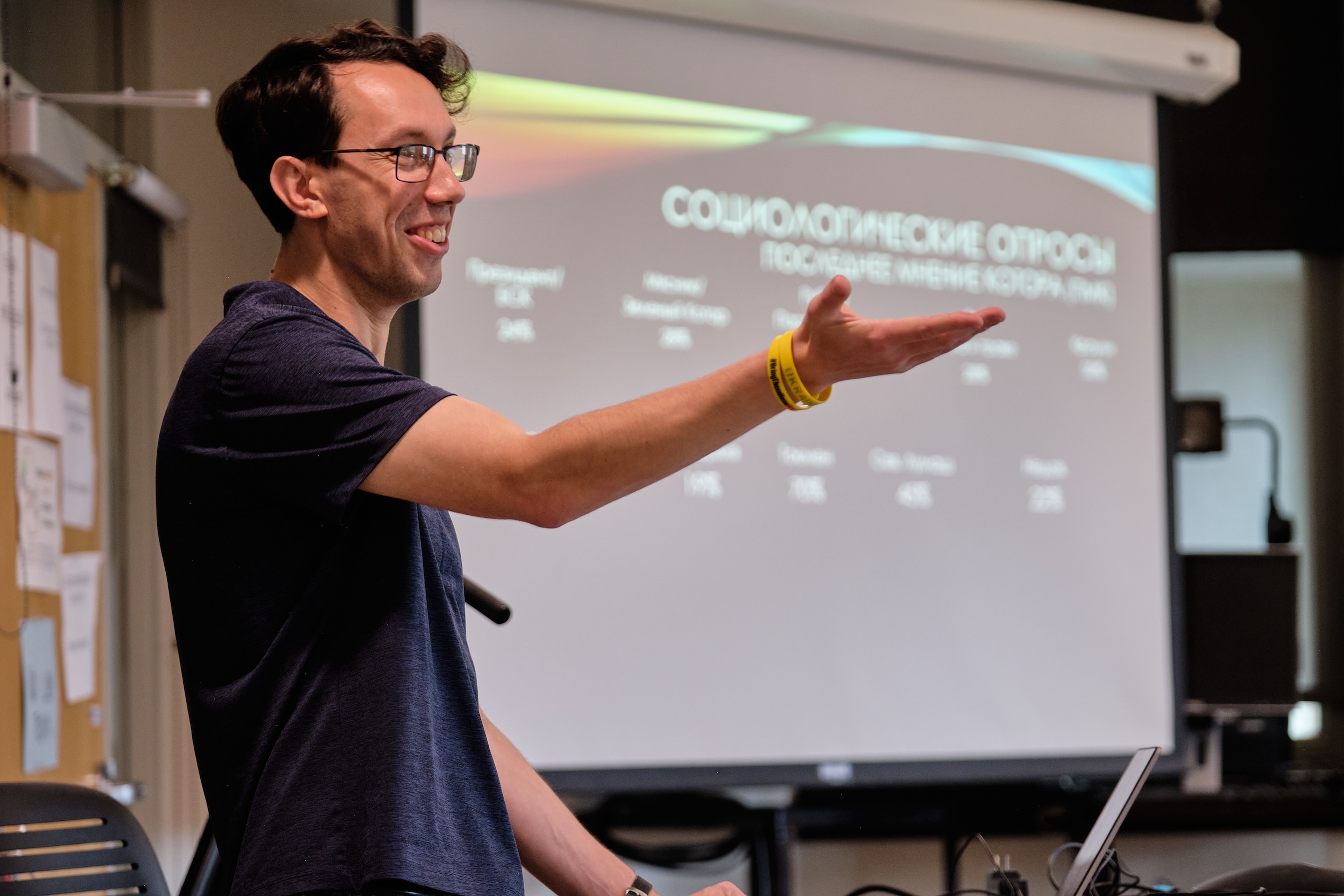
Helena Treeck ’12 shares a typical day at the School of Russian.

Professor, Dean of the Department of History, Political Science and Law at the Russian State University for the Humanities.Doktorskaya, Russian State University for the Humanities

When my administrative responsibilities and to-do list leave me a moment to catch my breath, I recall that my research interests (back when I had time for research interests) include teaching, and the study of historical consciousness and historical cognition.

I have published over 150 works, including 2 monographs and 3 textbooks. Among my favorite courses to teach are: "Historical psychology", "The History of Russia", "The History of Historical Science", and "The History of Political and Legal Concepts." Perhaps my favorite recent monograph is: "The Historiographical Culture of Russia in the Twentieth Century."

With little time for a hobby, my recreational activity recently has been exploring the topic: "What is good and what is bad?" with students and devising new means of praising the department with my superiors. If nothing else, these discussions are making me an expert negotiator.


Courses

Courses offered in the past four years.
indicates offered in the current term
indicates offered in the upcoming term[s]

RUSS 6610 - Russia Between East & West      

Russia Between East and West: a Choice of Priorities

Russia's historical and cultural development has been largely dominated by the «Eastern» and the «Western» vectors. Even in the Middle Ages Alexander Nevsky had to make a hard choice between the Catholic West and Mongol Hоrdes. In the 21st century the question has remained pressing for both Russian politicians and the public: what model should be chosen for Russian modernization — the Chinese (Eastern) or European (Western) one.

At the same time, it's extremely popular to think of Russia as a unique type of civilization having her own special design being neither the West nor the East.

This graduate course is to address key problems in Russian history and present an overview of the most important terms and concepts crucial for both developing better understanding of classical historical texts and literature and the current situation.

Civ Cul & Soc

Summer 2012

More Information »

RUSS 6613 - Ethnic & Religs Dsgn Mod Russ      

The Ethnic and Religious Design of Modern Russia

Ethnic and religious processes in the USSR and subsequently in Russia have been particularly striking since the end of the 1980s. After the demise of the Soviet Union, followed by the crisis in Soviet identity, ethnic and religious factors have become key elements in the emergence of a new system. Various political groups began to take advantage of this situation. At the same time, as the state gradually gained strength, its role in these processes grew. Thus comprehension of peculiarities and features of these trends is crucial to an understanding of today’s Russia. The aims of this course include providing information on major religious and ethnic groups and denominations in today’s Russia, as well as major terms and concepts related to these issues used in publications and colloquial Russian; studying the most pressing problems of ethnic and religious culture, as well as patterns of cross-cultural communication influencing the quality of life in present-day Russia; and examining the influence of various political, fiction and nonfiction texts on multi-ethnic and religious dialogue in Russia. The course will be accompanied by literary texts and documentary movies and will employ interactive methods. Students will be required to participate actively in class discussions and comment on assigned readings, to make an in-class presentation, and to write brief assignments and a final exam or paper.

Civ Cul & Soc

Summer 2008

More Information »

RUSS 6622 - Russia & US:Perestroika -Reset      

Russia and the USA: from «perestroika» to «reset»

The «image» and the attitude to the USA in Russian political life and public sphere are of utmost importance. A lot of Russia's political processes can be understood only in the context of their proper understanding. Intriguingly, there are two co-existing images of the USA in Russian mass culture - «demonized» and «romanticized».
The course aimed at graduate students is focused on the analysis of Russia's and America's misperception and stereotype formation process in mass culture as well as political manipulations in this field since the Cold War years and up to the present moment.

Great emphasis is going to be placed on the recent years and the latest developments closely connected with the ideas of «reset» in Russian-American relations accompanied by a thorough analysis of contradictions which have arisen in the context of this policy's implementation.

Civ Cul & Soc

Summer 2012

More Information »

RUSS 6636 - Civil Rights &Dissident Movmnt      

The Civil Rights and Dissident Movement in Russia

This course considers civil rights and dissident movements from the Thaw period to the present. Special attention will be given to analysis of the difficulties and contraditions of the creation of a civil society in Russia.

Civ Cul & Soc

Summer 2011

More Information »

RUSS 6639 - Stalinism & the Cold War      

This course, a continuation of last year’s course on early Twentieth-Century Russian History: Revolutions, will focus on the period from the Civil War to the Twentieth Congress of the CPSU, one of the most significant periods in twentieth-century Russian history: these were the formative years for the creation of the Soviet system of government, values, and the basis for its dialogue with the outer world. The course will prompt students to explore why Stalinism in the Soviet Union could take the form of a stable and efficiently working system whose domestic characteristics and trends contributed to the prolonged existence of its values among Soviet citizens. Though broad in its coverage of social, cultural, economic and ethnic deformations characteristic of the Stalinist system, the course will focus on the reasons why ‘Stalinism’ turned out to be so appealing to the society of that time. This issue is even more important in light of rising public interest in both Stalin’s personality and the processes which characterized his time. A great deal of this course will be devoted to international issues, since this period includes both the World War II period and the first steps towards bipolar confrontation. The course will be accompanied by literary texts and documentary films and will include a thorough study of transformations in political vocabulary and colloquial Russian. Students will be required to participate actively in class discussions and comment on assigned readings, to make an in-class presentation, and to write brief assignments and a final exam or paper.

Civ Cul & Soc

Summer 2008

More Information »

RUSS 6644 - Soviet Foreign Policy 1950-80s      

History of Soviet Foreign Policy, 1950s – 1980s

This course is dedicated to one of the most dynamic and contradictory periods in Soviet history, a time that combined in an astounding way criticism of the Stalinist cult of personality and the Krushchev Thaw with processes of re-Stalinization. Foreign policy was equally contradictory: the struggle for disarmament and the search for new principles in relations with the outside world were combined with major crises in foreign policy – in the Caribbean, Czechoslovakia, and Afghanistan, among other places. Cultural life in the Soviet Union was also extraordinary: the culture of the 1960s, the dissident movement, artistic breakthroughs combined with the growth of ideological censorship – all of this formed the unique cultural world of the postwar Soviet generation. The course will examine major political processes of the second half of the twentieth century, in which the USSR played a key role in world politics; it will also provide the background to study the formation of the Russian foreign policy outlook of the 21st century. Students will be required to participate actively in class discussions and comment on assigned readings, to make an in-class presentation, and to write brief assignments and a final exam or paper

Civ Cul & Soc

Summer 2009

More Information »

RUSS 6649 - Mechanisms Power Contemp Russ      

Operation Successor: Mechanisms of Power in Contemporary Russia

The contradictory nature of democratization and Russia’s peculiar transition from Communism predetermined the formation of certain traits of modern Russian political power. This was particularly evident in the process of presidential succession during which, while the outer appearance of democratic processes was preserved, completely different communicative patterns were established. One of the key problems is the level of trust between power and a society that has gone through profound transformations. The sheer scale of change in Russia is manifested in radical changes in virtually all spheres of political life and the pressing character of the non-political agenda in political discourse. Thus the course will also be devoted to issues in culture, science, and education, as well as to the role of expert commissions in the development of contemporary Russian politics. The course will also focus on the major personalities in Russian politics and their impact on political decision-making. Students will also learn contemporary political vocabulary. Students will be required to participate actively in class discussions and comment on assigned readings, to make an in-class presentation, and to write brief assignments and a final exam or paper.

Civ Cul & Soc

Summer 2009

More Information »

RUSS 6654 - Hist Civilizations in Eurasia      

The History of Civilizations in Eurasia

A consideration of Russia's place in and relationship with Central Asia and the Caucasus. The course will include an analysis of the historical development of non-Russian peoples in these areas and their encournters with the Russian empire.

Civ Cul & Soc

Summer 2011

More Information »

RUSS 6665 - Russian Reform & Reformers      

Analysis of the most significant reforms in Russian history helps to penetrate into the logic of modern Russian modernization. The starting point of the course is Peter the Great and his reforms, which resulted in the creation of a new type of state, new mode of life, new world outlook and relations with other countries. Peter’s reforms brought Russia to a different quality of existence and history but at the same time highlighted the limitations of such modernization.

The history of the 18th century is marked by a set of reforms undertaken by Catherine the Second. A special place in the course is reserved for analyses of the reforms aimed at the abolition of serfdom – starting with the first timid attempts to “modernize” it up to the decision for complete abolition. Given the importance of the “peasant issue” in Russia, Stolipin’s reforms, which proved to be way ahead of their time, are of great interest and importance. The Soviet epoch is to be explored through analysis of Stalin’s modernization, Khrushchev’s reforms and various attempts to make the Soviet economy more efficient in the 1960’s. The closing theme of the course is the analysis of the modern attempts to modernize Russia. Together with reforms themselves the course is focused on the most prominent Russian reformers as well as the feedback on their policy coming from the grass-roots level.

Summer 2010

More Information »

RUSS 6680 - Russia & CIS Countries '91-'10      

Russia and the CIS Countries, 1991-2010

The Commonwealth of Independent States, a group of newly independent states brought into being by the collapse of the Soviet Union, has an extremely significant influence not only on domestic but also on foreign policy of Russia. At the same time, Russia is their major neighbor holding the key to their own development and success. Today CIS countries are getting deeper and deeper plunged into the competition among major global actors: Russia, the USA, the EU, Turkey and China are all seeking for their own ways to secure influence in these states. This competition for influence is a drastic change of the framework of the whole system of world politics as well as the concept of global and regional leadership. The system is characterized by rising tension and contradictions among the major blocks and alliances. The course looks at not only various political and economic issues, but also major cultural aspects and patterns of communication.

Summer 2010

More Information »

RUSS 6903 - Research Paper      

This research paper is a requirement for DML candidates during their summer of application.

Summer 2010

More Information »

The School of Russian

Sunderland Language Center
Middlebury College
P: 802.443.5230
F: 802.443.2075

Mailing address
Russian School
14 Old Chapel Road
Middlebury College
Middlebury, VT  05753

John Stokes, Coordinator
schoolofrussian@middlebury.edu