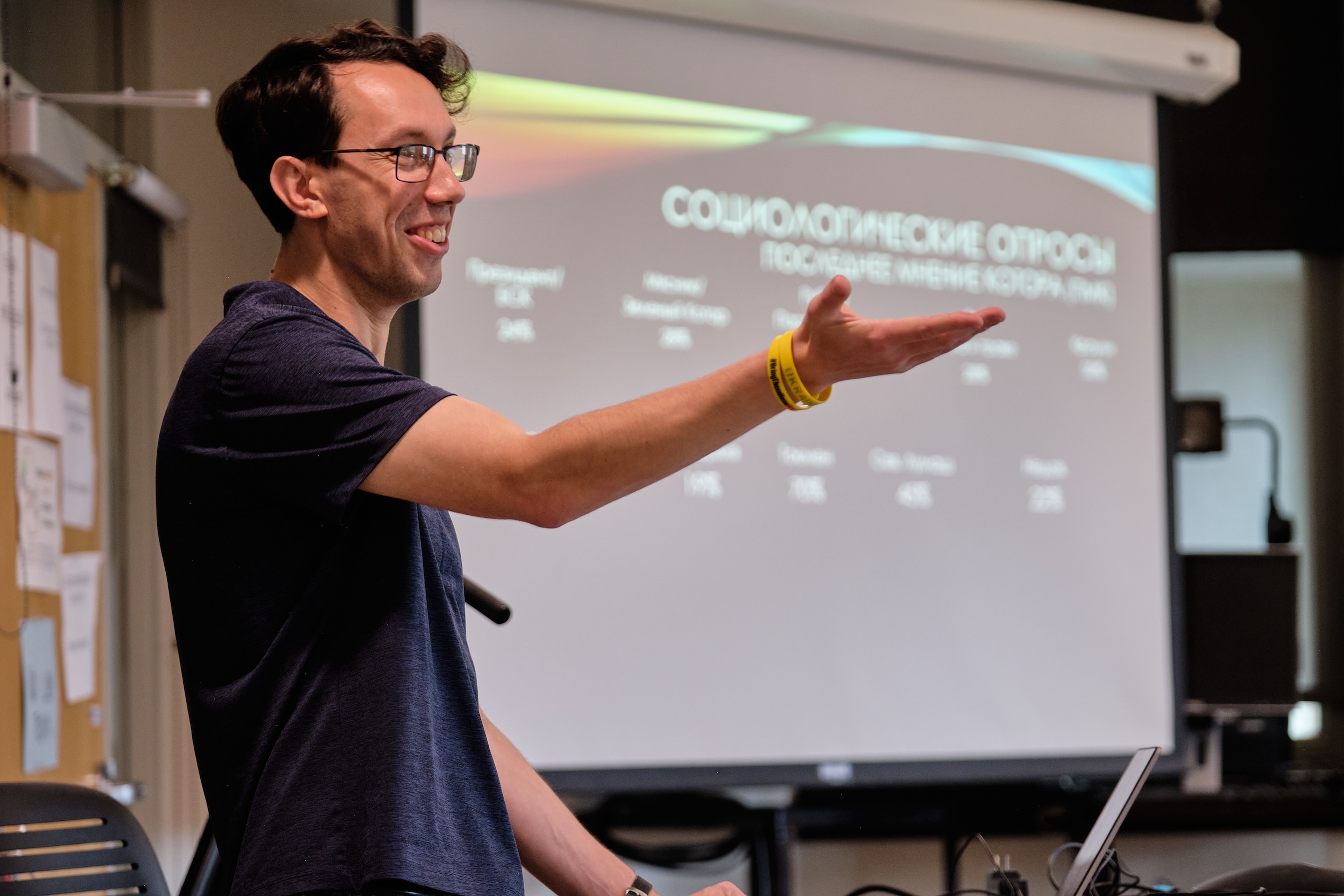
Oleg Proskurin
Email: oproskur@middlebury.edu
Phone: work802.443.5230
Download Contact Information
Kandidatskaya, Moscow State University
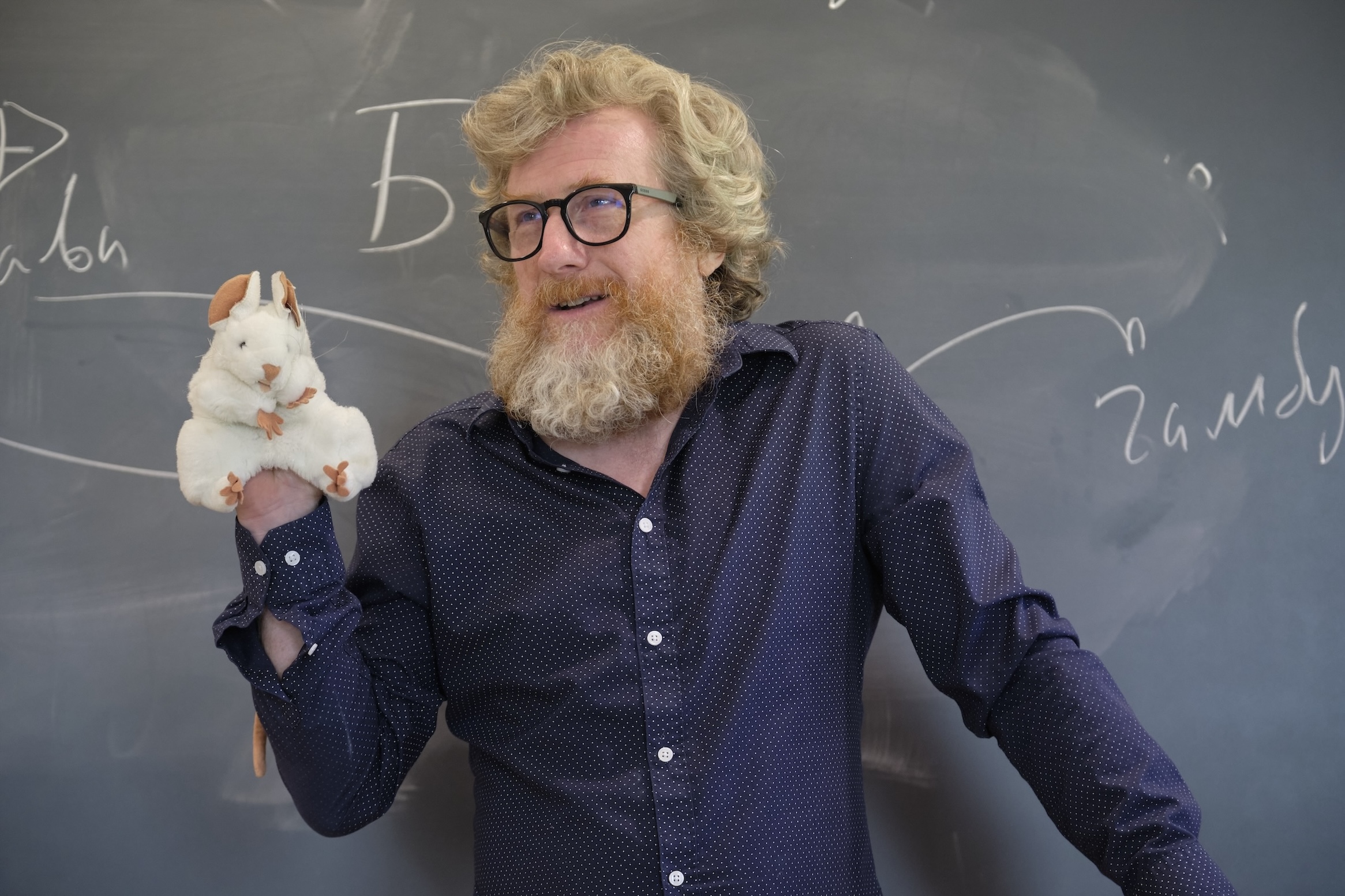
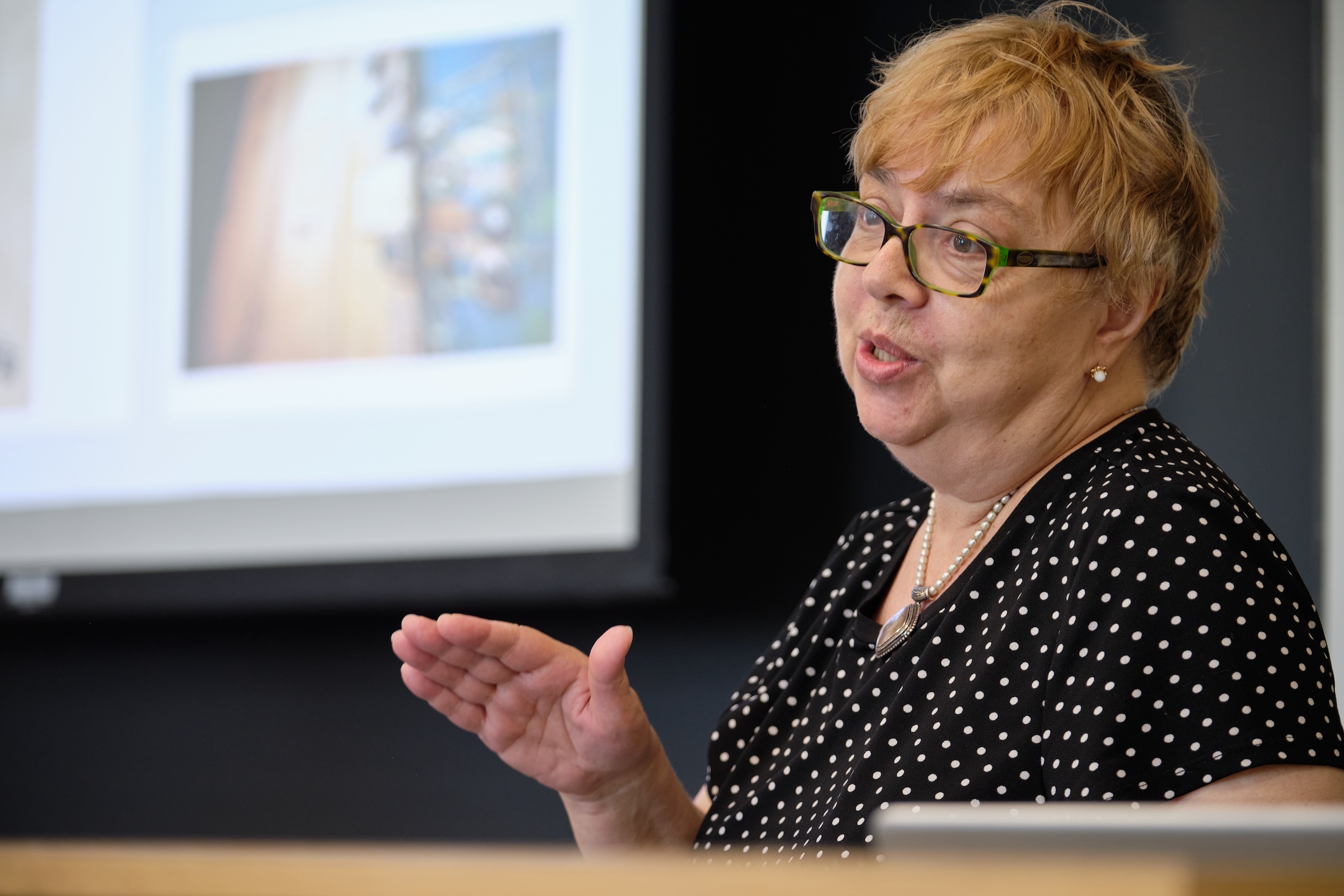
In 1984 I received my Ph.D. from the Department of Russian Literature at the Moscow State University. From 1985 through 1997, I taught Russian literature at the Moscow State Pedagogical University. My former students include successful editors, writers, and literary scholars. During the 1990's, I also taught as a visiting professor at the University of Illinois at Chicago, Northwestern University, and Cornell University. In 1998-1999 I worked as a Visiting Fellow at the Institute for European Studies (Cornell University); and in 2000-2001, as a Visiting Scholar in the Davis Center for Russian Studies at Harvard University.
I wrote a number of works on the history of Russian literature of the 18th-20th centuries and on modern literature, culture and politics.
My book Pushkin's Poetry, or A Lively Palimpsest (Moscow: NLO, 1999) was included in the short list of the 2000 Andrei Bely Award and was listed among the best Russian books of the 90's by several critics. My book Literary Scandals of Pushkin's Time (Moscow: OGI, 2000) provoked furious debates and was listed among the best books of the month, best books of the year, and best books on literature of the last decade.
Currently I am finishing my new book, "Gogol's High-Society Romance," and preparing a book-length commentary to Pushkin's narrative poems.
I love good parties, Baroque music, and long walking tours.
Courses
Courses offered in the past four years.
▲ indicates offered in the current term
▹ indicates offered in the upcoming term[s]
RUSS 6615 - Poets and Politics
Poets Against the Authorities: from G. Derzhavin to J. Brodsky
Poetry has always played a unique role in the Russian history. Due to the absence of possibilities for legal political life and political action, poets sometimes took the place of politicians. Accordingly, the state authorities always desired to convert Russian poets into their allies, or persecuted them as political enemies (i.e. exiled them, expelled them from the country, imprisoned, and even sent them to death). In 19th Century authoritarian Russia or the 20th Century totalitarian Soviet Union we often find situations that could not be imaginable in ‘normal’ democratic societies: the leaders of the state (such as Alexander I, Nicholas I, and Joseph Stalin) carefully read the particular poetic works of the major Russian poets and carried special resolutions about them; some sessions of the State Council in the Imperial Russia or the Central Committee of the Soviet Communist Party were completely devoted to recent poetic works and their possible impact on the inner condition of the society and on the foreign state affairs...
In our course we will examine the reasons of this unique attention to the poets and poetry paid by the State. The political views of different Russian poets, as well as their influence on Russian society will be a subject of our special examination. We will explore works and ideas of such poets as Gavriil Derzhavin, Alexander Pushkin, Mikhail Lermontov, Fedor Tyutchev, Nikolai Nekrasov, Alexander Blok, Osip Mandelshtam, Anna Akhmatova, Boris Pasternak, Joseph Brodsky. We will examine some cases when the poetry became the major issue of political life: Pushkin ‘southern exile’, the case of his poem Andre Chenier, the Central Committee Resolution on the journals Zvezda and Leningrad (particularly against Anna Akhmatova), Pasternak’s Nobel Prize scandal, or trials around Joseph Brodsky (charged with “parasitism”).
Summer 2010
RUSS 6620 - Great Love Small Genres 19-20C
Great Love in Small Genres: 19th and 20th Centuries
This course will focus on lyric poetry and short stories of great 19th- and 20th-century writers on the theme of love. We will see how these writers treat various aspects of love – psychological, moral, social, and even political. We will examine how this theme is connected with the individual creative characteristics of each writer and thus with the evolution of Russian literature. Prose works under study will include those of Pushkin, Lermontov, Dostoevsky, Turgenev, Tolstoy, Leskov, Chekhov, and Bunin; we will also read lyric poetry by Pushkin, Baratynsky, Lermontov, Tiutchev, Fet, Nekrasov, Blok, and Akhmatova. Students will write three short papers and a final exam.
LiteratureSummer 2008
RUSS 6621 - Nikolai Gogol ▹
In his brilliant essay The Apotheosis of a Mask Vladimir Nabokov called Gogol’s work “a grotesque and grim nightmare making black holes in the dim pattern of life.” Reading Gogol’s masterpieces, from his earlier Romantic tales to fantastic Petersburg’s short stories, from his eminent comedy An Inspector General to his mysterious novel/poem Dead Souls, students will learn to distinguish the writer’s life and artistic strategies. We will explore Gogol’s work within the broad literary and cultural contexts of his time. Students will write weekly one-page response papers and a final paper.
Readings:
Невский проспект
Нос
Записки сумасшедшего
Шинель
Ревизор
Мертвые души
Secondary literature (articles for discussion)
Б. Эйхенбаум. Как сделана «Шинель» Гоголя
О. Проскурин. Посмертное братство: Как Гоголь стал Пушкиным, а Пушкин — Гоголем
Summer 2012
RUSS 6623 - Prose of Russ Modernist Poets
Prose Works of the Russian Modernist Poets of the 20th Century
Some major Russian modern poets were at the same time outstanding masters of the Russian prose. Their novels, short stories or memoirs were concerned with the psychological biography of an intellectual (poet, artist, etc.) in the period of crisis and despair (such as wars, revolutions, social catastrophes, the changes of the entire social order). In our course we will focus on the following works: The Noise of Time (Shum vrememi, 1925) by Osip Mandelshtam (the internationally acclaimed critic D. S. Mirsky placed this work ‘on the first place among the most important books of recent times’); Cynics (Tsiniki, 1928), the novel by poet-imaginist Anatoly Mariengof (the Nobel Prize winner Joseph Brodsky treated this novel as ‘one of the most innovative books in Russian Literature), The Goat Song (Kozlinaia pesn’, 1928) by Konstantin Vaginov, a member of OBERIU, the last Soviet avant-garde literary group, ‘The Story’ (Povest’, 1929) and ‘Safe Conduct’ (Okhrannaia gramota, 1931) by Boris Pasternak – the prose works, which in many respects anticipated his famous Doktor Zhivago. We will read the prose of these authors against the background of their innovative poetry.
Students will read about 25-30 pages for each class session. They will compose short papers (4) as well as a final paper.
Summer 2010
RUSS 6629 - Literature and Empire
The goal of the course is to analyze the answers given by outstanding Russian writers of the Imperial period to questions that remain important today: “What is the Russian Empire? What did it bring to Russia and to other nations? What can we expect from it in the future? Will it end, and if so, for what reasons?” These questions provoked different answers from Gavriil Derzhavin, Aleksandr Pushkin, Aleksei Tolstoi; historians and political commentators Nikolai Karamzin and Aleksander Gertsen (Herzen); and prose writers Ivan Goncharov, Nikolai Leskov, and Lev Tolstoi. Their answers range from ecstatic apologies for the Empire, to attempts to find a basis for Russia’s ‘special mission’ as intermediary between West and East, to harsh and devastating criticism. The course will focus on well-known ‘classic’ texts (long poems of Pushkin, Lev Tolstoi’s story “Hadji Murat”) as well as lesser known and even forgotten texts without which, however, it is impossible to understand the problem of ‘Empireness’ in all its complexity (Nikolai Leskov’s “Na kraiu sveta”, Lev Tolstoi’s “Za chto?”, and others). Along with poetry and prose, we will be reading examples of ‘travel literature’ and political writings (which nevertheless also remain brilliant literary texts): Nikolai Karamzin’s ‘Zapiska o drevnei i novoi Rossii’ (excerpts), Gertsen articles on the ‘Polish question’, Pushkin’s ‘Puteshestvie v Arzrum’ and Ivan Goncharov’s ‘Fregat Pallada’ (excerpts). Students will be required to give a class presentation and to write three short papers and a final paper.
Civ Cul & Soc LiteratureSummer 2009
RUSS 6652 - Russian Formalism ▹
Russian Formalism: Theory, Literature, Cinema
The Russian Formalism is definitely one of the most renowned intellectual trends of the 20th century Russia. A famous British scholar Terry Eagleton claimed that the theory of literature started in 1917 when a young Russian formalist Viktor Shklovsly published his pioneering essay Art as Device. Students will read and discuss the most acclaimed works (critical essays, academic articles, and short fiction) by Viktor Shklovsky, Boris Eikhenbaum, Yury Tynianov, and Lidia Ginzburg to explore connections between Russian formalism and Russian Modernism (in arts, literature, and cinema.) The lectures and discussions will be widely supplemented by clips from movies made by formalist authors. Students will write weekly one-page response papers and a final paper.
Readings:
Виктор Шкловский.
Искусство как прием.
Письмо о России и в Россию.
Zoo, или Письма не о любви.
Рецензия на эту книгу (с. 380).
Об историческом романе и о Юрии Тынянове (глава о «Подпоручике Киже»).
Борис Эйхенбаум.
Как сделана «Шинель» Гоголя.
Из книги «Мой временник» (По мостам и проспектам: Из автобиографии ).
Проблемы киностилистики
О Викторе Шкловском.
Юрий Тынянов.
Литературное сегодня.
Литературный факт.
Об основах кино.
Либретто фильма «Шинель».
Подпоручик Киже (повесть)
Лидия Гинзбург.
Из записных книжек (записи 1920-х годов).
Movies:
Шинель (Сценарий Ю. Тынянова)
3-я Мещанская (Сценарий Виктора Шкловского и А. Роома)
Поручик Киже (Сценарий Ю. Тынянова. Музыка С. Прокофьева)
Summer 2012
RUSS 6653 - Russian Avant-Garde Poetry
Russian Avant-Garde Poetry: Theory and Practice
Almost all twentieth-century Russian poets familiar to Western readers – Akhmatova, Mandelshtam, Mayakovsky, Khlebnikov, Pasternak, Zabolotsky, Kharms, and others – belonged to that broad literary movement in the first decades of the previous century generally called the avant-garde or avantgardism; however, these poets are usually studied in isolation, without their broader literary context. Yet in order to understand the essence of their poetic experiments and achievements, and thus to evaluate their significance, it is necessary to examine their work within historical context, as a part of the activity of certain literary groups and schools. This course will examine the work of great poets of the 1910s to 1930s within this context. We will focus on literary groups including Acmeism (and the Guild of Poets), Futurism (and LEF), Constructivism (LTsK), Centrifuge, and OBERIU. We will examine the relationship of the literary practice of these great twentieth-century poets and their esthetic reflections, particularly those expressed in the declarations and manifestos put out by each group. We will also examine great critical responses to these groups and directions, such as Viktor Zhirmunsky’s article “Preodolevshie simvolizm”, Kornei Chukovsky’s articles on Futurism, and others. We will attempt to understand what traits of “group aesthetics” were of greatest significance for the work of these poets, and which ones they ‘overcame’ in the process of literary evolution, opening the field for further development and poetic renewal. There will be a class presentation, three short papers, and a final paper.
LiteratureSummer 2009
RUSS 6674 - Pushkin in Russian Culture
Pushkin in Russian Culture
This course attempts to answer the question of how Aleksandr Pushkin became, in Apollon Grigorev's formulation, "our everything." Why, over the last two hundred years, have groups of every possible aesthetic and political postioin claimed Pushkin as their own, and how have they interpreted his image and his works? Students will read some of Pushkin's key works but focus mainly on what various cultural figures have said about him over the last two centuries.
LiteratureSummer 2011
RUSS 6690 - Culture Shock:21C Russ Culture
Culture Shock: RUssian Culture of the 21st Century
An in-depth examination of Russian popular culture, literature, and cinema of the 21st century.
Civ Cul & SocSummer 2011
RUSS 6740 - Russ Prose 07:What Studnt Read
Russian Prose 2007: What Russian Students Read
This course will focus on prose works that were 2007 ‘short list’ nominees for the Russian Booker Prize, the most prestigious Russian literary prize today. Parallel with this short list prepared by an expert jury, student representatives from several Russian universities prepared their own ‘short list’, the so-called Student Booker. Student choices corresponded with the expert jury’s selections by half. Thus the Student Booker provides a sense of what current Russian books have attracted the attention of student-age readers today. For this course we will read Ludmila Ulitskaya’s Daniel Stein – perevodchik (Daniel Stein – Translator), which just won the prestigious Russian Great Book award; Maya Kucherskaya’s Bog dozhdia (Rain God); and other leading prose works from 2007. Students will write three short response papers and a final exam
LiteratureSummer 2008