This day-long exhibit, with lunch presentation including food and beverages, will showcase some of the work done by Black Studies students at Middlebury.
Departments of Sociology; Gender, Sexuality & Feminist Studies; Independent Scholar; and Black Studies joint reception for graduating seniors and their guests in Axinn Center Winter Garden.
As part of a new series of Black Studies teach-ins on current events, Kimberly St. Julian Varnon, an expert on Ukrainian history and Black Diasporas in Eastern Europe, will offer vital insights into the war, its impact on Black Ukrainians and Black residents of Ukraine, and the broader historical context of Russian imperialism. Kimberly St. Julian Varnon is a Penn Presidential PhD fellow in History at the University of Pennsylvania.
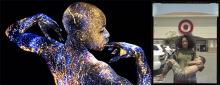
Photographers Jon Henry and Mikael Owunna discuss their artistic responses to police murder of Black men. Andrew Plumley ’11 (Senior Director, Equity & Culture, American Alliance of Museums) moderates this online conversation, which will include audience Q&A. Free.
A panel of Black Studies professors from Middlebury College will talk to students about the Black Studies major and course offerings. All students are welcome to attend, meet professors and fellow students, and ask questions about the Black Studies Program at Middlebury.
Franklin Environmental Center, The Orchard-Hillcrest 103
Your favorite South Asian drag auntie brings the nightclub to the classroom (and vice versa) to explain how critical social theory matters in queer nightlife. Touching on themes that include globalization, black feminist theory, diva worship, and islamophobia, she stages the nightclub as a site of politics and pleasure. Part lecture, part lipsync, part audience participation, the show demonstrates how much drag teaches us, even requires us, to be in relation with the rest of the world.
What does it take to dream the future we want? What does it mean to let go of the old in order to try something new?
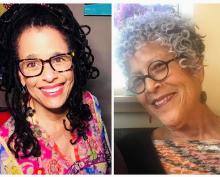
Join artist and catalyst Kaylynn Sullivan TwoTrees and artist & Middlebury scholar-in-residence Carolyn Finney as they lean into the borderlands of possibility to support multiple visions of the future.
“Who I am is the possibility of the transformation of humanity. What I’m giving up is that I’m misunderstood” – Mahting Putelis
Who do you stand with? Where do you stand? What does it mean for us to have something in common? CEO of Hunt to Eat Mahting Putelis and artist-in-residence Dr. Carolyn Finney open up with each other about identity, conservation, generational trauma, & the challenge of walking the talk. Join them as they take the leap – bring your open hearts and good questions!