
John Hunisak
Professor Emeritus of History of Art & Architecture
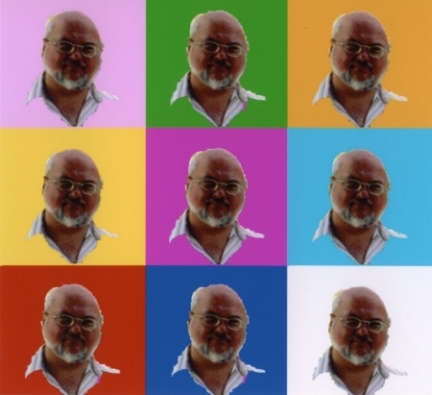
John Hunisak has taught the history of art at Middlebury since the fall of 1970. He is a Phi Beta Kappa graduate of Williams College, with an MA and PhD from the Institute of Fine Arts, New York University. His scholarly interests involve mostly painting and sculpture, from the Italian Renaissance through early modernism in Europe and America. He co-authored The Art of Florence (Abbeville Press), along with Glenn M. Andres and A. Richard Turner. He wrote The Sculptor Jules Dalou: Studies in His Style and Imagery (also Abbeville Press, from the series “outstanding dissertations in the fine arts”) and Carvings, Casts & Replicas: Nineteenth-Century Sculpture from Europe & America in New England Collections (exhibition catalogue, Middlebury College Museum of Art), along with other essays and reviews (most recently, “Warhol and Opera: Andy’s Secret,” for the exhibition catalogue, Warhol Live, Montreal Museum of Fine Arts). After extensive research in the archives of The Andy Warhol Museum in Pittsburgh, he is currently engaged in a book-length study, called Andy Warhol: the Serious Side.
Hunisak has often taught courses for Middlebury’s Alumni College, at Bread Loaf, in Santa Fe (New Mexico), and abroad. He has lectured for several “Middlebury at the Met,” evenings in New York, prior to performances at the Metropolitan Opera. Most recently, he delivered a lecture entitled “Panis angelicus fit panis hominum (May the bread of angels become mankind’s bread): Images of food in representations of the New Testament,” for the Faculty Lecture Series and for the Vermont Council for the Humanities.
In addition to art and art history, Hunisak’s passions are cities, opera, and cuisine.
Courses
Courses offered in the past four years.
▲ indicates offered in the current term
▹ indicates offered in the upcoming term[s]
FYSE 1174 - The Art & Era of Andy Warhol
The Art and Era of Andy Warhol
During his lifetime, Andy Warhol was often regarded as a charlatan, but since his death in 1987, his art, life, and career have been the subjects of unceasing investigation and speculation. Was his art a put-on? How should we interpret his often-contradictory statements? What is his place in the history of art and of his era? We will study his art works closely, evaluate his own words, and consider the evaluations of others in an attempt to understand his significance. 3 hrs. sem.
Fall 2011
FYSE 1310 - Age of Michelangelo
The Age of Michelangelo
Michelangelo Buonarroti (1475-1564) was one of greatest artists of the Italian renaissance. As painter, sculptor, and architect, he redefined each of those fields of creative endeavor. He was also a prolific writer of letters and poetry, a shrewd businessman, a tireless promoter of his family, and one of the most famous personalities of his era. We will examine the entire range of Michelangelo's achievement in the context of his age. His seventy-two year long career included service to the Medici court in Florence, the short lived Florentine republic, rich connoisseurs in Bologna and Rome, and seven popes. 3 hrs. sem/disc.
Fall 2010
HARC 0100 - Monuments/Ideas in Western Art
Monuments and Ideas in Western Art
This course is an introduction to the study of Western art history through an investigation of selected art works, considered individually and in broader contexts. The course chronicles the evolution in painting, sculpture, and architecture of the western world. It is designed for those who wish to build a broad acquaintance with the major works and ideas of Western art in their historical settings and to develop tools for understanding these works of art as aesthetic objects and bearers of meaning for the societies, groups, or individuals that produced them. Registration priority will be given to first and second year students. 2 hrs. lect./1 hr. disc.
Spring 2010
HARC 0205 - Pa/Sculp. 19th Century Europe
Painting and Sculpture of Nineteenth-Century Europe
During the 19th century, Paris was the capital of the art world, and the structure of this course will be based upon that central, undeniable fact. From the revolutionary 1780s until the Universal Exposition of 1900, we will consider 19th century painting and sculpture primarily as a Parisian phenomenon, with detours to other countries and cultural centers whenever appropriate. 3 hrs. lect.
Spring 2009, Spring 2011
HARC 0302 - Baroque Art Rome
Baroque Art: Painting, Sculpture, and Architecture of Seventeenth-Century Rome
During the period to be considered, Rome was the undisputed capital of the art world. From the vast projects of Pope Sixtus V to the death of Bernini, we will investigate the richness, diversity, and splendor of artistic creation under a church triumphant. 3 hrs. lect.
Spring 2010, Fall 2011
HARC 0323 / HARC 0300 - Art and Texts
Colloquium in Art History: Art and Texts
From antiquity through the 19th-century, most art in the Western tradition was derived from identifiable literary sources. Invention was calibrated by how well and with how much originality a visual artist depicted a scene from a textual source. In this course we will closely examine artistic interpretations of passages from the Old and New Testaments, The Apocrypha, the devotional literature of the 13th and 14th-centuries, The Iliad of Homer, and the Metamorphoses of Ovid. We will conclude with a case of parallelism, rather than direct influence: Zola's novel Nana and representations of prostitution in 19th-century Paris. (Not open to students who took HARC 0300 in Spring 2011) 3 hr. lect.
Spring 2011, Spring 2012
HARC 0326 - Biography Of Artists
Biography of Artists and Art History
Giorgio Vasari presented the history of art as “lives of the artists” in his publications of 1550 and 1564, but in modern times art historians and critics have often regarded the use of biographical evidence with suspicion. In this course we will examine the lives of three Italian artists who lived during the 16th and 17th centuries: Michelangelo Buonarroti (1475-1564), Benvenuto Cellini (1500-71), and Michelangelo Merisi, known as Caravaggio (1571-1610), all of whom were homosexual or bisexual. The central question will be the usefulness of biographical data as a tool for interpreting their art. 3 hrs. lect.
Spring 2009, Spring 2012
HARC 0510 - Advanced Studies
Advanced Studies
Supervised independent work in art history. (Approval Required)
Spring 2009, Fall 2009, Winter 2010, Spring 2010, Fall 2010, Winter 2011, Spring 2011, Fall 2011, Winter 2012, Spring 2012, Winter 2013
HARC 0700 - Methods & Theories in Art Hist
Methods and Theories in the History of Art
This seminar is designed for art history majors and is required of them. We will endeavor to reach a critical understanding of the range of methodologies employed in art historical research and writing, thereby preparing students to undertake their senior thesis work. 3 hrs. sem.
Fall 2009, Fall 2010
HARC 0710 - Senior Research Seminar
Senior Research Seminar
In this course students will conceive, undertake research, and plan the organization of their senior theses in art history or senior museum studies projects. Seminar discussions and workshops will focus on research strategies, conventions in art historical writing, project design, and public presentation skills. (HARC 0301; Approval Required) 3 hr. sem.
Winter 2010
HARC 0711 - Senior Thesis: History of Art
Senior Thesis: History of Art *
This course is a continuation of HARC 0710 which consists of ongoing, supervised independent research with an advisor, plus organizing, writing, and presenting a thesis, which will be due on a Friday, two weeks before the end of classes. (HARC 0301 and HARC 0710)
Spring 2009, Spring 2010, Spring 2011, Spring 2012


