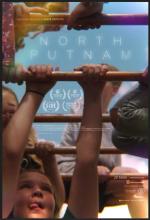
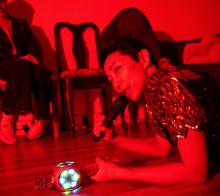
This reception, which warmly welcomes the public, celebrates the fieldwork and reflections of students in the winter term course: Acting Your Age: Meanings of Adulthood. Through images, objects and text in the exhibit, students share personal, scholarly, and creative reflections about notions of adulting and adulthood. They reveal traces of gendered norms for adulting from the college archives, and tell stories of childhood, ageing and being alive drawn from their fieldwork with children and elders in Addison County.
This exhibit features the fieldwork and reflections of students in the winter term course: Acting Your Age: Meanings of Adulthood. Through images, sound and text, students will share personal reflections and highlights from readings. They will reveal traces of “adulting” norms found in college archives, and tell stories of growing, ageing and being alive shared by youth and elders in Addison County. They will explore how notions of childhood, adulthood and ageing are shaped by economic, political and social structures, and envision new possibilities for becoming “adult.”
This exhibit features the fieldwork and reflections of students in the winter term course: Acting Your Age: Meanings of Adulthood. Through images, sound and text, students will share personal reflections and highlights from readings. They will reveal traces of “adulting” norms found in college archives, and tell stories of growing, ageing and being alive shared by youth and elders in Addison County. They will explore how notions of childhood, adulthood and ageing are shaped by economic, political and social structures, and envision new possibilities for becoming “adult.”
Celebration of Nominees and Winners of the 2025 Ward Prize
The Paul W. Ward ‘25 Memorial Prize competition recognizes annually those first-year students who are judged by the faculty to have produced outstanding writing in writing classes during that academic year. Please join us we celebrate this year’s winners and nominees.
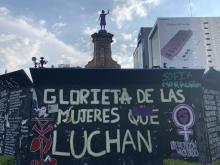
Mexican women writers are driving an affective rearrangement of aesthetic practices, places of enunciation, and the “lettered city” — a shift that is shaking up ideas about the canon, the functioning of national literature, and the role of the intellectual in the 21st century. As Cristina Rivera Garza has pointed out, we are witnessing a transformation in literature where the book is no longer the endpoint, nor is there a singular figure of the author.
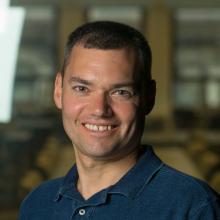
Peter Beinart is Professor of Journalism and Political Science at CUNY. He is also a Contributing Opinion Writer for The New York Times, a political commentator on MSNBC, and Editor-at-Large of Jewish Currents. Over the years he served as Editor of The New Republic and wrote for publications like The Wall Street Journal, The Atlantic, Die Zeit, and the Financial Times. He is the author of four books including The Icarus Syndrome: A History of American Hubris (Harper, 2010) and The Crisis of Zionism (Times Books, 2012).
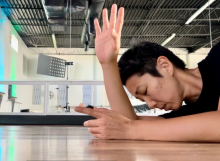
As educators, researchers, and members of a fast-paced college community, we often work in static positions that can inhibit our creativity and sense of connection with others. This workshop aims to open up new ways to be in our bodies alone and together. Visiting movement artist Maree ReMalia, who has worked with faculty, staff and students across the disciplines at Middlebury to rave reviews, will facilitate. No particular experience with movement is needed.
In this talk Maree ReMalia shares her journey through life and across mediums, from dance to writing to singing to boxing, via excerpts and explorations from her in-process solo performance, “with ourselves, with each other.” The solo aims to be a balm for the heart and a container for grief, an opening for joy, welcoming desire, acknowledging rage, and insisting on love, while exploring how a solo can become a gathering, a chorus, and a communal remembrance. Open to the college community and the public.