
The economics major provides students with numerous opportunities to explore the intricacies of the field—through research, internships, and professional development.
Economics
The study of economics provides insights into how the world works.
It teaches us a way of thinking, which when combined with training in qualitative and quantitative reasoning, and good judgment, provides an excellent foundation for just about anything that you may do after college.
Learning Across Disciplines
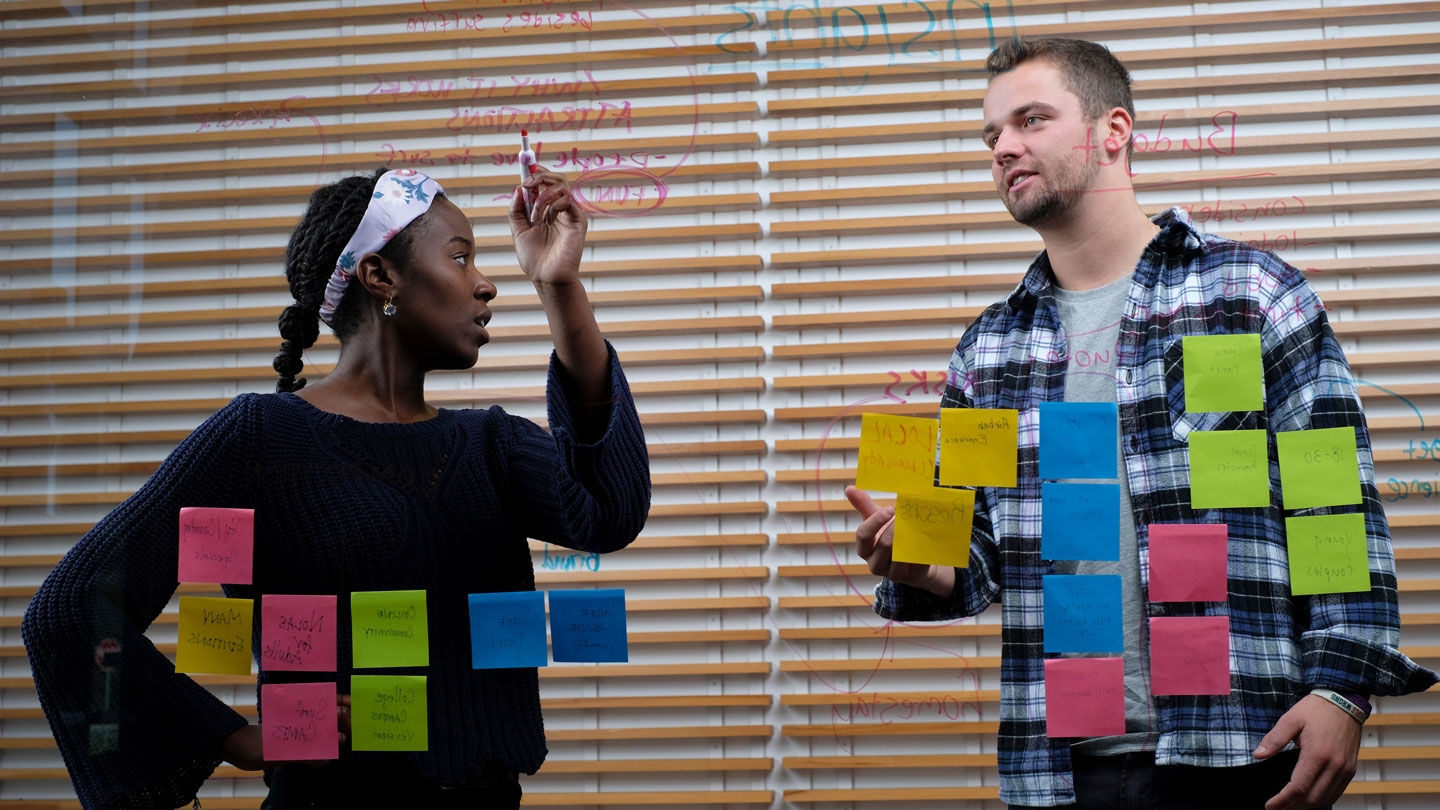
Since economics is one of the core social science disciplines, our department also serves students from across several popular interdisciplinary programs, including Environmental Studies, International Studies, and International Politics and Economics.
Courses
Our department offers a wide array of courses designed to provide insight into how the world works—from introductory principles to a rigorous senior research seminar in which students pursue an independent research project to qualify for departmental honors. Our curriculum exposes you to the basic tools of economic analysis and develops your critical reasoning and expository skills, through topics as diverse as natural resource management, urban poverty, international integration, and many more.
Majors in economics must enroll in six core courses that are organized in three two-semester blocks:
- Introductory macro- and microeconomics
- A quantitative sequence in statistics and regression analysis
- Macro- and microeconomic theory
In addition, majors must take at least four electives, two of which must be at the senior-seminar level.
Affiliated Labs
Middlebury Experimental Economics Lab
The Middlebury Experimental Economics Lab is a research group of faculty and students using controlled experiments to test economic theory and decision making.
Center for Behavioral Science
The Vermont Center for Behavioral Science Research on Climate and the Environment is an innovative hub to connect and support students, faculty, researchers, and community-based organizations across Vermont in connecting, sharing, and collaborating on climate and environmental projects.
Opportunities in the Field
Our Alumni
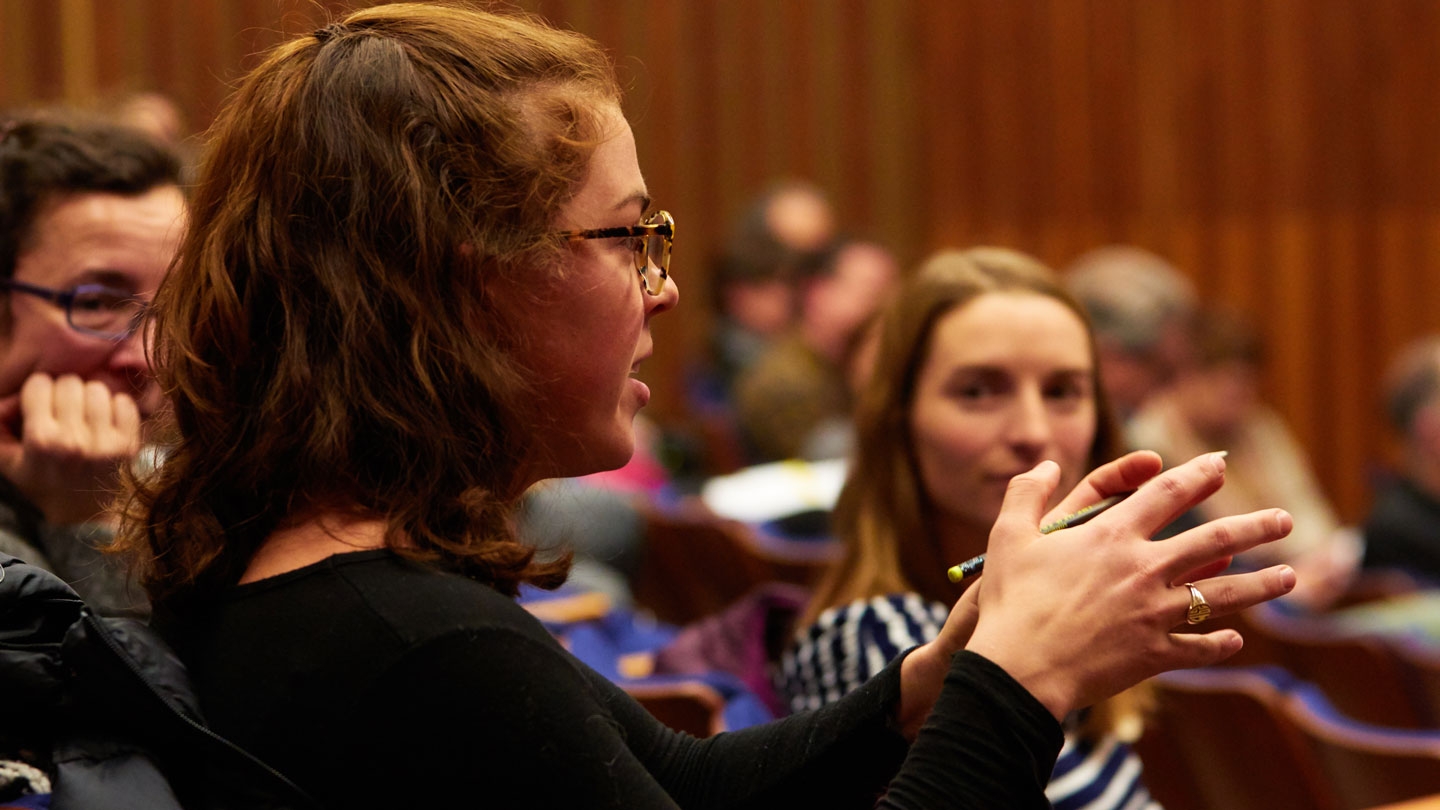
The economics major provides you with an excellent background for graduate work and employment in various fields, including economics, business, law, government, education, and international finance. These are some of the many interesting ways our graduates have applied their liberal arts learning to engage the world:
- Amazon, Global Head of Business Intelligence
- Tesla, Senior Product Manager
- World Bank, Senior Economist, Statistician
- Google, Head of VC & Startups, Android + Google Play
- Department of Foreign Affairs and Trade, Policy Officer
- New England Patriots, Assistant Controller
- Nike, Manager, Global Supply Chain Innovation
- Partners Healthcare, Senior Analyst
- CNN Money, Vice President and General Manager
- American Natural Gas, Cofounder and CEO
- Vertigo Entertainment, Creative Executive
- See’s Candies, Inc., Chief Financial Officer
- Standard & Poor’s, Director, Structured Finance Ratings
- Physician’s Computer Company, Director of Pediatric Solutions
- Guggenheim Museum, Chief Technology Officer
- U.S. Department of Treasury, Director of Macroeconomic Analysis
- The Nature Conservancy, Impact Investing
- DaMina Advisors LLP, Global Managing Director and Chief Frontier Markets Analyst
- Census Bureau, Economist, Health and Disability Statistics Branch
- Boston Redevelopment Authority, Director of Planning
- Goldman Sachs, Vice President, Equities-Securities Services
- SEC, Offices of the Commissioners, Senior Advisor to the Chair
- Bain Capital LLC, Vice President, Investor Relations
Upcoming Events
See more events-
A Chinese Education: Teaching and Learning from Two Generations of Students in China
The Rohatyn Center for Global Affairs program on Global Economics, Development and Political Economy presents “A Chinese Education: Teaching and Learning from Two Generations of Students in China” with Peter Hessler.
Robert A. Jones '59 Conference Room
Open to the Public
-
Globalization and its Discontents: Stories from the Factory Floors of China and Egypt
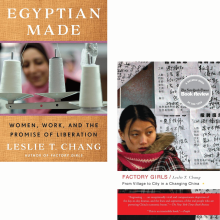
The Rohatyn Center for Global Affairs program on Global Economics, Development and Political Economy presents “Globalization and its Discontents: Stories from the Factory Floors of China and Egypt” with Leslie Chang.
Axinn Center Abernethy Room (221)
Open to the Public
-
Traitors: Russia’s Interrupted Opposition Reckoning with the 1990s
2024, Maria Pevchikh and Alexei Navalny’s Anti-Corruption Foundation released Traitors, a provocative documentary series asking how Russia’s democratic opening of the 1990s ended in Vladimir Putin’s authoritarian regime. The film places much of the blame on the political and economic elites surrounding Boris Yeltsin, focusing on corruption, privatization and the rise of the oligarchs, the controversial 1996 presidential election, and ultimately the choice of Putin as Yeltsin’s successor.
Robert A. Jones '59 Conference Room
Open to the Public