
Events
Though Middlebury College’s Mahaney Arts Center remains closed to the public due to the pandemic, the show must go on!
We’re proud to host a robust virtual 2020-2021 arts season, with world-class concerts from the Middlebury Performing Arts Series, timely screenings from the Hirschfield International Film Series, and more. Check back here throughout the semester or more events from the Middlebury College Museum of Art and the seven academic arts departments and programs.
September
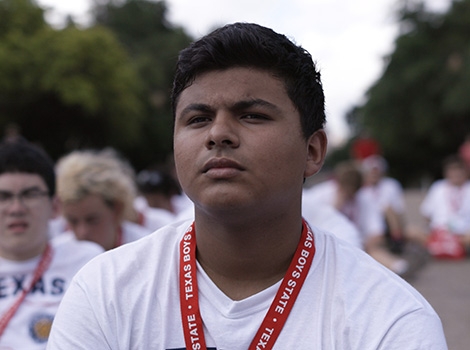
(Jesse Moss and Amanda McBaine, USA, 2020, 1h 49min) Free
The sensational winner of the Grand Jury Prize for documentary at this year’s Sundance Film Festival, Boys State is a wildly entertaining and continually revealing immersion into a week-long annual program in which a thousand Texas high school seniors gather for an elaborate mock exercise: building their own state government. Filmmakers Jesse Moss and Amanda McBaine closely track the escalating tensions that arise within a particularly riveting gubernatorial race, training their cameras on unforgettable teenagers like Ben, a Reagan-loving arch-conservative who brims with confidence despite personal setbacks, and Steven, a progressive-minded child of Mexican immigrants who stands by his convictions amidst the sea of red. In the process, they have created a complex portrait of contemporary American masculinity, as well as a microcosm of our often dispiriting national political divisions that nevertheless manages to plant seeds of hope. An Apple Original Films and A24 release.
Sundance Film Festival Winner: Documentary Grand Jury Prize
Online Virtual Cinema

The 2020 Sundance Film Festival Short Film Tour (Virtual Version) is a 80-minute theatrical program of 6 short films selected from this year’s Festival. Widely considered the premier American showcase for short films and the launchpad for many now-prominent independent filmmakers for more than 30 years, the Short Film Tour includes fiction, documentary and animation from around the world, giving new audiences a taste of what the Festival offers.
The Festival’s Short Film Program has long been established as a place to discover talented directors, such as past alumni Dee Rees, Taika Waititi, Debra Granik, Damien Chazelle, Wes Anderson, Jill Soloway, Spike Jonze, Paul Thomas Anderson, Trey Parker and Matt Stone, Lake Bell, Jay and Mark Duplass, Todd Haynes, Lynne Ramsay, Andrea Arnold, and many others.
See the film listings
PTP/NYC YouTube

A visceral, politically urgent thriller. Shakespeare’s study of ideology, power and populism. Who is listening? Play by William Shakespeare; a Middlebury College presentation directed by Cheryl Faraone. Free
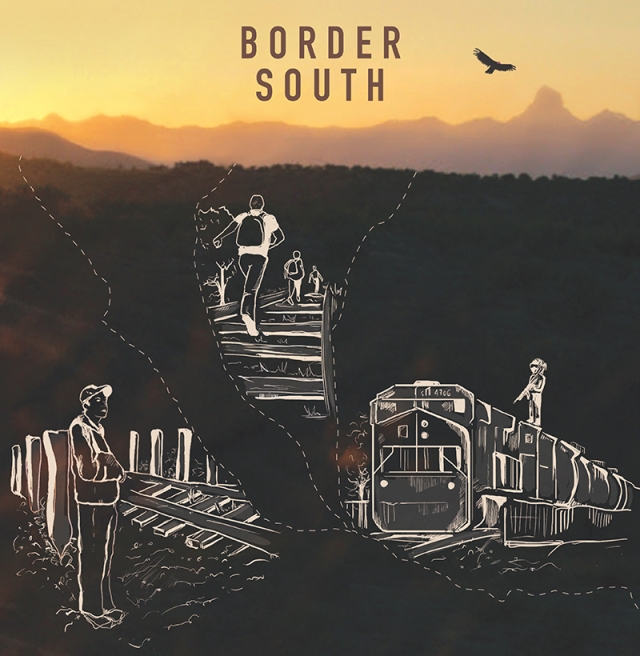
Fragmented stories from individuals crossing through southern Mexico assemble a vivid portrait of the thousands of immigrants who have disappeared along the trail running from southern Mexico to the US border. Border South reveals the immigrants’ resilience, ingenuity, and humor as it exposes a global migration system that renders human beings invisible in life as well as death. Director: Raúl O. Paz Pastrana. Producers: Jason De León, Cecilia Girón Pérez, Raúl O. Paz Pastrana. (Guatemala, Mexico, USA, 83 minutes)
Associated event: Q&A with the filmmakers, Friday at 5:00 p.m.
Access the film below, or for Spanish, go to https://ucla.box.com/v/ht94bordersouthesp (password: HT94@hosts).
Online
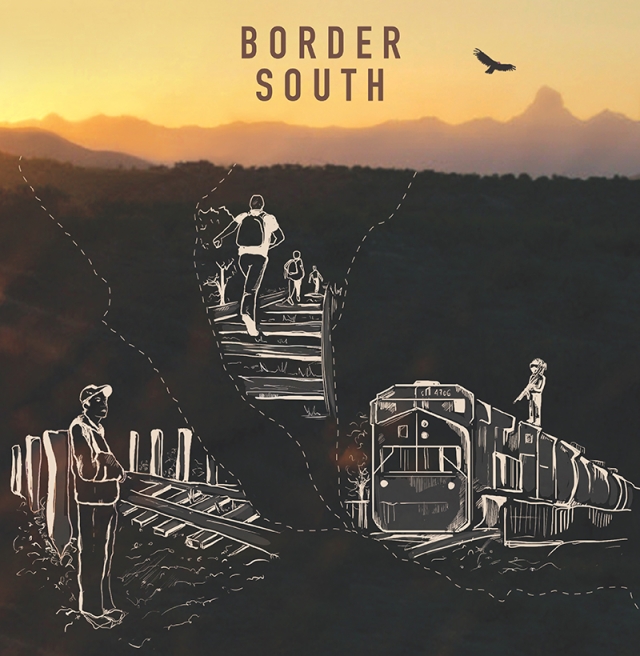
Filmmaker Raúl O. Paz Pastrana and anthropologist/artist/activist Jason De León answer questions about their film documenting the stories of immigrants who have disappeared along the trail running from southern Mexico to the US border.
Associated event: online film screening of Border South/Frontera Sur, Thursday-Friday.
Register for the live Q&A via Zoom below (limited to 300 participants) or watch the livestream on Facebook (unlimited)
PAS Event
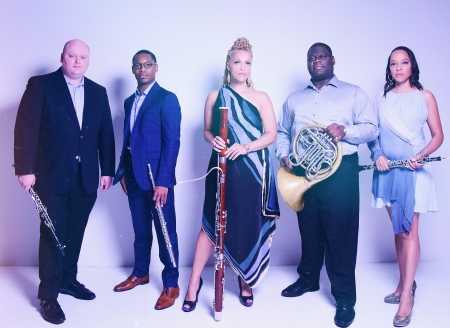
Celebrating 20 years of music making, the Grammy-nominated Imani Winds have led both a revolution and the evolution of the wind quintet. Their dynamic playing, adventurous programming, imaginative collaborations, and commitment to education have inspired audiences of all ages and backgrounds. Though their playlist embraces traditional chamber music repertoire, they also reach forward into the 21st century, expanding the wind quintet repertoire by commissioning music from new voices that reflect both historical events and present times.
We planned to bring you this groundbreaking quintet last April, but now we proudly open the 20–21 season with the Imani Winds in an exclusive virtual concert, featuring works by John Harbison, Paquito D’Rivera, and Jeff Scott. This event is part of a digital residency that will also bring the Imani Winds into Middlebury College music classes.
“The signature contribution of this group [is] a technical ease with extravagant gestures, intense production of sound, and the daring expressive liberties that come only after musicians have developed a sixth sense of ensemble-bonding. Imani’s got it all.”—Philadelphia Inquirer
7:15 PM ET Opening Act: Matthew Evan Taylor, Assistant Professor of Music
A Nelson Fund event.
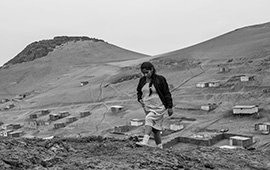
Peru, at the height of the political crisis of the 1980’s.
Georgina is a young woman from the Andes whose newborn daughter is stolen at a fake health clinic. Her desperate search for the child leads her to the headquarters of a major newspaper, where she meets Pedro Campos, a lonely journalist who takes on the investigation.
Based on a true story.
(97 minutes). A Hirschfield International Film Series event. Free
October
PTP/NYC YouTube
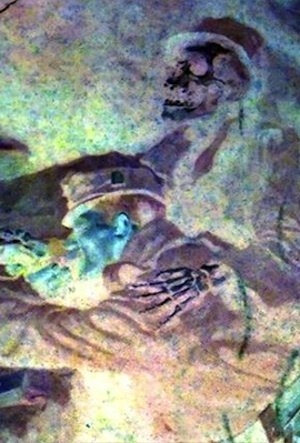
A political statement in the form of hysteria. A WWI soldier returns from the dead “the ease with which you can identify with the oppressed does not excuse your adulation of their banality.” Play by Howard Barker, directed by Richard Romagnoli, read by Robert Emmet Lunney. Free
Location link below
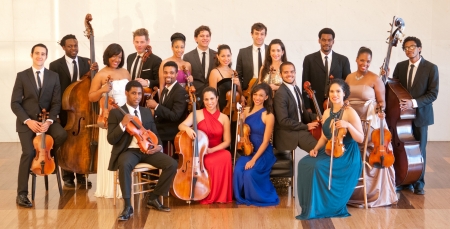
One of the nation’s most dynamic professional chamber orchestras, this self-conducted ensemble is comprised of 18 top Black and Latinx classical soloists. Its national tour includes annual stops at Carnegie Hall and Miami’s New World Center, bringing fresh, diverse programming to leading venues around the country. They engage in immersive outreach to bring classical music to communities nationwide, including students of all ages.
Their virtual concert program, entitled This Is America, draws inspiration from the country’s most promising voices of today. “Despite the physical isolation imposed by the pandemic, we are unified through our shared commitment to social impact through our expression…we seek to find new ways to lift the voices of our black and brown communities through the lens of our black and brown musicians.”
“Electrically charged performances of as high a caliber as any other professional group, but with the vital energy of a life-and-death mission.”—New York Concert Review
7:15 PM ET Opening Act: Heath Quartet, PAS Quartet-in-residence
A Nelson Fund event.
Free
virtual screening
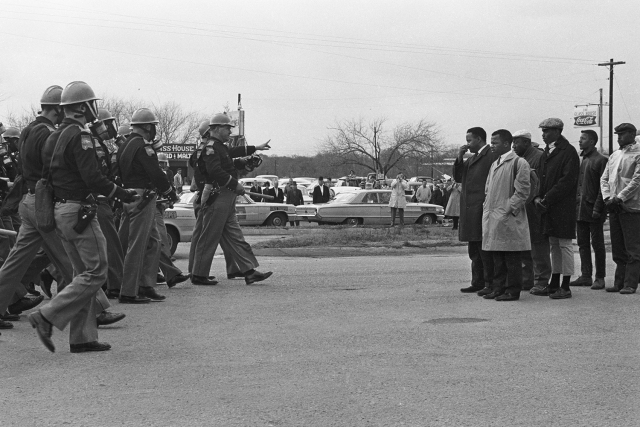
Directed by acclaimed filmmaker Dawn Porter (Trapped, Gideon’s Army), the 2020 film John Lewis: Good Trouble chronicles the life and career of the legendary civil rights activist and Democratic Representative from Georgia. Using interviews and rare archival footage, the film chronicles John Robert Lewis’ 60-plus years of social activism and legislative action on civil rights, voting rights, gun control, health-care reform, and immigration. Using present-day interviews with Lewis, Porter explores his childhood experiences, his inspiring family, and his fateful meeting with Dr. Martin Luther King Jr. in 1957. In addition to her interviews with Lewis and his family, Porter’s primarily cinéma verité film also includes interviews with political leaders, Congressional colleagues, and other people who figure prominently in his life. (96 minutes). A Hirschfield International Film Series event. Free
Zoom link below
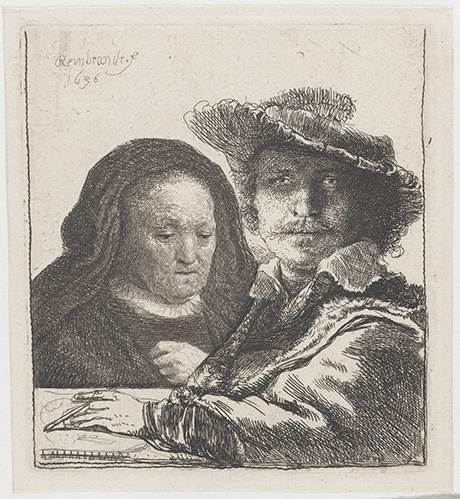
Public Lecture by Jun Nakamura, hosted by the Department of History of Art & Architectural Studies.
Prints are a unique medium in that, through the repeated printing of a plate or block, prints index their own histories. Most of the prints that we have today from plates made in the 16th and 17th centuries were likely pulled by hands not belonging to the artists who engraved, etched, and cut the plates themselves. Many, in fact, were printed posthumously, sometimes with interventions being made to the plates before reprintings by later artists and printers. This talk will focus on a few of Rembrandt’s posthumous printers, and how they engaged with the artist across time through the medium of the diachronic printing plate. An examination of these prints will lead to broader discussions about authorship, artistic value, and the temporality of prints.
Free
Thursday, October 8, 2020 through Sunday, October 11, 2020
The House in Scarsdale: A Memoir for the Stage
PTPNYC YouTube
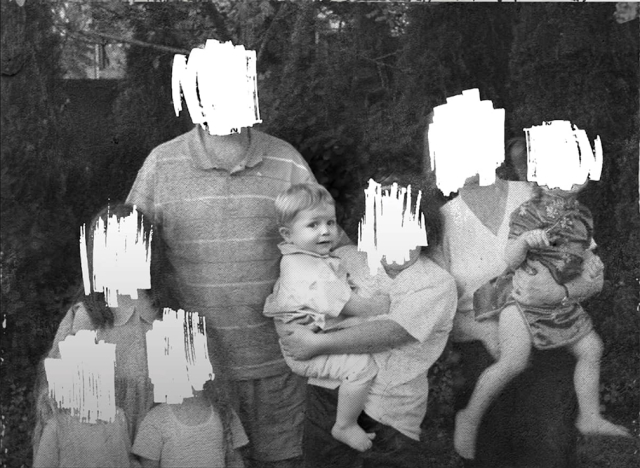
Play by Dan O’Brien ‘96, directed by Christian Parker ’93, performed by Dan O’Brien and Alex Draper ’88.5. Free
“…a dense poetic piece of storytelling with Irish-American trappings. It elicits a kind of sorrowful laughter and will resonate with anyone with a troubled personal past.”—Stage Raw
“Dan O’Brien has written an American gothic tale on a par with Pulitzer Prize winner Sam Shepard’s best works.”—TheaterMania
PAS Event
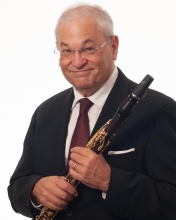
The Middlebury Performing Arts Series presents Avery Fisher Prize-winning clarinetist David Shifrin, one of only two wind players to have been awarded the prestigious prize since the award’s inception in 1974. Shifrin is in constant demand worldwide as an orchestral soloist, recitalist, and chamber music collaborator. In this virtual concert, he’ll perform works by Mozart, Bassi, and Duke Ellington. Fun fact: Duke Ellington performed on Middlebury’s Performing Arts Series in 1960. This dynamic program also features violinists Danbi Um and Bella Hristova, violist Mark Holloway, cellist Dmitri Atapine, and pianist Gloria Chien.
7:15 PM ET Opening Act: Dan Frostman, Oboe; Library Manager and Affiliate Artist in Music
Part of the Chamber Music Society of Lincoln Center’s CMS: FRONT ROW, a series of exceptionally high quality, digital, chamber music concerts curated by David Finckel and Wu Han. Our CMS: FRONT ROW broadcasts are part of the Nelson Fund series, and made possible with generous support from Raphael and Jane Bernstein.
Free
virtual cinema
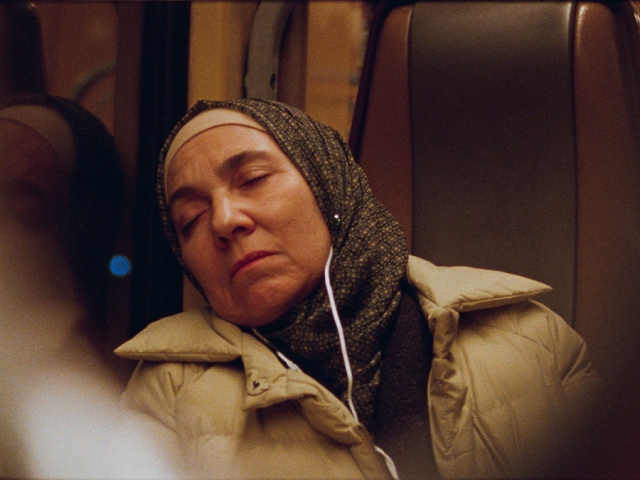
Khadija (Saadia Bentaïeb) is a 58 year old Maghrebi cleaning woman living in Brussels in the wake of the 2016 bombings that shook the city. After work one night, she falls asleep on the last subway train, wakes up at the end of the line, and has no choice but to make her way home—all the way across the city—on foot. Along the way, she has a series of encounters with a security guard, a convenience store clerk, and a group of teenagers. She asks for and gives help and slowly, steadily makes her way. A Hirschfield International Film Series event. (85 minutes) Free
Streamed live from the Mahaney Arts Center, Robison Hall
Inspired by the popular storytelling phenomenon The Moth, Cocoon is a special evening of true stories told live and without notes. This year’s virtual edition, on the theme of “Downpour,” will feature a select group of students and staff. This eight-annual community-wide event is produced by the Middlebury MothUP in partnership with the Mahaney Arts Center. For mature audiences: adult language. Free and open to all.
Read more>>
via Zoom
A 24 hour play festival featuring the talent of over 50 Middlebury students. All the plays will be written, staged and performed in 24 hours by students. To be streamed live from the Mahaney Arts Center’s Seeler Studio Theatre to a virtual audience everywhere. Directed by Julia Proctor ‘06.5. Free
Watch at go.middlebury.edu/togetherapart (password: SHOWTIME)
PTPNYC YouTube
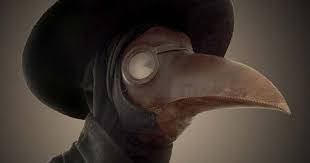
Play by Caryl Churchill, directed by Cheryl Faraone, featuring Nesba Crenshaw, Caitlin Duffy ’15.5, Ro Boddie, and Lilah May Pfeiffer. A punchy dystopian drama (that) seems so prescient it’s hard not to imagine the playwright had her own crystal ball when she wrote it in 2000…this twisted fairytale clearly demonstrates that if you declare war on the world, the world will declare war on you. Free
PAS Event
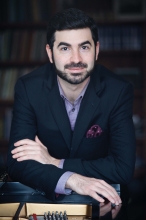
Described as “one of the leading figures in the current renaissance of performer-composers” by the New York Times, pianist Michael Brown is the winner of both Lincoln Center’s 2018 Emerging Artist Award and a 2015 Avery Fisher Career Grant. He makes regular appearances with orchestras and festivals across the U.S. and was selected by pianist András Schiff to perform an international solo recital tour. In this online performance, Brown will play works by Barber and Mendelssohn, plus one of his own compositions, and will be joined by violinist Chad Hoopes, violists Paul Neubauer and Matthew Lipman, cellist Nicholas Canellakis, double bassist Joseph Conyers, and pianist Gilles Vonsattel,—many of whom have appeared in our own Robison Hall.
7:15 PM ET Opening Act: Ronnie Romano ‘20, Piano
Part of the Chamber Music Society of Lincoln Center’s CMS: FRONT ROW, a series of exceptionally high quality, digital, chamber music concerts curated by David Finckel and Wu Han. Our CMS: FRONT ROW broadcasts are part of the Nelson Fund series, and made possible with generous support from Raphael and Jane Bernstein.
Free
Livestreamed from the Clemmons Family Farm
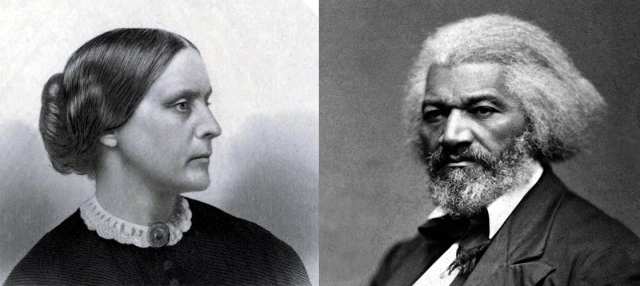
A play reading about the relationship of Frederick Douglass and Susan B. Anthony, two abolitionists who fought for the rights of others. Play by Mat Smart, directed by Michole Biancosino ‘98 as part of the 21st Century Theatre Festival, sponsored by the Middlebury Performing Arts Council.
Presented by Middlebury College’s Theatre Program, Town Hall Theater, and the Clemmons Family Farm. Livestreamed from outdoors at the farm. Running time: 2 hours, 15 minutes including one intermission.
Free to Middlebury College ID card holders, register here>>
Community members: tickets available via Town Hall Theater
Virtual Cinema
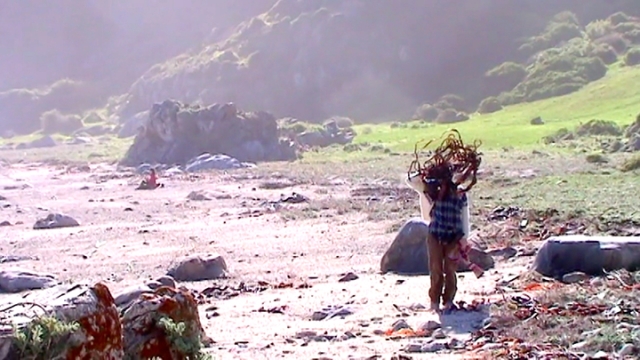
Eight years after being raped on a beach near Santiago, a young filmmaker arms a kaleidoscope with dozens of video diaries, showing the wounds of the abuse, the re-victimizing legal proceedings and the friendship that accompanies it. In a voyage from which the question arises. What is a rape, really, and when does it end?
A Hirschfield International Film Series event. Please note mature themes are explored in this series. Available to view through Monday 10/19. (78 minutes) Free
PAS Event
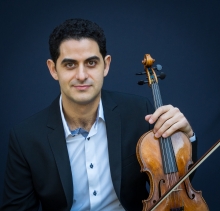
Winner of a 2009 Avery Fisher Career Grant, violinist Arnaud Sussmann has distinguished himself with his unique sound, bravura, and profound musicianship. Minnesota’s Pioneer Press writes, “Sussmann has an old-school sound…a rare combination of sweet and smooth that can hypnotize a listener.” Sussmann will perform Bach’s Brandenburg Concerto No. 4 and Chausson’s Concerto in D Major for Violin, Piano, and String Quartet. For this concert he is joined by flutists Sooyun Kim and Tara Helen O’Connor; violinists Bella Hristova, Francisco Fullana, Kristin Lee, and Yura Lee; violist Richard O’Neill; cellists Dmitri Atapine and Nicholas Canellakis; double bassist Xavier Foley; pianist Wu Han; and piano-harpsichordist Hyeyeon Park.
7:15 PM ET Opening Act: Matt LaRocca ‘02, Viola/Composer
Part of the Chamber Music Society of Lincoln Center’s CMS: FRONT ROW, a series of exceptionally high quality, digital, chamber music concerts curated by David Finckel and Wu Han. Our FRONT ROW broadcasts are part of the Nelson Fund series, and made possible with generous support from Raphael and Jane Bernstein.
Free
via Zoom

From Boston’s award-winning Arlekin Players Theater, this interactive digital production is set inside a live “ZOOM courtroom,” where the virtual audience serves as the jury. Performer Darya Denisova gives a “mesmerizing portrayal” (Boston Globe) of Natasha Banina, a teen orphan on trial for a crime of passion, whose alluring testimony reveals her dreams for love, family, and freedom.
This inventive production, based on Natasha’s Dream by the Russian playwright Yaroslava Pulinovich, began in May 2020 as a living room experiment and went on to earn critical acclaim from the New York Times. Followed by a discussion with the artists and audience; space is limited. Running time: 1 hour, with an additional 30-40 minutes for the post-show discussion.
“Critic’s Pick! A bracing trial by Zoom…Riveting!”—Maya Phillips, New York Times Read the review>>
A Hirschfield International Film Series event. Please note mature themes are explored in this series. Free
PAS Event

The real-life marriage of concert pianists Alessio Bax and Lucille Chung—with their abundant artistic chemistry, passion, and stunning virtuosity—has led to one of the most appealing and impressive piano duos of our time. In the words of the UK magazine Music and Arts, “Theirs is a marriage of wondrous colors and dexterous aplomb, subtly balanced to make a musical performance sound as one.” Bax and Chung will perform Mozart’s K. 449—and the Middlebury premiere of Bartók’s Sonata for Two Pianos and Percussion—with a supremely talented group of collaborative musicians: violinists Bella Hristova and Arnaud Sussmann, violist Paul Neubauer, cellist Sophie Shao, double bassist Joseph Conyers, and percussionists Ayano Kataoka and David Rosenbaum.
7:15 PM ET Opening Act: Sophie Shao, Cello; 13-time PAS artist
Part of the Chamber Music Society of Lincoln Center’s CMS: FRONT ROW, a series of exceptionally high quality, digital, chamber music concerts curated by David Finckel and Wu Han. Our FRONT ROW broadcasts are part of the Nelson Fund series, and made possible with generous support from Raphael and Jane Bernstein.
Free
Virtual Cinema

The Hirschfield International Film Series presents this 2019 film from Oscar winner Caroline Link (All About Me, Nowhere in Africa), who adapted Judith Kerr’s bestselling book for the screen.
Suppose your country began to change. Suppose that without your noticing it became dangerous for some people to live in your country. Suppose you found, to your complete surprise, that your own father was one of those people. That is what happens to Anna in 1933. Anna is not sure who Hitler is. She is nine years old when everything begins, too busy to take much notice of his face on posters all over Berlin. But when her own father goes missing one day, she comes to realize that the man on the posters is about to change the whole of Europe—starting with her own small life. Anna and her family hastily flee Germany, leaving even her favorite stuffed pink rabbit behind. A true story about parting, family cohesion, and optimism.
Sponsored by the Holocaust Film Fund. (119 minutes) Free
November
PAS Event
The profound influence of pianist Gilbert Kalish as an educator and pianist has established him as a major figure in American music-making, receiving the Richard J. Bogomolny National Service Award for his significant and lasting contribution to the chamber music field. He also holds the rare distinction of the longest Middlebury Performing Arts Series relationship, having first played on campus in 1966. Performing works by Crumb, Schubert, and Brahms, Kalish will be joined by soprano Lisette Oropesa, clarinetist David Shifrin, violinist Nicolas Dautricourt, violist Paul Neubauer, and cellist Torleif Thedéen. This concert is additionally made possible with generous support from Olin C. Robison.
Free
7:15 PM ET Opening Act: Sadie Brightman, Piano; Affiliate Artist in Music
Part of the Chamber Music Society of Lincoln Center’s CMS: FRONT ROW, a series of exceptionally high quality, digital, chamber music concerts curated by David Finckel and Wu Han. Our CMS: FRONT ROW broadcasts are part of the Nelson Fund series, and made possible with generous support from Raphael and Jane Bernstein.
Part of the Light Up the Night Fall Arts Fest, throughout November 2020: student-focused, student-led arts and cultural activities taking place all over campus.
Virtual Cinema
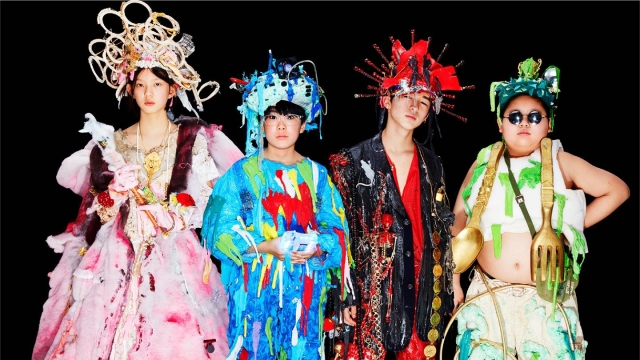
The Hirschfield International Film Series presents this 2019 Japanese film from director and writer Makoto Nagahisa. When four young orphans—Hikari, Ikuko, Ishi, and Takemura—first meet, their parents’ bodies are being turned into dust, like fine Parmesan atop a plate of spaghetti Bolognese, and yet none of them can shed a tear. They are like zombies; devoid of all emotion. With no family, no future, no dreams, and no way to move forward, the young teens decide that the first level of this new existence involves salvaging a gaming console, an old electric bass, and a charred wok from their former homes—just enough to start a band—and then conquer the world. Tragedy, comedy, music, social criticism, and teenage angst are all subsumed in this eccentric cinematic tsunami. (120 minutes) Free
Part of the Light Up the Night Fall Arts Fest, throughout November 2020: student-focused, student-led arts and cultural activities taking place all over campus.
Virtual Cinema
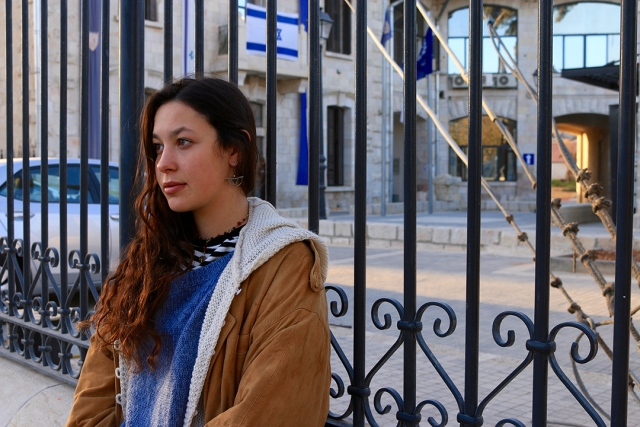
Q&A with Director Molly Stuart ’15 following the screening
The Hirschfield International Film Series presents this 2019 film from director Molly Stuart ’15. Like all Israeli youth, Atalya is obligated to become a soldier. Unlike most, she questions the practices of her country’s military, and becomes determined to challenge this rite of passage. Despite her family’s political disagreements and personal concerns, she refuses military duty and is imprisoned for her dissent. OBJECTOR follows Atalya to prison and beyond, offering a unique window into the Israeli-Palestinian conflict from the perspective of a young woman who seeks truth and takes a stand for justice. (75 minutes) Free
Q&A with Director Molly Stuart ’15 on Saturday, November 15 at 8:00 PM ET
Part of the Light Up the Night Fall Arts Fest, throughout November 2020: student-focused, student-led arts and cultural activities taking place all over campus.
Thursday, November 12, 2020
Migrants at Work: The Production of Christian Ivories in 17th-century Southeast Asia
Virtual lecture
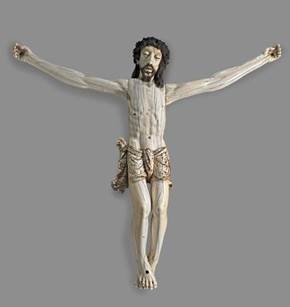
A public lecture by Jessie Park, Nina and Lee Griggs Assistant Curator of European Art, Yale University Art Gallery
For over 200 years, ivory sculptures with Christian iconography were produced in the Spanish Philippines for local and transpacific markets. These masterfully carved ivories have long been examined from the vantage point of European hegemony, in which aspirations of ivory carvers and a larger migrant community to which they belonged in the Philippines were unaccounted. This talk proposes an alternative approach to looking at the ivories by exploring the interlocking developments of maritime trade, migration, and competition in Southeast Asia. It will demonstrate the agency of ivory carvers in creating sculptures of global appeal and thereby reversing the direction of artistic transmission across the Pacific and the Atlantic Oceans.
Free
Part of the Light Up the Night Fall Arts Fest, throughout November 2020: student-focused, student-led arts and cultural activities taking place all over campus.
To watch the lecture, you may need the password: 607998
Zoom
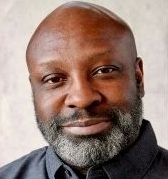
A conversation with alum Tyrone Wilson ‘81, a 26 year veteran of the Oregon Shakespeare Festival.
If prompted for a password, please use: Othello20
MAC Tent and live streamed online
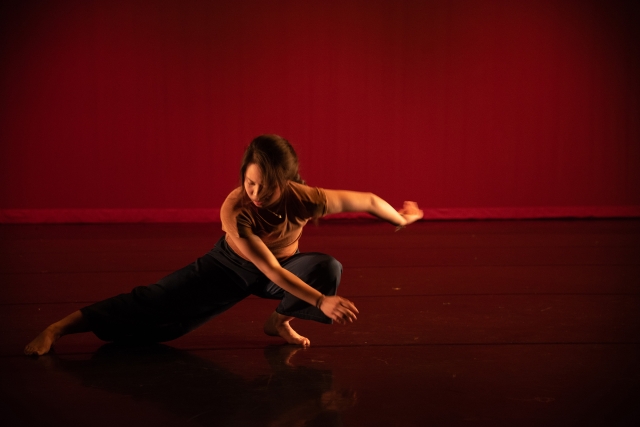
Artists all over the world are reimagining performance due to the pandemic and the Black Lives Matter movement. In this context, we present a live stream event showcasing students’ unique movement practice. Students will perform original dances live or via pre-recorded video from the Dance Theatre. Limited seating in the MAC Plaza tent is available to view the stream, hot drinks will be served; click the button below to reserve a space. The livestream is free an open to everyone; visit the dance program website for link>>
Part of the Light Up the Night Fall Arts Fest, throughout November 2020: student-focused, student-led arts and cultural activities taking place all over campus.
PAS Event
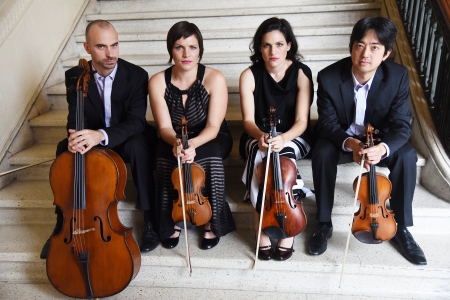
The Jupiter String Quartet is a particularly intimate group, consisting of violinists Nelson Lee and Meg Freivogel, violist Liz Freivogel (Meg’s older sister), and cellist Daniel McDonough (Meg’s husband, Liz’s brother-in-law). Now enjoying their 17th year together, this tight-knit ensemble is firmly established as an important voice in the world of chamber music. Among their many honors are top prizes at the Banff International String Quartet Competition, Fischoff National Chamber Music Competition, Young Concert Artists International auditions, the Cleveland Quartet Award, and the Avery Fisher Career Grant.
Middlebury enjoys a long and fruitful relationship with the Jupiters, who first visited campus in 2010. Though they have often treated us to core string quartet repertoire such as Beethoven and Bartók, they are also strongly committed to new music. For this concert, they will treat us to a program of Mendelssohn, George Walker, and Michi Wiancko.
“Jupiter, always talented, has reached that stage where musical expression, not technical proficiency, has become the focus … an intensely alert investigation of the musical possibilities in each work.”—Boston Classical Review
7:15 PM ET Opening Act: Middlebury College Choir; directed by Jeffrey Buettner, Professor of Music
This Nelson Fund event is made possible thanks to the Sunderman Family Concert Endowment Fund, in memory of Dr. F. William Sunderman Jr. and Dr. Carolyn Reynolds Sunderman.
Free
Part of the Light Up the Night Fall Arts Fest, throughout November 2020: student-focused, student-led arts and cultural activities taking place all over campus.
Livestream link to come
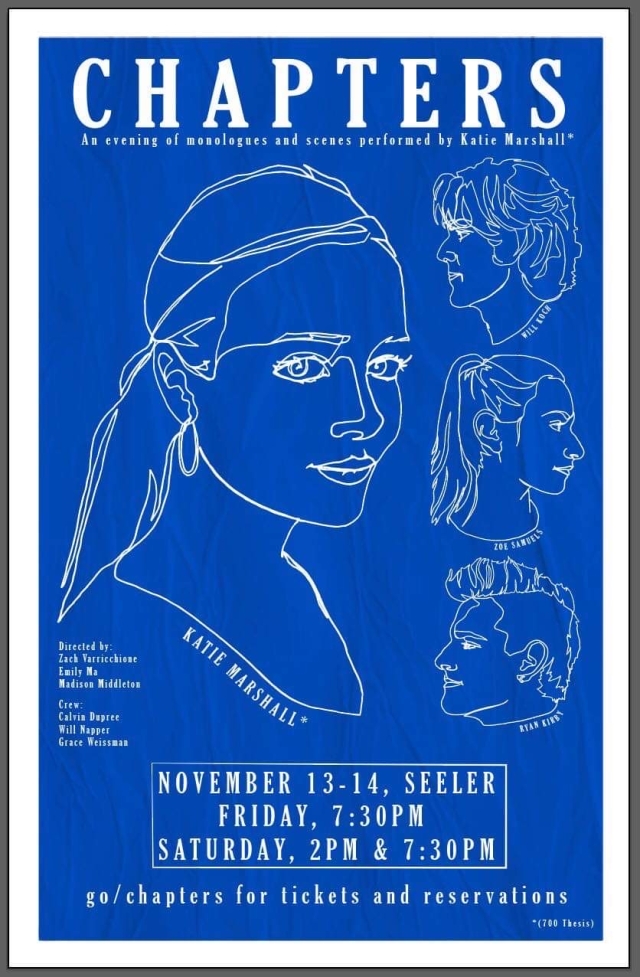
This is a collection of monologues and scenes about a woman hungry for something more. This collection is an active search, a specific moment in time infused with discomfort and the undefined. She is searching for something that isn’t defined by a partner, a material object, or any sort of status. These are the chapters that make up a novel. This novel is full of self-doubt, humor, sabotage, pain, relief, release, and happiness. This novel ends with the comfort and fulfillment of being alone.
This is a journey back to the self.
(Katie Marshall’s 700 project in Acting)
Zoom
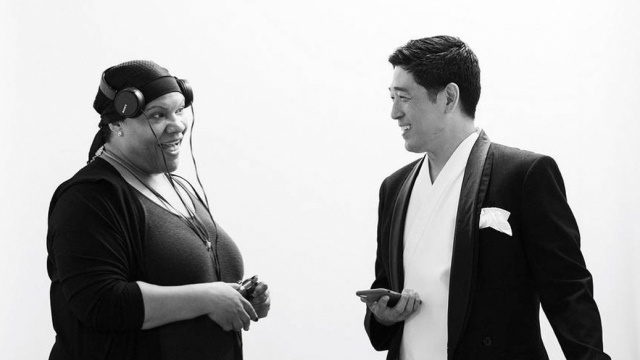
Broadway Actor and featured actor in he Sundance 2020 Award Winning The 40 Year Old Version with Radha Blank.
Virtual
The Middlebury College Museum of Art is proud to partner with Visual AIDS for Day With(out) Art 2020 to present TRANSMISSIONS, a program of six new videos considering the impact of HIV and AIDS beyond the United States. The videos—created by artists working in Chile, Greece, India, Mexico Greece, Uganda, and the United Kingdom—cover a broad range of subjects, such as the erasure of women living with HIV in South America, ineffective Western public health campaigns in India, and the realities of stigma and disclosure for young people in Uganda. As the world continues to adapt to living with a new virus, COVID-19, these videos offer an opportunity to reflect on the resonances and differences between the two epidemics and their uneven distribution across geography, race, and gender. Please note that some videos include sexually explicit content. Free.
November 30 video screening will last approximately one hour and will be followed by a panel discussion and Q&A with the artists, organized by the Whitney Museum of American Art. For more information—and to watch the videos beginning December 1—visit visualaids.org/transmissions.
This event is co-sponsored by the Middlebury College Museum of Art, the Rohatyn Center for Global Affairs, Student Friends of the Art Museum, and GlobeMed.
December
Virtual
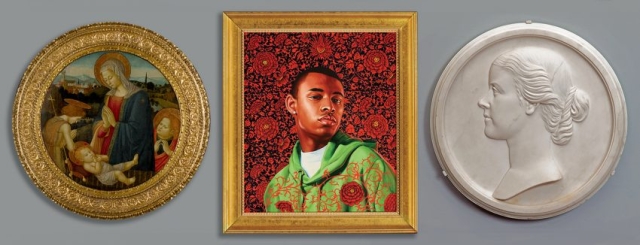
The 2020 Friends of the Art Museum Purchase Party—our 51st annual!—will be a little different this year. Due to Covid, the entire program will be presented online via Zoom. Yet, as in previous years, museum colleagues will offer presentations of three recent additions to the museum’s collection, and at the end we will give members of the Friends the chance to vote for one of the works to become the Friends’ gift to the museum. Over the last half century the Friends have, via their annual membership dues, gifted more than seventy objects to the museum’s collection, and we don’t plan to let a global pandemic break the tradition, so please join us! This event will NOT be recorded.
All Purchase Party registrants who are not currently subscribed as members will be given a complimentary Individual membership in the Friends of the Art Museum, with all associated benefits, valid through June 30, 2021.
Virtual Middlebury
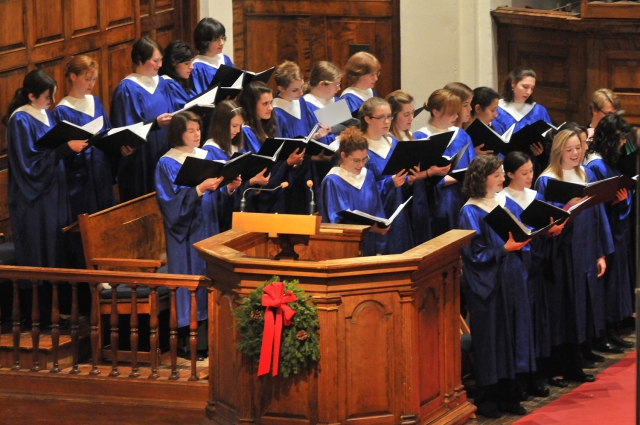
The Scott Center for Spiritual & Religious Life and the Department of Music present our annual Christmas service with traditional hymns and anthems sung by the Middlebury College Choir, and Biblical readings of the season by faculty, staff, and students.
YouTube premiere on Sunday, December 20 at 4:00 PM ET. The program will be available to view online anytime until January 1.
Free; donations will be accepted for H.O.P.E, Elderly Services, and Addison County Home Health & Hospice. For more information>>
January
Virtual
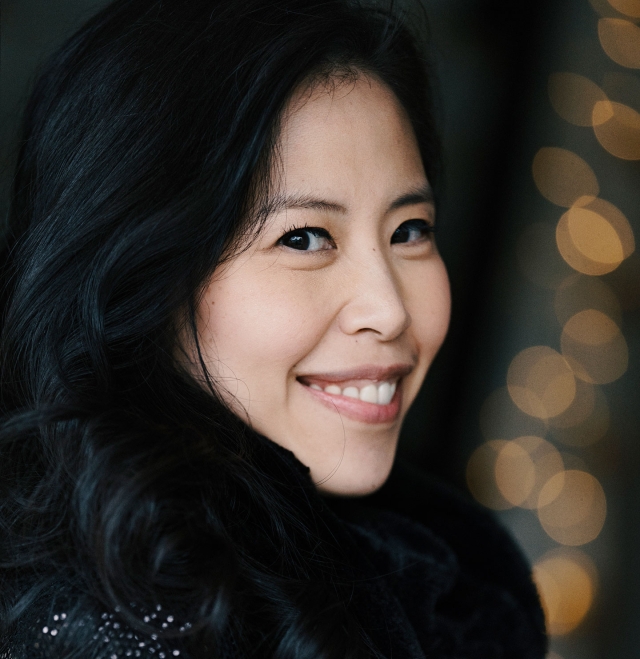
The Middlebury Performing Arts Series opens its Winter 2021 Virtual Season with pianist Gloria Chien—an equally acclaimed performer, concert presenter, and educator. Selected by the Boston Globe as one of its Superior Pianists of the year, Taiwanese-born Chien has performed as a recitalist and chamber musician around the globe, and performs frequently with the Chamber Music Society of Lincoln Center as an alumna of its Bowers Program. Chien founded the String Theory chamber music series in Chattanooga, Tennessee, and is Co-Artistic Director of both the Chamber Music Northwest and Lake Champlain Chamber Music festivals. Chien’s CMS program features works by Field, Liszt, and Mendelssohn. “Gloria Chien, who appears to excel in everything…”—Boston Globe
Part of the Chamber Music Society of Lincoln Center’s CMS: FRONT ROW, a series of exceptionally high quality, digital, chamber music concerts curated by David Finckel and Wu Han. Our CMS: FRONT ROW broadcasts are part of the Nelson Fund series, and made possible with generous support from Raphael and Jane Bernstein.
Virtual
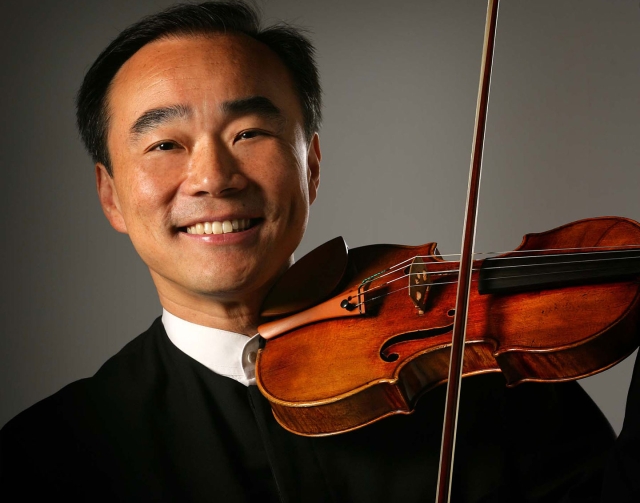
Violinist Cho-Liang Lin—Musical America’s 2000 Instrumentalist of the Year—is lauded the world over for the eloquence of his playing and for superb musicianship. In a concert career spanning more than 30 years, he is equally at home with orchestra, in recital, playing chamber music, and in the teaching studio. An avid chamber musician, he’s made recurring appearances at the Chamber Music Society of Lincoln Center, the Aspen Music Festival, and the Santa Fe Chamber Music Festival. He also serves as artistic director of the Hong Kong International Chamber Music Festival. As director of La Jolla Music Society’s SummerFest from 2001 to 2018, Lin developed the program into a multidisciplinary festival featuring dance, jazz, and new music. Lin’s CMS program features works by Foss, Dvořák, and Tchaikovsky. “Cho-Liang Lin has an enviable reputation on record not only for his dazzling technique and flawless intonation but his instinctive artistry… His perfect intonation and tonal purity excite admiration.”—Gramophone
Presented by the Middlebury Performing Arts Series.Part of the Chamber Music Society of Lincoln Center’s CMS: FRONT ROW, a series of exceptionally high quality, digital, chamber music concerts curated by David Finckel and Wu Han. Our CMS: FRONT ROW broadcasts are part of the Nelson Fund series, and made possible with generous support from Raphael and Jane Bernstein.
February
Virtual
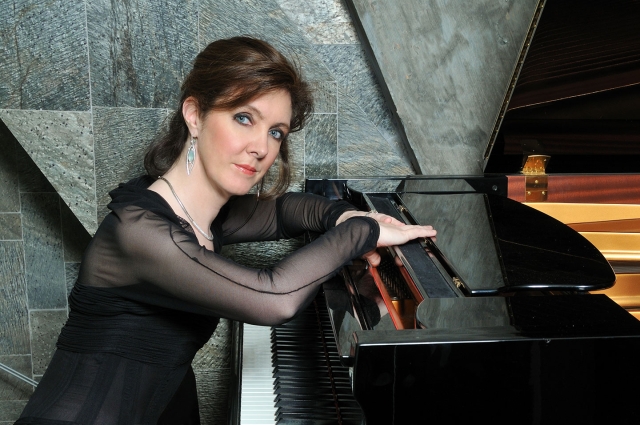
Winner of the Young Concert Artists auditions, a Mortimer Levitt Career Development Award for Women, and an Avery Fisher Career Grant, pianist Anne-Marie McDermott has enjoyed a celebrated, worldwide concert career for over 25 years. She serves as artistic director of the Bravo! Vail Music and Ocean Reef Music festivals, as well as Curator for Chamber Music for the Mainly Mozart Festival in San Diego. Her award winning recordings include works by Prokofiev, Bach, Gershwin, most recently Haydn. She tours each season with the Chamber Music Society of Lincoln Center, as a member of the piano quartet Opus One, and as part of a trio with her sisters Kerry and Maureen McDermott. Her CMS program will include Mozart and Smetana. “…She’s one of the great American pianists of her generation. Her depth of insight, precision of phrasing, and command of the piano on all levels are ceaselessly marvelous.”—Philadelphia Inquirer
Presented by the Middlebury Performing Arts Series.Part of the Chamber Music Society of Lincoln Center’s CMS: FRONT ROW, a series of exceptionally high quality, digital, chamber music concerts curated by David Finckel and Wu Han. Our CMS: FRONT ROW broadcasts are part of the Nelson Fund series, and made possible with generous support from Raphael and Jane Bernstein.