College language school expands our view of China for 60 years
| by Rachelle Talbert
The number of American students studying in China has fallen dramatically over the past 15 years. In 2011-12, nearly 15,000 U.S. students studied in China; now, there are fewer than 2,000, according to the Institute of International Education.
Article published: Addison County Independent, Aug. 20, 2026
“For at least a generation now, the Chinese elite has been sending their children to be educated in America,” Theodore Waldron told the Independent. “These are bilingual people who are deeply steeped in our culture, accustomed to our politics and understand the strengths and weaknesses of our country. There is no reciprocal understanding by the U.S.”
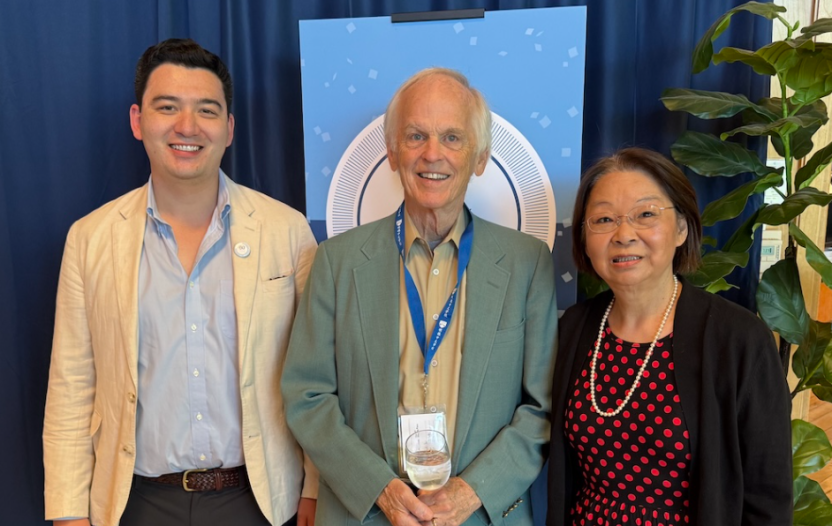
Waldron is no stranger to the subject. He was a student at Middlebury College’s Chinese School this summer and the son of a Chinese School student in the 1970s.
This was the summer when the Chinese School turned 60 years old.
Middlebury College hosts the most intensive Chinese language program in the U.S., which began in 1966. Students not only study the language for eight weeks, but they pledge to not speak a word of English during that time.
With few opportunities for Americans to reach high levels of Chinese proficiency, students come from all different backgrounds and motivations, united by their desire to learn the language.
Chika Dunga, 33, this summer returned to the program for a second year. Dunga is a Nigerian-American entrepreneur. Her company, A Day with Aslan, sells food brands using climate-resilient crops. She decided to study Chinese to expand her business internationally — and China was a strategic choice.
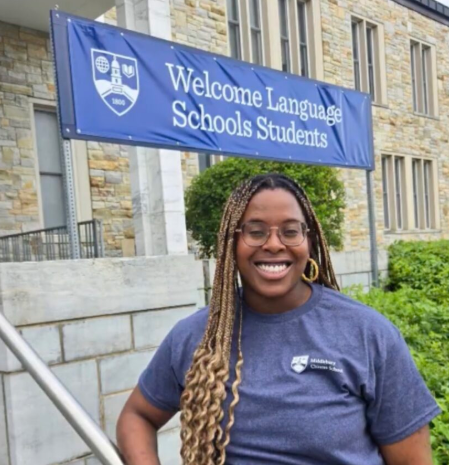
Entrepreneur Chika Dunga hopes to use the skills she learned at Middlebury College’s Chinese School to expand her business to China.
“China has the world’s largest consumer market because of its population,” Dunga told the Independent. “So from a business perspective, I’m thinking about sales, I’m thinking about number of people who can buy my products.”
To Dunga, the Chinese language is an essential skill for expanding her business and bridging cultural barriers, but the learning process hasn’t been easy.
To afford tuition to the program, Dunga had to create a GoFundMe last year. She raised $10,400 and ran the fundraiser once again to return to the program in 2026.
“People were really interested in the project and what I’m doing,” Dunga said. “And so it was amazing to see the support.”
Beyond finances, the program has been difficult. Along with 15 hours per week of instruction, students pledge not to speak any other language.
Still, Dunga recognizes her own improvement in the Chinese language, and she is committed to improving cross-cultural communication — particularly when Chinese language instruction is decreasing in the U.S.
“There’s not enough American students learning Chinese who can replace the current crop of U.S.-China experts, because the U.S. government has cut a lot of scholarships,” Dunga said.
For his part, Theodore Waldron, also believes Chinese language education needs to expand for Americans.
Waldron grew up understanding the importance of the Chinese language. His father, Arthur Waldron, attended the Chinese School in 1971, went on to study history at Harvard and became a professor focused on Chinese history.
He came to Middlebury not knowing any Chinese and left with the language skill to go to Taiwan. Theodore’s mother, Xiaowei Yu, was born in Beijing and speaks Chinese as her first language. She also attended a Middlebury language school — studying Japanese.
When comparing his own experience at Middlebury with his parents’, Theodore Waldron said the program has remained remarkably consistent.
“The actual experience of Middlebury, I think, is exactly the same,” Waldron said. “You get to get comfortable with embarrassments, you start to get excited when you discover you’re unlocking the short-term goal, the mid-term goal, the long-term goal.”
The director of Middlebury’s Language School, Cecilia Chang, agrees that the values have remained the same.
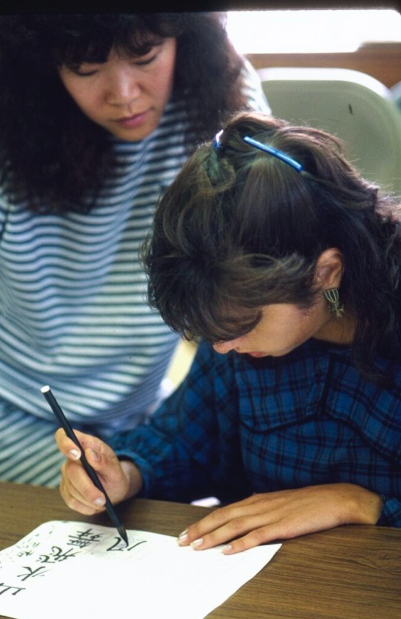
Working at Middlebury’s Chinese School in 1987, Cecilia Chang checks a student’s work as she writes Chinese calligraphy. Almost 40 years later, Chang serves as director of the program. Photo courtesy of Middlebury Special Collections
“I will start with something that we haven’t changed,” Chang said. “We believe in accuracy before fluency.”
This means that in teaching language, Chang is not afraid to correct language right away to help students learn from their mistakes.
Chang started working in the program as a graduate student in 1987. Having spent decades instructing at Middlebury, Chang is honored to be the school’s director for the 60th anniversary of the program.
“The number 60 means even more, sometimes, than 50,” Chang said. “That number has a great significance in Chinese.”
In Chinese culture, the number 60 marks the completion of a full calendar cycle. In the Chinese calendar, the 12 Chinese zodiac signs repeat five times for each of the five natural elements, adding up to 60 years. When someone turns 60 in China, they host huge celebrations for the completion of a life cycle.
Chang values the opportunities the language school has provided her as they pass this milestone.
“In my career, I did not try to look for jobs,” Chang said. “Jobs would find me.”
Many students in the program realize the value of an education in the Chinese language — particularly with how rare it is in the U.S.
“It’s a golden ticket for a good career, because people like that are incredibly scarce,” Waldron said.