
Jennifer Strtak
Visiting Assistant Professor of History
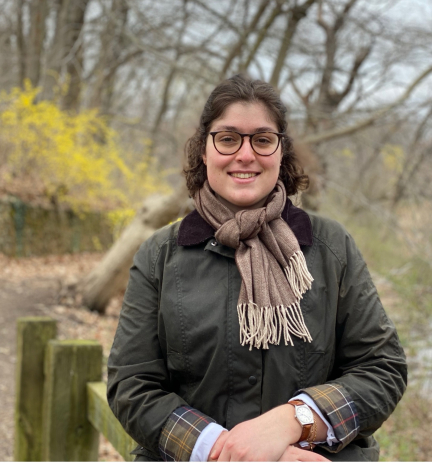
- Office
- Axinn 335
- Tel
- (802) 443-6272
- jstrtak@middlebury.edu
- Office Hours
- Fall 2026: Thursday 10am-1pm and by appointment: https://calendly.com/jstrtak-middlebury
Jennifer Strtak is a historian of early modern technology, science, and the built environment, specializing in how technological artifacts shaped everyday life in urban spaces. She is currently completing her first book manuscript, The Driving Divide: The Carriage, Social Inequality, and Urban Transformation in Early Modern Paris. This project examines how differing levels of access to passenger vehicles—and the ways they were used—reshaped both the built environment and the social fabric of Paris between 1650 and 1789. The book is both a social history of technology and a political history of environmental change, and it challenges conventional narratives of early modern mobility by revealing that vehicle use—far from simply facilitating circulation—also produced new forms of spatial inequality and urban constraint.
Prior to arriving at Middlebury in 2025, Strtak was a Research Associate and Lecturer in the Princeton-Mellon Initiative in Architecture, Urbanism, and the Humanities at Princeton University. She received her PhD in History from Yale University in May 2024. She obtained her MPhil in History from Lucy Cavendish College, University of Cambridge (2016) and her BA with High Distinction from Trinity College, University of Toronto (2015). During the 2021-2022 academic year, Strtak was an invited Research Fellow at L’Institut d’études politiques de Paris. Her research has been generously supported by the Social Sciences and Humanities Research Council of Canada-Conseil de recherches en sciences humaines du Canada as well as the Fox International Fellowship Program.
Strtak teaches across a broad spectrum of early modern European history, offering courses that range from general surveys to specialized classes on scientific and medical practice, technology, and the dynamics of urban life.
Courses Taught
FYSE 1135
Current
The History of Urban Life
Course Description
Of Cobblestones and Coffeehouses: The History of Urban Life, 1500-1800
In this seminar we will explore the diverse forms of urban life that emerged in Europe between 1500 and 1800. Early modern cities became engines of global commerce, laboratories of public health and policing, and sites of civic and religious unrest. Moving from the street to markets, apothecaries, and coffeehouses, we reconstruct everyday urban experiences through close reading of primary sources alongside critical scholarship. Texts by travelers, reformers, and city officials, together with visual and material culture, invite us to analyze commerce, sexuality, festivals, and waste management. Through discussion, writing, and research, students develop skills in historical argument evidence-based analysis, and scholarly communication.
Terms Taught
Requirements
HIST 0213
Upcoming
The Scientific Revolution
Course Description
The Scientific Revolution: Fact or Fiction?
In this course we will explore the major changes in understanding the cosmos, body, and natural world across Western Europe between roughly 1500 and 1800. Encounters with new lands and ideas fueled a significant shift in how the universe was perceived. While traditionally called the "Scientific Revolution," this concept is now debated. We will meet key figures, both well-known like Copernicus and lesser-known like Aldrovandi, who adopted new approaches and incorporated novel ideas into their work. Through lectures and discussions of primary and secondary sources, we will examine how these individuals and European society rethought their fundamental knowledge. Each week we will delve into topics such as astronomy, natural history, dissection, and electricity. By investigating these histories, students will gain a comprehensive understanding of early modern studies within various intellectual, religious, and socio-cultural contexts. By the end of this course students will understand the complexities of the Scientific Revolution and its lasting influence on contemporary scientific thought. Counts for HSMT credit.
Terms Taught
Requirements
HIST 0244
Current
Early Modern Euro Civ
Course Description
The Civilization of Early Modern Europe
In this course we will gain a broad understanding of early modern European history, focusing on the period from c. 1350 to 1800. Through lectures and discussions, we will examine how modern European society’s foundations were established. We will critically engage with primary and secondary sources to explore significant changes and key continuities in Europe’s political, social, economic, intellectual, religious, and cultural spheres. Topics include the revival of classical ideals and their impact on art, education, politics, law, science, and gender relations. We will also investigate how new ideas sparked knowledge production, fueled conflicts, and shaped the modern state and therefore gain insight into the forces that continue to influence contemporary European identity. There are no prerequisites. Pre-1800 3 hr lect/disc.
Terms Taught
Requirements
HIST 0336
Upcoming
Environment &Society 1450-1800
Course Description
City and Nature: The (Urban) Environment and Society, 1450-1800
In this interdisciplinary course students will explore the relationship between urban development and the natural environment from 1450 to 1800. While focusing on Western Europe, we will challenge the notion that nature exists only outside city limits by highlighting how urban spaces are woven into the natural world, demanding protection, restoration, and creation. Each week, we will investigate the interplay between cities and ecologies—like water, darkness, vegetation, and wildlife—examining how built environments shaped and were shaped by these elements. Through historical case studies of specific environments—such as rivers and lagoons—we will analyze how water systems functioned as sources of destruction, lifelines for hydration, and stages for political pageantry. Ultimately, students will explore how these historical insights inform contemporary environmental practices, deepening their understanding of the relationship between city life and nature. (Counts for HSMT credit.)
Terms Taught
Requirements
HIST 0344
Early Modern Bodies
Course Description
Early Modern Bodies: Sex and Gender in Europe
Do men and women share the same historical experiences? When do their paths align, and when do they diverge? What accounts for these differences? In this course, we will explore the physical and cultural constructions of gender and sexuality in Europe, c. 1350–1800, through a variety of topics, including the life cycle, midwifery, heterosexual marriage, homoerotic desire, same-sex practice, cross-gender identification and performance, hermaphroditism, and the “monstrous” body. Each week, we will discover how transformations in natural philosophy, religious belief, scientific experimentation, art and literature, and medical practice shaped—and were reshaped by—ideas of the body and sexual difference. We will engage with a variety of sources, ranging from anatomical illustrations and poetry to medical treatises and birth salvers, to uncover how gender norms influenced power structures and personal identity within hierarchical systems. Counts for HSMT credit.
Terms Taught
Requirements
HIST 0454
The History of Technology
Course Description
From Plow to Pixel: The History of Technology
In this course student will explore the history of technology, from medieval agriculture to modern digital systems, through classic and recent scholarship. We will examine fundamental questions that have shaped the field, such as: What is "technology"? How do we navigate the debates between technological determinism and the social construction of technology? And what politics are embedded within technological artifacts? Through diverse case studies like automobiles, plastics, and bicycles, we will unpack the ideologies of innovation, explore technology's environmental and gendered impacts, and analyze its intricate relationship with social status. By the end of this course, students will have a comprehensive understanding of the dynamic interplay between technology and the human experience. Counts for HSMT credit.
Terms Taught
Requirements
HIST 0500
Current
Upcoming
Special Research Projects
Course Description
Special research projects may only be taken during the Junior or Senior year, preferable after taking HIST 0600. Approval of department chair and project advisor is required.
Terms Taught
HIST 0700
Current
Upcoming
Senior Independent Study I
Course Description
Senior Independent Study I
The optional History Senior Thesis is written over two terms, with the final grade applying to both terms. Approval is required. Students submit thesis proposals in the spring before the year that they choose to write their thesis. Students generally begin their thesis in the fall and complete it during winter or spring. Approval is required to begin the thesis in winter or spring. All students must attend the Thesis Writer's Workshops in fall and winter semesters and work with a faculty advisor to complete a 55-70 page paper. Please see detailed guidelines under history requirements.
Terms Taught
HIST 0701
Upcoming
Senior Independent Study II
Course Description
Senior Independent Study II
With departmental approval, senior history majors may write a two-term thesis under an advisor in the area of their choosing. The final grade is applied to both terms. Students must submit thesis proposals in the spring before the academic year that they choose to write their thesis. They must attend the Thesis Writers' Workshops held in the fall and winter of the academic year in which they begin the thesis. The department encourages students to write theses during the fall (0700) and winter terms (0701), but with the permission of the chair, fall/spring and winter/spring theses are also acceptable. Under exceptional circumstances, the department may approve a thesis initiated in the spring of an academic year and finished in the fall of the following year. Further information about the thesis is available from the department.
Terms Taught
HIST 1035
Upcoming
Making in Early Modern Europe
Course Description
The Matter of Material: Craft, Science, and Making in Early Modern Europe
In this course we will explore European art and craft from 1300–1800 through hands-on and textual engagement. We will study a critical edition of Ms. Fr. 640, a 16th-century manuscript produced by Columbia University’s Making and Knowing Project, which contains recipes for working with natural materials. Students will analyze and reconstruct historical techniques such as preparing burn salves, molding stuccos, and making azurite pigment. Through this work we will reflect on experiential knowledge in the early modern period and consider how hands-on making and textual analysis intersect as forms of knowledge production. By course end, students will gain insight into early modern knowledge-making and how these practices shape our own ways of learning and understanding the world.
Terms Taught
Requirements