Middlebury Alum's Career Sparked with Korean Language
| by Seth Joyner
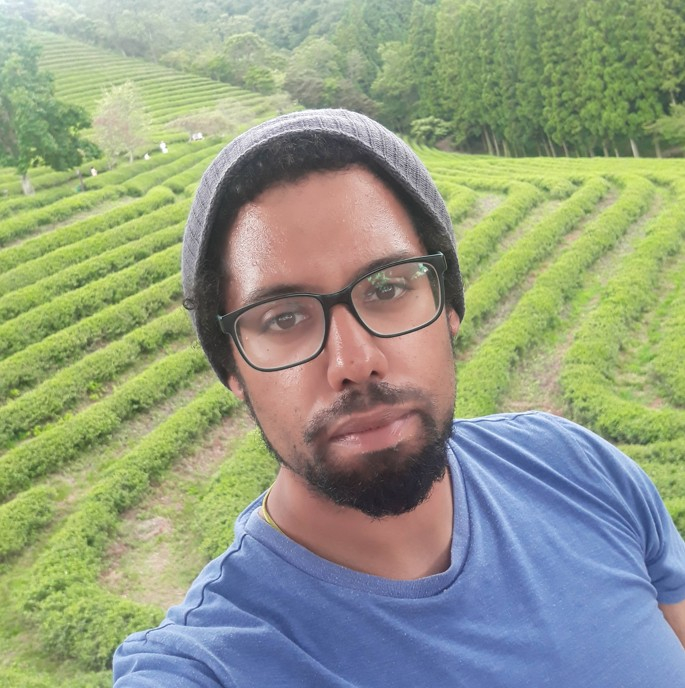
In 2011, I arrived in Daegu, South Korea, with a simple goal: to see what I could see. I was a young English teacher in a city where few people spoke English, and I quickly realized that every new Korean vocabulary word I learned was a key to a different, more interesting conversation. What started as a social necessity evolved into something far deeper commitment that would shape my entire career.
Fast forward to today, as Senior Program Manager at the National Committee on North Korea (NCNK), I manage a nonprofit dedicated to promoting peace and security on the Korean Peninsula. While coordinating with U.S. government officials and foreign dignitaries, I oversee grant programs and design initiatives that facilitate principled engagement between the United States and North Korea. The Korean language remains essential to my work—not just for reading policy documents or communicating with colleagues, but also for understanding the cultural nuances that enable effective diplomacy.
The path from English teacher to policy professional wasn’t linear, but most exciting things in life often aren’t, are they?
Choosing Depth Over Breadth
As a child, my Québécois Canadian grandmother introduced me to French–gifting me with new and often “colorful” vocabulary, particularly when I had gotten up to no good. While I never became fluent, that early exposure was the seed of an appreciation for how language opens doors to different perspectives.
During my years teaching English across South Korea, I picked up my old French books again and dabbled in Mandarin while traveling through Asia. I was on track to become someone who knew “a little bit about a lot.”
Then I met an expat who changed my trajectory entirely. He was a military linguist, fluent in Farsi, Russian, and Korean. One afternoon while walking home together after a particularly taxing day at work, he admitted,“I’ve been all over the world, alone, and I’m tired. Sometimes I wonder what it’d be like to just stay put.”
I didn’t know it yet, but those words would ring in my ears for years to come – resonating in ways I had yet to realize and, whether consciously or not, shaping my path in ways I couldn’t have imagined.
Building a Foundation at Middlebury
For a little over half of the next decade, I would study Korean both formally and informally while living in South Korea as an English teacher. It was fun. Everything I could get my hands on is what I learned. Before the deluge of K-culture, Netflix, and K-Pop Demon Hunters we see nowadays, there I was on my futon in Daegu, scribbling down new vocabulary while watching reruns of “Bones” and “Supernatural” with Korean subtitles and suspicious dubbing. Nonetheless, pop culture would only take me part of the way.
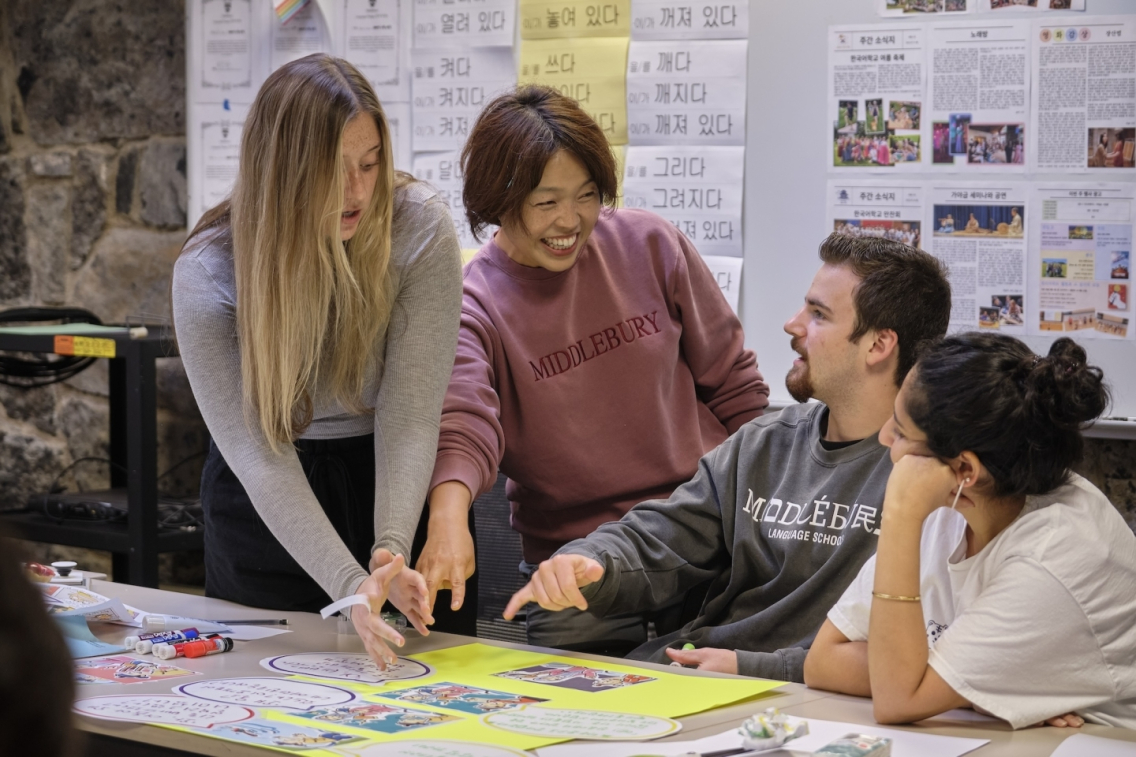
I first came across Middlebury Language Schools after applying to the Middlebury Institute of International Studies (MIIS), where I pursued a Master’s in International Education Management with a focus on the Korean language. The immersive environment of my Middlebury Language summer taught me lessons I hadn’t anticipated. The rigorous pace and volume of work forced me to memorize the Hangeul keystrokes of Korean on a PC keyboard in less than a week’s time through sheer will, because typing was simply the only way to keep up with wave after wave of assignments!
But more importantly, I learned to let go of the fear of looking foolish. I watched classmates who understood less Korean than I did make faster progress and have more fun, simply because they’d stopped caring about being right. They jumped into conversations, made mistakes freely, and learned from every stumble.
Meanwhile, before Middlebury, I often held back, paralyzed by the need to sound correct.
Middlebury taught me that fluency comes not from perfection, but from the courage to speak imperfectly—a lesson that serves me now when navigating complex policy discussions where admitting what you don’t know is often more valuable than pretending expertise.
From Education to Exchange to Engagement
After Middlebury, my career became an exercise in connecting people across cultures. I coordinated student affairs at the University of Utah’s Asia Campus in Incheon, developing leadership training and cross-cultural workshops. I taught English immersion at Korean schools, using my Korean skills to ensure successful programs and events. Each role taught me something essential about how people learn to relate to one another.
Originally I thought I would stay in South Korea long-term and open up a private English Academy. But as they say, life had other plans for me. With 2020 being the watershed year for all of us that it was, a major career inflection point came when I joined Global Ties U.S. back in Washington, DC as Program Manager for the USA Pavilion Youth Ambassador Program at Expo 2020 Dubai. While designing cross-cultural training for that program, I drew on my years of navigating Korean and other multicultural contexts. More than traditional education—that role meant cultural diplomacy at scale.
Later in my career, working alongside colleagues at American Councils for International Education to develop and execute the US Department of State’s International Visitor Leadership Program (IVLP), I thought my time working in or centered around the Korean Peninsula would soon fizzle out.
All that until two days after Christmas in 2022, a LinkedIn message led to an invitation to apply for my current position with NCNK, and suddenly, all the pieces connected.
I now work specifically on Korean Peninsula issues and am using skills nurtured while at Middlebury to facilitate the kind of peacebuilding I’m proud to be a part of.
Our team develops and executes 20+ annual programming initiatives, ranging from small expert roundtables to large-scale semi-annual events that host U.S. government officials and foreign dignitaries.
NCNK’s mission is “principled engagement” —the belief that dialogue, even with challenging actors, can promote peace and improve lives. This resonates deeply with my own philosophy, shaped by years of language learning: communication is the precondition for understanding, and understanding is the precondition for progress.
What Middlebury Taught Me
As for using what I learned at Middlebury in my work and daily life, I read Korean news sources to stay current on peninsula developments and have a better understanding of the cultural context behind statements and policy positions in ways that pure translation can’t capture. Language skills aren’t just about communication—they’re about comprehension at a deeper level.
Looking back on my Korean learning journey, bolstered specifically by my time at Middlebury, I’ve learned much more than grammar and vocabulary:
Humility: Reflecting on the days of time I spent trying to capture every detail on flashcards has reminded me that we’re never “done” and that there’s always more to learn, buried under layers of cultural context – and that’s ok.
Persistence: Achieving and maintaining language proficiency requires years of sustained effort, often without immediate payoff. That persistence now serves me when facing complex policy challenges.
Cultural intelligence. Language is inseparable from culture. Learning Korean meant learning to think differently.
The value of specialized expertise. That military linguist had a point–choosing depth over breadth has given me credibility and capability. While it’s fun and useful to know a little about a lot, it can also be incredibly satisfying to dive deep and continually discover new things about subjects you’ve already grown to love.
Advice for Fellow Language Learners
For current Middlebury Language Schools students and recent graduates wondering whether intensive language study is worth it, I offer this:
Your language skills will be relevant in ways you can’t yet imagine. My years spent learning Korean informed how I designed youth exchange programs for Dubai and how, today, navigate Congressional briefings in Washington. Stay open to unexpected applications.
Proficiency unlocks doors, but cultural competence unlocks rooms. Technical language ability gets you in the building. Cultural understanding—earned through years of study, travel, and genuine engagement—is what makes you effective once you’re there.
Don’t forget depth. In a world that rewards generalists, there’s profound value in deep expertise. Pick your place, learn it deeply, and become the person who can bridge that particular gap.
Language is infrastructure. Whether you’re teaching, managing programs, or shaping policy, language skills provide the foundation for connection. Everything else builds on that.
The Journey Continues
Fifteen years after arriving in Daegu, the Korean language remains central to my professional (and personal) identity. I continue to study, to practice, and to learn. My work is challenging—Korean Peninsula issues don’t have easy solutions—but it’s exactly what I hoped for back at Middlebury: using language as a tool for meaningful engagement on issues that matter.
To current Middlebury Language Schools students: you’re not just learning vocabulary and grammar. You’re developing the capability to understand the world from a fundamentally different perspective. You’re becoming someone who can build bridges that wouldn’t otherwise exist.
That’s the real gift of language study—not just what you can say, but who you can become.
Seth Joyner is Senior Program Manager at the National Committee on North Korea. He holds certifications from Duke University in Nonprofit Management, and as a Project Management Professional (PMP), PMI Agile Certified Practitioner (PMI-ACP), and Certified ScrumMaster (CSM). In addition to TOPIK III proficiency and an Intermediate High OPI assessment, in 2019 Seth completed the KIIP Level 5 Program and passed the Korean Immigration and Permanent Residency Aptitude Test.
Special thanks to my husband Myungjae for his ongoing support, patience, and for continuing to teach me something new about his native Korean language and culture every day.