






Card 1
Subtitle here

This is your opening sentence that positions your office or center in the context of Middlebury’s mission, ideally in an active voice that speaks from the visitor’s perspective in terms of what they will gain from viewing this site.
This is a text component with introductory language that gives an overview of the office. It should describe what services and/or resources your office provides. Use active language that speaks to the visitor and directly addresses what they might be looking for by visiting your site.
This is where you could put temporary important information that you want students and faculty to see right away, such as deadlines or upcoming schedule changes. You can include a link to more information or it can be self-contained here.
More about Announcement Topic.
You can use a Link List component when you want to include a grid-like representation of important—and often visited—pages within your site. You can also link to related content on other Middlebury sites, but note that will take people away from this page.
Find important information about XYZ
Find important information about XYZ
XYZ Office also offers helpful information
If you don’t want to showcase a single full-size video, you can use the Media Group to showcase several side by side. You can also use this component to have several smaller photos or audio files in a grid formation.
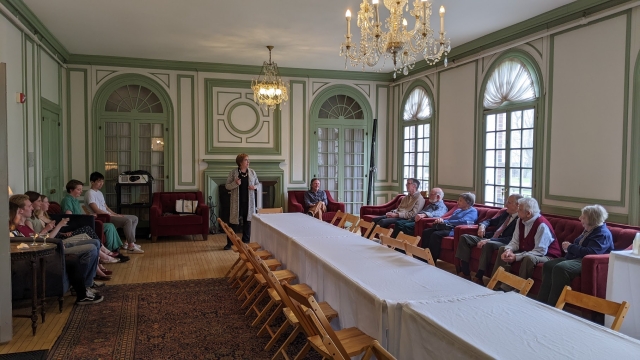
Subtitle here

Subtitle

Subtitle

Subtitle
This component provides space for up to four separate but related stories/teasers. They can link somewhere else within the site or stand alone, with or without descriptive text below the image.
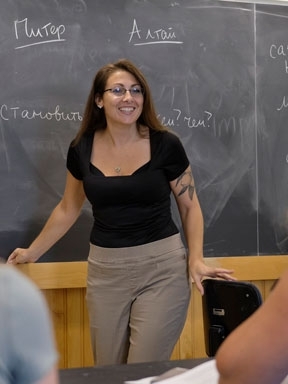
The description below the image can include more information.
and a Title
And a link
You can just include more information without a name or link.
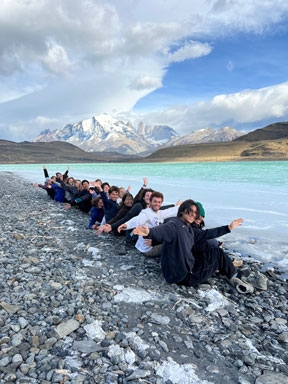
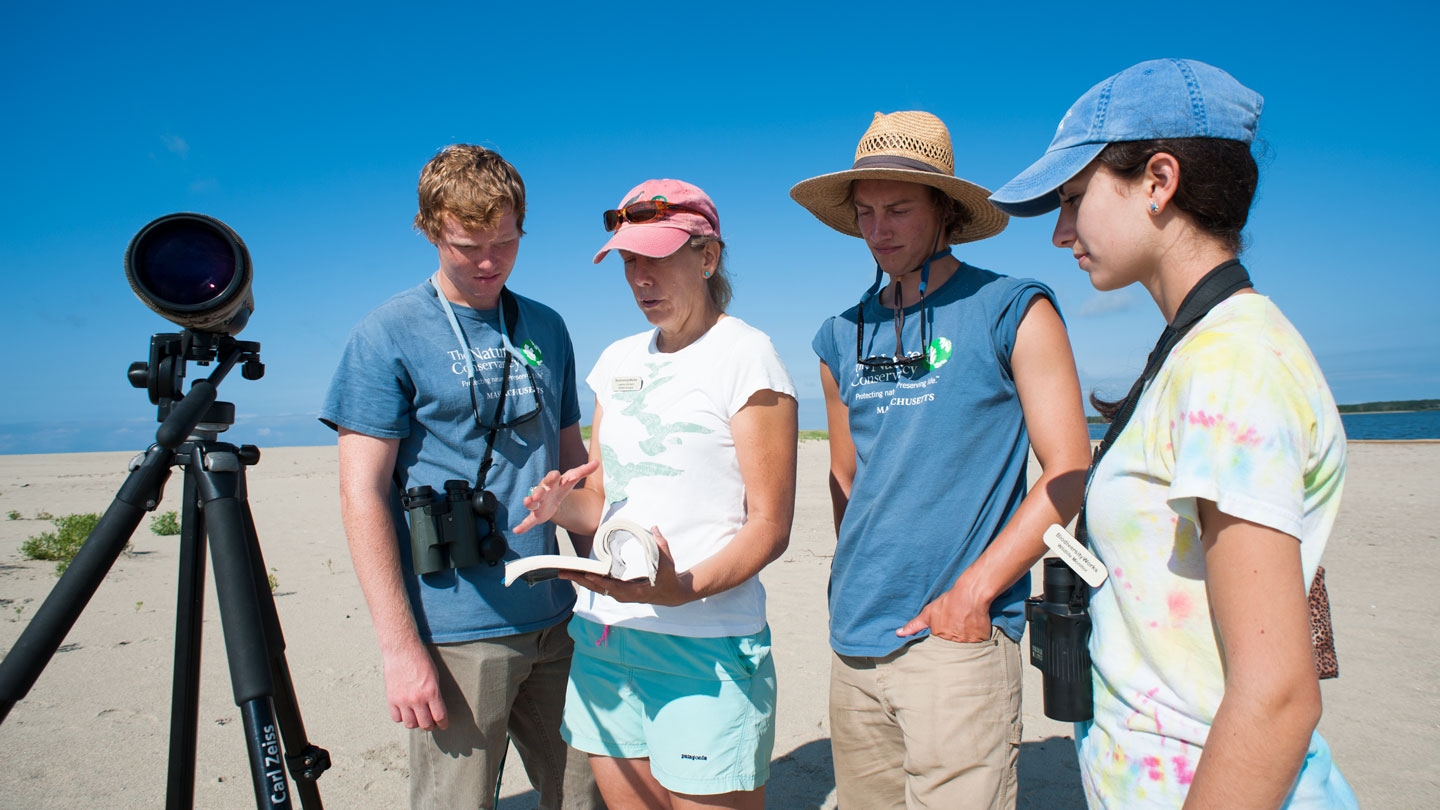
This is where you could feature something timely, such as a recent award, a new program or initiative, or faculty/student research. You can then link to a place in the site where that info is expanded on, but a link is not required.

A themed panel is a great way to show up to three related topics within your site that you want to feature on the homepage. This encourages people to dig deeper. For example, Faculty Research or Student Awards or Featured Events.
Academic Departments can use a Course List to showcase courses associated with a department. A Curated Course List allows you to choose from all the courses in the catalog.
Courses offered in the past four years. Courses offered currently are as noted.
FOOD 0230
Food Security in LebanonCourse Description
Food Security in Lebanon
In this course we will begin with a short history of Lebanon’s agrarian to urban transition to look at its contemporary food system, asking such questions as: Who profits from the food system? How viable is agriculture in Lebanon? Does this system provide food security? This course will provide students with an understanding of how global and local political/financial systems have extracted wealth from farmers, and have left the Lebanese in a state of fluctuating food insecurity. We will look at commodity chains, crop selection, markets, farmer to farmer relations, and the role of Syrian crops entering the country. We will draw on the work of NGOs, UNEP reports, media, policy papers, and the academic literature. (ENVS 0112 or GEOG 0100 or IGST 0101 or ANTH 0103 or ANTH 0211; Or by instructor approval) 3 hrs. lect.
Terms Taught
Requirements
FOOD 0280
Intro to Food Systems IssuesCourse Description
Middlebury's Foodprint: Introduction to Food Systems Issues
Food systems encompass all activities, people and institutions determining movement of food from input supply and production (on land and water) through waste management. The dominant U.S. food system is responsible at least in part for some of the nation’s most troubling environmental and health challenges. What do we eat at Middlebury? What difference does it make? How do we know? We will examine impacts of how Middlebury sources and consumes its food, and disposes of food waste, as a lens to understand sustainable food systems and how they can be achieved. (formerly INTD 0280) 3 hrs. lect.
Terms Taught
Requirements
FOOD 0299 Upcoming
Literary FeastsCourse Description
Literary Feasts: Representations of Food in Modern Narrative (in English)
This course will consider food and eating practices within specific cultural and historical contexts. We will analyze realistic, symbolic, religious, erotic, and political functions surrounding the preparation and consumption of food. Readings will be drawn from several national traditions, with a focus on Europe. Authors will include, among others, I. Dinesen, L. Esquivel, J. Harris, E. Hemingway, T. Lampedusa, P. Levi, C. Petrini, M. Pollan, E. Vittorini, and B. Yoshimoto. Viewing of several films where food and eating play an important role will supplement class discussion.
Terms Taught
FOOD 0345
Anthropology of FoodCourse Description
The Anthropology of Food
Food not only sustains bodies, but also reflects and shapes cultures, social identities, and systems of power. In this course we examine the relationship between food and culture. Beginning with an examination of the origins of cooking, we will go on to analyze a variety of approaches to understanding the food/culture/society relationship. These include the symbolic meanings of food, the role of food in constructing social and cultural identities, and the relationship between food and political and economic systems. Our examples will be cross-cultural (Africa, South and East Asia, Europe, and the Americas). 3 hrs. sem.
Terms Taught
Requirements
FOOD 0352
Food History in Middle EastCourse Description
Food in the Middle East: History, Culture, and Identity
In this course we will examine the rich culinary history of the Middle East from the time of major Islamic Empires, such as the Abbasids and Ottomans, until the modern period. Using an array of primary and secondary sources, we will explore the social, religious, literary, and economic place of food in the region. We will study the consumption of and attitudes toward specific foodstuffs, gauging the relevance of items like spices and coffee in the pre-modern period and of various dishes within modern nationalist constructions. We will also investigate how Middle Eastern peoples from different ethnic, geographic, and religious backgrounds have historically used food to express their distinct cultural, national, and gendered identities.(Counts for HSMT credit) 3 hrs. lect./disc.
Terms Taught
Requirements
FOOD 0383
Grassroots & SustainabilityCourse Description
Grassroots Perspectives on Sustainable Development
Whose sustainability is threatened now, and why does it matter? How do the Sustainable Development Goals adopted in 2015 perpetuate existing power asymmetries that hurt marginalized people and block systemic transformation? We will critique the rise of “sustainable development" and explore the emphases of sustainability science to assess whether it is addressing the needs of marginalized people. Then we will turn to the articulation of alternatives to neoliberalism from social movements and post-development advocates. Are alternatives arising that offer radically different and more sustainable patterns of production and consumption to meet life needs? The course involves critique of original scientific literature and reports and interactive discussion. 3 hrs. seminar
Terms Taught
FOOD 0466
Animals in Mideast HistoryCourse Description
Animals in Middle Eastern History
In this course we will examine attitudes towards animals in Middle Eastern history, with an emphasis on Muslim settings. We will survey the law and ethics of human-animal relations in religious sources and engage with issues such as how humans differ from non-human “animals,” how they should treat animals, and the overall place and roles of animals in divine creation as reflected within different historical periods. We will also consider the impact of the modern animal liberation movement in the Middle East and examine a variety of religious and secular positions formulated by Muslims that have recently prioritized animal welfare and promoted environmental consciousness. (Counts for HSMT credit) Pre-1800. 3 hrs. sem.
Terms Taught
Requirements
FOOD 0500
Independent StudyCourse Description
Independent Study
Approval Required
Terms Taught
FOOD 1004 Upcoming
The Natural Fermentation LabCourse Description
Natural Fermentation: Engaging the Wild Microorganisms that Surround Us
In this course students will be immersed in the scientific, historical, and practical pursuit of food fermentation. Fermentation is the earth's first biotechnology and method of preserving energy. We will explore traditional fermentation techniques in a hands-on kitchen setting, while also contextualizing these practices in terms of community, biological and cultural evolution, health, and nutrition. This approach takes advantage of natural processes to the greatest extent possible, using wildly and intrinsically available inputs rather than lab-created or purchased ones. We will engage all of our senses to curate wild, tamed, and unaccounted-for microorganisms as we cure, culture, bake, and sour vegetables, wheat, and milk to create favorites such as pickles, sourdough, vinegar, kombucha, kefir, yogurt, and cheese.
Terms Taught
Requirements
FOOD 1005
Endangered FoodCourse Description
Endangered Food
We walk into a grocery store and perceive a large variety of food choices. At the same time, we are told western diets are unhealthy and “homogenous.” What does this “homogeneity” refer to? And, does it apply to those of us who strive to consume “balanced” diets? In this course, we will explore the contrast between modern dietary homogeneity and the history and diversity of ancient foods. In addition to reading social science literature and case studies, we will take a practical approach to exploring course themes by meeting with farmers and naturalists aiming to preserve, and return to, diverse and wild food systems. For their final projects, students will undertake a project centering a native foodway.
Alexa Duchesneau is a fifth year Anthropology PhD candidate at Yale University. She studies the nutritional ecology of human and non-human primates.
Terms Taught
Requirements
FOOD 1006
Intro to Agrifood SystemsCourse Description
Introduction to Agrifood Systems
How do agricultural and food systems intersect with the polycrises confronting us, including climate change, political instability, and systemic and structural oppression? In this course, we will learn to apply a critical systems thinking approach to our engagement with agrifood systems. We begin by exploring the principles and processes of complex systems and how these apply to agriculture and food. Weaving together critical studies and systems thinking, we will identify how power operates within agrifood systems. We conclude by applying our learning to complex issues including climate change, conservation, political polarization, and health. Throughout the semester, we will learn from a diverse array of materials, moving beyond the written word and academic content to weave together diverse voices and knowledges. (Not open to students who have already completed FOOD 0380.)
Katie Horner '10 is a researcher and educator with the Institute for Agroecology. Some of her recent work has explored the social elements of soil health, alternative models of farmland access, and barriers to just transitions in Vermont. Prior to academic work, Katie spent years farming in Vermont and California. She still maintains a strong connection to agrarian communities here in Vermont through research partnerships and her work as a board member for Rural Vermont.
Terms Taught
Requirements
FOOD 1007 Upcoming
The Economics of Free FoodCourse Description
The Economics of Free Food
Economists say there’s no such thing as a free lunch. Yet Vermonters self-report obtaining 14% of their food in ways other than purchasing it: gardening, hunting, fishing, foraging, food pantries, soup kitchens, backyard chickens, or neighborly gifts. How have these non-market practices persisted in today’s market-dominated food system of commercial farms, wholesalers, retailers, and restaurants? What shifts when food is not for sale? In this course we will understand the history and present of non-market food, in Vermont and beyond, from texts, practitioner guests, and students’ own experiences. Using food systems as an example, we will assess when markets do and do not serve the public good. We will also visit non-market food institutions such as Addison Food Hub.
Sam Bliss raises, shares, and studies food that's not for sale. He holds a Ph.D. in Natural Resources from the University of Vermont, where he is currently a postdoctoral fellow at the Gund Institute for Environment.
Terms Taught
Requirements
FOOD 1023
Anthropology of MeatCourse Description
Anthropology of Meat: Why Humans Consume Other Animals
Why are some animals taboo to eat? Can it be ethical to eat meat (and how is “ethical” defined)? In this course, we will explore meat eating practices around the world, focusing on issues like sustainability, race, and gender. Key texts include Nadasdy's 2007 article "The Gift in the Animal," Boisseron's Afro-Dog (2018), Adams' The Sexual Politics of Meat (1990), and Ko's Racism as Zoological Witchcraft (2019). Through a variety of texts, films, and guest speakers--including food discrimination lawyer Thulasi Raj and Vermont slaughterer Mary Lake--we will explore our own relationships to meat eating, while questioning what it means to be human. This course does not seek to persuade you towards or away from vegetarianism; all experiences are welcome.
Amanda Kaminsky is a PhD Candidate in Sociocultural Anthropology at the University of Michigan and an alumna of Middlebury College (Class of 2013, B.A. Chinese).
Terms Taught
Requirements
FOOD 1044
Vermont's Farms, Food & FutureCourse Description
Vermont's Farms, Food & Future
What crops make sense to grow in Vermont? Where is the best land to farm? Who owns land and capital, and who grows the food? What systems and interests shape the answers to these questions? In this course we will examine Vermont agriculture through lenses of climate change, racial equity, and socioeconomic viability. Through reading, discussion, and meeting with food system practitioners, students will understand intersecting and conflicting perspectives related to agriculture and land use. The final project will be a proposed policy, program or enterprise that would contribute to the agricultural future each student believes in for Vermont.
Jeannie Bartlett ‘15 grows fruit trees in Plainfield, Vermont. From 2016 through 2021 she managed the Franklin County Conservation District, where she developed and implemented programs to assist farmers with stewardship of soil and water in northwest Vermont. She serves on the board of Rural Vermont and is an active member of the VT Young Farmers Coalition. She studied Conservation Biology at Middlebury.
Terms Taught
Requirements
Answer
Use FAQ when you feel like there are specific things you have not addressed in your content.
5 is ideal, 10 is okay, 20 is unmanageable. No one will read them.
This allows you to pull your organization’s events (upcoming, past, all) from 25Live. A Curated Event Calendar allows you to choose any events from 25Live that you want to appear. They can be from organizations other than your own, such as those you co-sponsor.

Join journalist Devon O’Neil ’01 for a presentation on reporting, writing, and following a non-linear career path as he discusses his award-winning 2025 book The Way Out: A true story of survival in the Heart of the Rockies. O’Neil, a psychology major at Middlebury, has been a daily newspaperman, a staff writer at ESPN, and a correspondent at Outside Magazine — as well as a construction worker, counterterrorism analyst, and backcountry hutmaster. He’ll detail how his time at Middlebury led to a life at 10,200 feet in Colorado and beyond.
Axinn Center Abernethy Room (221)
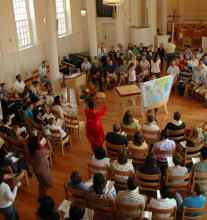
Stop by the table in the Davis Library vestibule on Friday, October 23rd, from 2 to 4 pm and chat with Nathan from Yale Divinity School.Find out more about the degrees offered and the registration process.
Yale Divinity School educates and inspires the scholars, ministers, and leaders of the global future. Students from a full spectrum of backgrounds and Christian denominations come together at YDS to develop their faith and intellect while beginning a lifetime of ministry, scholarship, and service to church and world.
Davis Family Library Vestibule (main entrance)

Interested in healthcare, data, AI, or consulting? Join N1 Health to learn about full-time opportunities in Consulting and Data Science. Hear from Midd alum Liz Rightmire ’24.5 and other N1 Health team members about their work, career paths, and opportunities in Boston and NYC.
Treats & light refreshments provided!
Register on Handshake
Axinn Center 220
This component allows you to group together a series of Calls to Action—actions you want someone to take when visiting your site.
Do This Now