Announcing the 2026 Scott Symposium

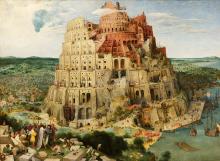
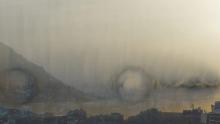
An image of Bruegel's Tower of Babel

Thriving in the Tower of Babel: The Soul of the Liberal Arts 

Friday, March 6 from 2:30pm - 6:00pm

Hillcrest 103 (The Orchard)
 

Are you confused about how to know what’s true? Or about how best to live? Or how to even approach these questions?

In open-ended roundtable discussions, our multi-disciplinary panel of experts will address such questions as: What is love? How do we know what is the best way to live, to promote human flourishing? Are there empirical answers to these? Are quantitative approaches enough? What other modes of understanding do we need? And how can we integrate or balance the differing assumptions, methods and conclusions of our various fields and disciplines—making the multi-disciplinarity of the liberal arts akin to being multi-cultural or multi-lingual?

THE PROGRAM

2:30-2:50pm: Introduction

Opening remarks by Bill Waldron, Professor of Religion at Middlebury College

3:00-3:50pm: Love

What is love? Think of the many ways we understand love, especially human love. How would your discipline/field explain or interpret love? Is it biological (especially in mammals); social or cultural; perhaps a path to the divine? What are the strengths and limitations of that particular approach? What do you personally think?

4:00-4:50pm: Human Flourishing

What is human flourishing? Is it emotional, economic, or spiritual—or all of these? How does your discipline/field understand and contribute to human flourishing? What are the strengths and limitations of that particular approach? What do you personally think?

5:00-5:50pm: Integrating Multiple Perspectives; Thriving in the Tower of Babel 

How can we integrate or balance multiple ways of understanding our lives—as applied to, say, public policy and education, or in our personal lives as human beings who also have specialized knowledge? Should we—need we—seek a comprehensive, unified vision, in which it all fits together, or should we just enjoy the obvious fruits of our cacophonous knowledge systems? 

AT THE ROUNDTABLE

Mike Dash is an Associate Professor of Psychology and a member of the Neuroscience Program.  He teaches courses on the neurobiology of sensory perception, brain plasticity, neuronal oscillations, and statistics.  His research lab investigates the interactions between sleep, neuronal communication, and memory by recording electrical and chemical activity within the brains of freely-behaving rats.  Before coming to Middlebury, Mike received a B.A. in neuroscience from Kenyon College, a PhD in neuroscience from the University of Wisconsin, and worked as a post-doctoral researcher at the University of Illinois and Syracuse University.  In conjunction with the talented Middlebury undergraduate students who have worked in his research lab, Mike has published scientific articles in a variety of journals including The Journal of Neuroscience, The Journal of Neurochemistry, Hippocampus, and Sleep. 

Rev. Dr. Andi Lloyd is an ecologist and an ordained minister in the United Church of Christ. She received her B.A. degree in Geography from Dartmouth College in 1989, an M.S. in Biology & Wildlife from the University of Alaska Fairbanks in 1992, and a PhD in ecology and evolutionary biology from the University of Arizona in 1996. From 1996 to 2020, she was on the faculty of Middlebury College, where she taught classes on plant ecology, ecology and evolution, and climate change. While at Middlebury, she conducted research on the effects of climate change on forests in Alaska and Siberia. From 2012 to 2019, Andi also served as the Dean of the Faculty and Vice President for Academic Affairs at Middlebury. Andi left academia in 2020 to pursue pastoral ministry. In 2022, she received her M.Div. degree from Yale Divinity School, after which she was ordained in the United Church of Christ. From 2022 to 2025, she served as pastor of the Trinitarian Congregational Parish of Castine, Maine. In October 2025, she joined the staff of the Church of Christ at Dartmouth College as co-pastor. Andi is the author/co-author of more than 30 peer-reviewed articles and book chapters on forests and climate change. Along with Rev. Dr. Andy Nagy-Benson, she is the author of Letters to the Ecotone: Ecology, Theology, and Climate Change (Resource Publications, 2022).

Jason Ānanda Josephson Storm is an historian and philosopher of the Human Sciences. He is currently Francis Christopher Oakley Third Century Professor of Religion and Chair of Science & Technology Studies at Williams College. Storm received his Ph.D. from Stanford University, his MA from Harvard University, and has held visiting positions at Princeton University, Harvard University, École Française d’Extrême-Orient, and Universität Leipzig. He is the author of The Invention of Religion in Japan (2012), The Myth of Disenchantment: Magic, Modernity and the Birth of the Human Sciences (2017), and Metamodernism: The Future of Theory (2021), all published by University of Chicago Press. A fourth monograph, The Genealogy of Genealogy: Nietzsche, Foucault, & the Coils of Critical History is forthcoming in April 2026.

Gina Thomas is a psychologist whose research examines solitude and its relationship to identity, personality, and well-being. She earned her doctorate in developmental psychology at the University of California, Santa Cruz, and works now as an assistant professor of psychology at Middlebury College. She is currently at work on a book, titled “Embracing Solitude: A Radical Act for a More Balanced Life.”

William S. Waldron is a Professor in the Department of Religion at Middlebury College, VT, where he teaches South Asian religions and assorted Buddhist topics. He received his Ph. D. in Buddhist Studies from the University of Wisconsin after studying extensively in India, Nepal and Japan. His research focuses on Indian Yogācāra Buddhist theories of mind in dialogue with Western philosophies of mind and the cognitive sciences. His first book was “The Buddhist Unconscious: The Ālaya-vijñāna in the Context of Indian Buddhist Thought ” (Routledge, 2003). He explored these themes in further depth in “Buddhist Steps to an Ecology of Mind: Thinking about ‘Thoughts without a Thinker’” (2002). His recent book, Making Sense of Mind-Only (Wisdom, 2023) is an accessible introduction to Indian Yogācāra Buddhist teachings. He is currently a Fulbright Senior Scholar, working on a collaborative project on the Five Buddha Families in Nepal. 

Upcoming Events

  • Resilient Democratization: Social and Political Change in Iran and Beyond

    The Rohatyn Center for Global Affairs program on Security and Global Affairs presents “Resilient Democratization: Social and Political Change in Iran and Beyond” with Norma Claire Moruzzi.

    Based on the author’s book, “Tied Up in Tehran: Women, Social Change, and the Politics of Daily Life in Postrevolutionary Iran” (Cambridge University Press, 2025), this talk examines the social conditions that gave rise to the widespread street protests in Iran and the ensuing violent state repression during the winter of 2025–26. It further explores the broader implications of these developments for democratization and regional security in the Middle East.

    Norma Claire Moruzzi is Professor of Political Science and Gender and Women’s Studies, with Affiliations in History and Art History, Director of the International Studies Program, and Co-Chair of the Middle East and Muslim Societies Cluster at UIC. She is an Associate Editor for the journal Iranian Studies, and a past chair and member of the editorial committee of the journal Middle East Report. Her research and teaching address the politics of social identity, with particular emphasis on the intersection of gender, religion, and nationalisms.

    In-person event. For more information on the Rohatyn Center for Global Affairs, click here.

    Robert A. Jones '59 Conference Room

    Open to the Public

Past Events

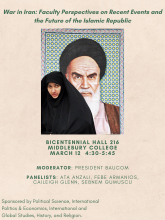
  • War in Iran: Faculty Perspectives on Recent Events and the Future of the Islamic Republic

    Iran has entered one of the most consequential crises in its recent history when the United States and Israel launched coordinated and unprovoked air strikes across the country on February 28. These strikes killed hundreds, including Supreme Leader Ali Khamenei, who ruled Iran since 1989. The country has retaliated with missile and drone attacks on U.S. bases, Israel, and other targets in the Gulf countries, raising the risk of a full-scale regional war.  How did we get here? What is the role of ideology on both sides in how the conflict has gotten to this point, and how might it define where we go from here? What immediate political and institutional challenges does Iran face in the wake of Khamenei’s assassination? What domestic and international factors are shaping U.S. decision-making, and what effects might they bring to bear on the region and the international system? The panel will address these questions.

    Panelists: Ata Anzali, Febe Armanios, Caileigh Glenn, Sebnem Gumuscu

    McCardell Bicentennial Hall 216

    Open to the Public

  • Thriving in the Tower of Babel: The Soul of the Liberal Arts

    Are you confused about how to know what’s true? Or about how best to live? Or how to even approach these questions?

    In open-ended roundtable discussions, our multi-disciplinary panel of experts will address such questions as: What is love? How do we know what is the best way to live, to promote human flourishing? Are there empirical answers to these? Are quantitative approaches enough? What other modes of understanding do we need? And how can we integrate or balance the differing assumptions, methods and conclusions of our various fields and disciplines—making the multi-disciplinarity of the liberal arts akin to being multi-cultural or multi-lingual?

    Franklin Environmental Center, The Orchard-Hillcrest 103

    Open to the Public

  • Screening of Mariam Ghani's Documentary Film, There's a Hole in the World Where You Used to Be

    Mariam Ghani is an artist, writer, and filmmaker. Her work examines places, spaces, and moments where social, political, and cultural structures manifest in visible forms, encompassing video, sound, installation, photography, performance, text, and data. 

    Mariam will give a lecture and host a Q & A after the screening of her film (15:30), There’s a Hole in the World Where You Used to Be, which is a film about memory and mourning, war at a distance, and grief that overflows or fits poorly into the usual containers. It departs from the premise that both grief and black holes are so dense and intense that they bend space and time around their specific gravity – warping perspectives, reshaping the physical world, and throwing those caught in their orbit out of temporal sync.

    Mahaney Arts Center 125

    Open to the Public

  • Restorative Justice and Lived Religion: Transforming Mass Incarceration in Chicago

    This lecture by Jason Springs (Professor of Religion, Ethics, and Peace Studies at the University of Notre Dame) introduces a novel understanding of what restorative justice is and how it should be implemented. It explores the ways in which restorative justice ethics and practices exhibit moral and spiritual dynamics, and what difference such “lived religious” dynamics can make in transforming structural violence.

    Franklin Environmental Center, The Orchard-Hillcrest 103

    Open to the Public

  • The Kingdom of God and Modern Nation State: A Response to christian Nationalism From a Christian Perspective

    R. Ward Holder (Associate Professor of Theology at St. Anselm College) will deliver the final talk in the 2025 Scott Lecture Series. Christian nationalists insist that the US was founded by and for Christians. As a resurgent populist movement in contemporary American politics, Christian nationalism aims to establish the legal, moral, and cultural dominance of an ultra-conservative, exclusivist interpretation of the religion, and it views diversity and pluralism as existential threats to that objective. This year’s Scott Lecture Series, sponsored by the Religion Department, will invite a range of scholars to help us understand this movement, its roots, its adherents, and the consequences it poses to American public life.

    Franklin Environmental Center, The Orchard-Hillcrest 103

    Open to the Public

  • Fantasizing Christian America: A Queer Take on Christian Nationalism

    Daniel Miller (Professor of Humanities at Landmark College) will deliver the third talk in the 2025 Scott Lecture Series. Christian nationalists insist that the US was founded by and for Christians. As a resurgent populist movement in contemporary American politics, Christian nationalism aims to establish the legal, moral, and cultural dominance of an ultra-conservative, exclusivist interpretation of the religion, and it views diversity and pluralism as existential threats to that objective. This year’s Scott Lecture Series, sponsored by the Religion Department, will invite a range of scholars to help us understand this movement, its roots, its adherents, and the consequences it poses to American public life.

    Robert A. Jones '59 Conference Room

    Open to the Public

  • Platforming Extremism: How Social Media Reshapes Christian Nationalism

    Mark Douglas (Associate Professor of Christian Ethics at Columbia Theological Seminary) will deliver the second talk in the 2025 Scott Lecture Series, which invites a variety of scholars to explore the theme of Christian nationalism. 

    Christian nationalism does more than rely on social media to promote its message; it is getting changed by social media in ways that make it both more difficult to address to and (slightly) easier to dismantle.  One set of resources that may prove effective in dismantling it as it is being changed are those related to developments in theologies of parody and camp. This lecture explores Christian nationalism, the impacts of social media on it, and how parody and camp may shape responses to it. 

    Axinn Center 219

    Open to the Public

  • Money, Lies, and God: Inside the Movement to Destroy American Democracy

    The Rohatyn Center for Global Affair Global Fellows Program presents “Money, Lies, and God: Inside the Movement to Destroy American Democracy” with Katherine Stewart. 

    Journalist Katherine Stewart new book “MONEY, LIES, AND GOD: Inside the Movement to Destroy American Democracy” (February 18, 2025) exposes the inner workings of the “engine of unreason” roiling American culture and politics, but aims at a bigger and more challenging target: how did we get to the point where there is an organized political movement within the United States that is working to destroy American Democracy? Furthermore, why have so many Americans turned against democracy?

    In this talk she’ll discuss her findings with a compelling analysis of the authoritarian reaction in the United States. She demonstrates that the movement relies on several distinct constituencies, with very different and often conflicting agendas. Stewart’s reporting and comprehensive political analysis helps reframe the conversation about the moral collapse of conservatism in America and points the way forward toward a democratic future.

    For more information on the Rohatyn Center for Global Affairs and events visit here.

    Dana Auditorium (Sunderland Language Center)

    Open to the Public
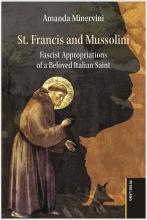
  • "Bending the Biotechnological Arc Back Toward Justice: A Critique of Rhetorics of Scientific Progress”

    This talk by Emma McDonald Kennedy, Ph.D (Assistant Professor of Christian Ethics at Villanova University) considers the history of the eugenics movement and its links to contemporary biotechnological innovation. With resources from Christian ethics, reproductive justice, and disability rights, this talk will sketch a more inclusive vision of social progress and argue for regulation and public consultation in biomedical research.

    Axinn Center 219

    Open to the Public

  • "Being Jewish after the Destruction of Gaza," A conversation with Prof. Peter Beinart

    Peter Beinart is Professor of Journalism and Political Science at CUNY. He is also a Contributing Opinion Writer for The New York Times, a political commentator on MSNBC, and Editor-at-Large of Jewish Currents. Over the years he served as Editor of The New Republic and wrote for publications like The Wall Street Journal, The Atlantic, Die Zeit, and the Financial Times. He is the author of four books including The Icarus Syndrome: A History of American Hubris (Harper, 2010) and The Crisis of Zionism (Times Books, 2012). He will speak at Middlebury about his latest book, Being Jewish After the Destruction of Gaza (Knopf, 2025), which challenges a dominant narrative of Jewish victimhood and argues for a new concept of Jewish identity that links Israeli and Palestinian safety and places equality above supremacy.

    Sponsored by: Office of the President; Office of the Provost; Jewish Studies; Middle East and North Africa Studies; International & Global Studies; Departments of History, Philosophy, English, Religion (Charles P. Scott Fund); Writing and Rhetoric Program; Axinn Center for the Humanities

    Wilson Hall, McCullough Student Center

    Open to the Public