






Experiential Learning
Leadership, creative thought, and intellectual risk taking

With a curriculum anchored in the liberal arts and sciences and an approach to learning responsive to an evolving, increasingly complex world, a Middlebury education is as distinct as it is comprehensive.
We offer a 21st-century global liberal arts and sciences education. Scholarship and research are not confined to the classroom or laboratory, nor even to a particular field of study. A robust offering of majors, minors, and academic programs not only provides students with a diverse range of disciplines to explore and to experience, but each discipline is intended to work in concert with another, fostering an evolution of cross-disciplinary collaboration that is at the heart of the academic experience at Middlebury.
See what people on campus have to say about academics at Middlebury. See more video FAQ.
A first-year seminar is a course, every first-year takes it. It’s a course designed to get you involved in the liberal arts education and what the liberal arts actually looks like. A lot of these courses are unique and are something that professors are interested in but don’t often teach. For instance, I teach a course called the Language of Conspiracy Theories, which is a fun course where we study why do conspiracy theories exist, where do they exist in the 21st century, and why do they keep popping up. Those are the types of courses that you’ll be taking with your first-year seminar. They’re a great way for you to engage with peers in your new class. Your first-year seminar professor is also your advisor. So it’s a great way to get you involved with your first-year experience here at Middlebury and to get you set up for the rest of your academic career. Next I wanna talk to just quickly about choosing a major. This is my third year at the College, and I can say that I’ve been surprised how many students show up, they have a major in mind. They know what they want to do in life. And then after a semester, maybe a year, they’ve completely changed their mind. They’ll go from something that, oh, they were all about science, and now they wanna do something a little liberal arts. Or vice versa. So to find a major, we really suggest taking a broad array of classes. Really exploring the possibilities of what interests you. And you’ll be surprised by what you might want to major in. It’s okay if you have a major already in mind when you get here, and maybe that stays your major. Maybe the major changes. Or maybe you don’t have a major in mind, and that’s great as well. The great thing is you’ll focus on taking different sorts of courses and working with your professor to find the best major for you.
Here at Middlebury, we have a 4-1-4 calendar system, meaning that students take four classes in the fall semester, four classes in the spring semester, and then one class during the month of January, and that is known as our J-term. J-term is a really wonderful time to try something new because you’re taking one class for four weeks. My first year here I took a class in the Religion Department called Buddhism in the Modern World, which was really far outside of my comfort zone, but I think it was the perfect time to do that. You could also take a class from a visiting professor, take a more unique class, like an EMT course and get your certification, but you could even use this time to do an internship, study abroad, or do research for credit. Beyond the classroom, J-term is a really fun time because we celebrate winter in Vermont with activities like a Winter Carnival, which consists of a concert and ski races, and a bunch of different workshops and student-led activities. I also used this time to take my first ever ski lesson at a Rikert Nordic Center, and it was just really fun to celebrate winter in Vermont.
It is my pleasure to welcome you to this institution and to give you a little clue about what your academic advising might look like. The way that liberal arts means making sense of the human experience, please also remember that your advisor, your first-year seminar advisor, then subsequently your academic advisor, are here to help you make sense of your college experience, your entry into being a scholar, and ultimately a purposeful person in the world. So, in your third semester, you will declare your major. But prior to that, your first-year seminar instructor will serve as your academic advisor. He or she will tell you how to expand your vision of not only the academic experience, but yourself. They may nudge you to take courses in something that might make you feel a little uncomfortable, or they may point you in the direction of something that may expand your horizons. And then in your third semester, once you declare your major, you’ll have an academic advisor who’ll help you hone in on the question that will ultimately propel you to a new understanding and a purposeful life in the world.
Interested in the humanities and arts? STEM? Learning a language? Do you want to explore an interdisciplinary field like environmental studies? Do you envision a career in the social sciences?
The Middlebury curriculum is broad, deep, and flexible. Once here, you may decide to focus on a new area of study. You can engage in extracurricular pursuits like playing sports, writing for the student newspaper, or performing in a musical, and also participate in cocurricular activities, such as volunteering in the community, through our experiential learning centers, and much more.
Such exploration and immersion is the essence of a liberal arts education. Here you have the time, space, and support to pursue the many interests that appeal to you!
Leadership, creative thought, and intellectual risk taking

Digital methodologies across disciplines

A vital and dynamic part of the liberal arts

The professional and peer help you need as a student

An integral part of how we teach, learn, work, and play

Opportunities for research and creative works across disciplines

Understanding the world's ever-changing cultures

Celebrating and affirming opportunities for support and engagement

An extension of the classroom across disciplines

Bringing the World to Middlebury
From your first-year seminar to your senior work, you can create an academic experience entirely your own at Middlebury. Explore the subjects you love and discover some new ones you’ve never considered. Now is the time to do it, and Middlebury makes it possible.
Academic advising is central to the undergraduate experience. It’s an ongoing conversation between students and faculty, beginning with your earliest days on campus and lasting over the years as you plan for graduation and life after college. You’ll also find the resources you need in other areas—from tutoring and writing help to planning and time management. The Center for Teaching, Learning, and Research is a wealth of peer and professional support. The Registrar’s Office is also a great source of useful information.
An undergraduate education at Middlebury is an immersive experience with the world—a global education—whether in Vermont or at any of our Middlebury schools and programs.

Middlebury has been offering immersion language learning from beginner to graduate level for more than 100 years. Each summer we welcome students from all walks of life and all parts of the world who want to study one of our 13 languages in an intensive and immersive environment.
Middlebury Language Schools
The Middlebury Institute of International Studies in Monterey, California, offers graduate programs that prepare students for professional roles in cross-cultural, multilingual environments. Its career-oriented degrees provide intentional focus on developing skills and implementing practical solutions worldwide.
Middlebury Institute of International Studies
With 37 schools in 17 countries, students experience total immersion in the language and culture of their choice—an authentic experience at a local academic institution, engagement with the community, and personal discoveries.
Middlebury Schools Abroad
Centrally located in Washington, D.C., these offices serve as a place for the entire Middlebury community to gather, learn, and network with experts here in the city, nationally, and internationally. We provide access to academic programming, educational events, and internship opportunities.
Middlebury in DC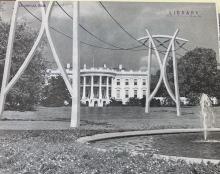
This lecture considers the rise of the American environmental movement as a driver of changes in professional-managerial expertise. As federal, state, and local land-use controls proliferated, architects increasingly worked beyond the design of individual buildings, developing new design tools and techniques of persuasion in response to public pressure on development.
Johnson Classroom 204
Open to the Public

In 1930s French Algeria, indifferent Frenchman Meursault faces upheaval after his mother’s death and a fatal beach encounter with an Arab man, leading to a trial that scrutinizes his detached character in this adaptation of Albert Camus’s existential novella. The story explores his emotional aloofness amid a violent intrigue involving his neighbor and the victim’s brothers.
Twilight Auditorium 101
Open to the Public

Spanning 1932, 1937, and 2017, three men confront the ghosts of a Spain torn between desire and repression. Carlos fights for acceptance, Sebastián falls in love across the battle lines of the Civil War, and Alberto unearths a family secret buried for decades. Bound by forbidden passions, violence, and inherited wounds, their intertwined destinies expose a legacy of intolerance that refuses to die, echoing the tragic world of Federico García Lorca.
Dana Auditorium (Sunderland Language Center)
Open to the Public
Psychology research study on motivation!
Davis Family Library 105A
Closed to the Public
